


Warmly Welcome Mac Waste Group from Australia to Visit WTEYA


Warmly Welcome Mac Waste Group from Australia to Visit WTEYA
On 16 November 2026, WTEYA received four representatives of Mac Waste Group, a well-known septic and liquid waste management company from Australia. The delegation came to our factory in Dongguan, Guangdong, to look at a full-process leachate treatment line — pretreatment, volume reduction and membrane polishing — and to test it against the liquid streams Mac Waste Group collects every week. Four visitors and five WTEYA engineers and sales staff took part, in a programme that combined a showroom walkthrough, a shop-floor equipment review and a closed technical session.
Mac Waste Group: Septic and Liquid Waste Specialists from Australia
Mac Waste Group works across the part of the market that most equipment suppliers never see: septic tank servicing, septage collection, grease trap and liquid waste from commercial and industrial customers. The material arrives in tankers, and it varies from load to load — one tanker can carry strong domestic septage, the next oily restaurant waste, the next a high-strength industrial stream.
For an operator in this position the constraint is not collection but what happens after the tanker empties: liquid waste that is only dewatered still leaves a large volume to be hauled, and every litre moved carries a cost. Treating further on site, to a quality the local water authority accepts under a trade waste agreement, changes the economics of the business — and that question is what brought the team to WTEYA.

A Showroom Walkthrough: Reference Projects and Track Record
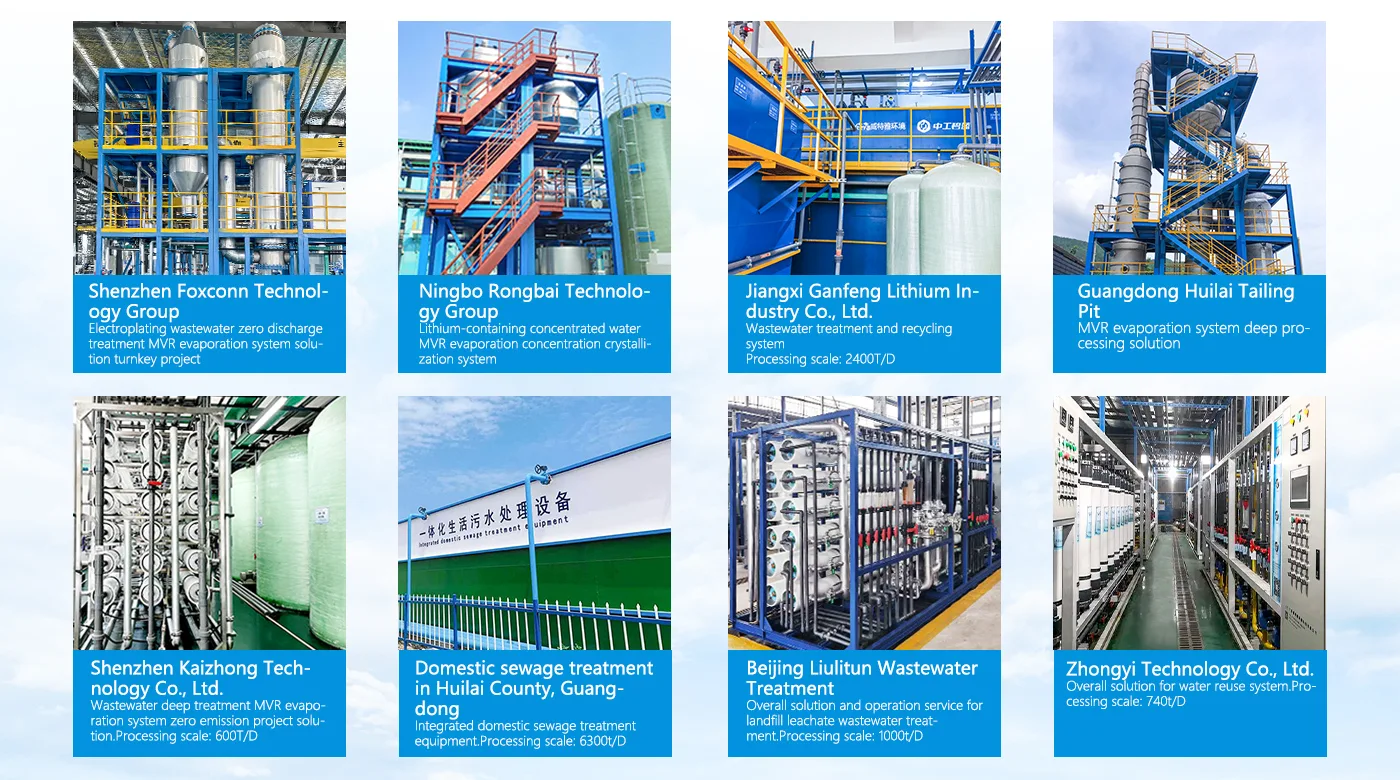
The visit opened in the showroom, where a digital display maps installations by region and process type. Our engineers used it to walk the delegation through landfill leachate projects of very different scales: a 24 m³/day evaporation unit at a municipal landfill, a 100 m³/day leachate plant combining pretreatment with two-stage membrane separation, and a 500 m³/day system built for zero liquid discharge. The visitors asked not about headline capacity but about feed quality, uptime, and how the plants behave in the rainy season when leachate volume rises sharply.
The same walk covered the certification and honours wall and the client photo wall documenting commissioned projects — enough for the delegation to judge scope: not a single machine supplier, but a team building pretreatment, evaporation, membrane and crystallization stages under one roof.

On the Shop Floor: Pretreatment, Evaporation and Membrane Skids
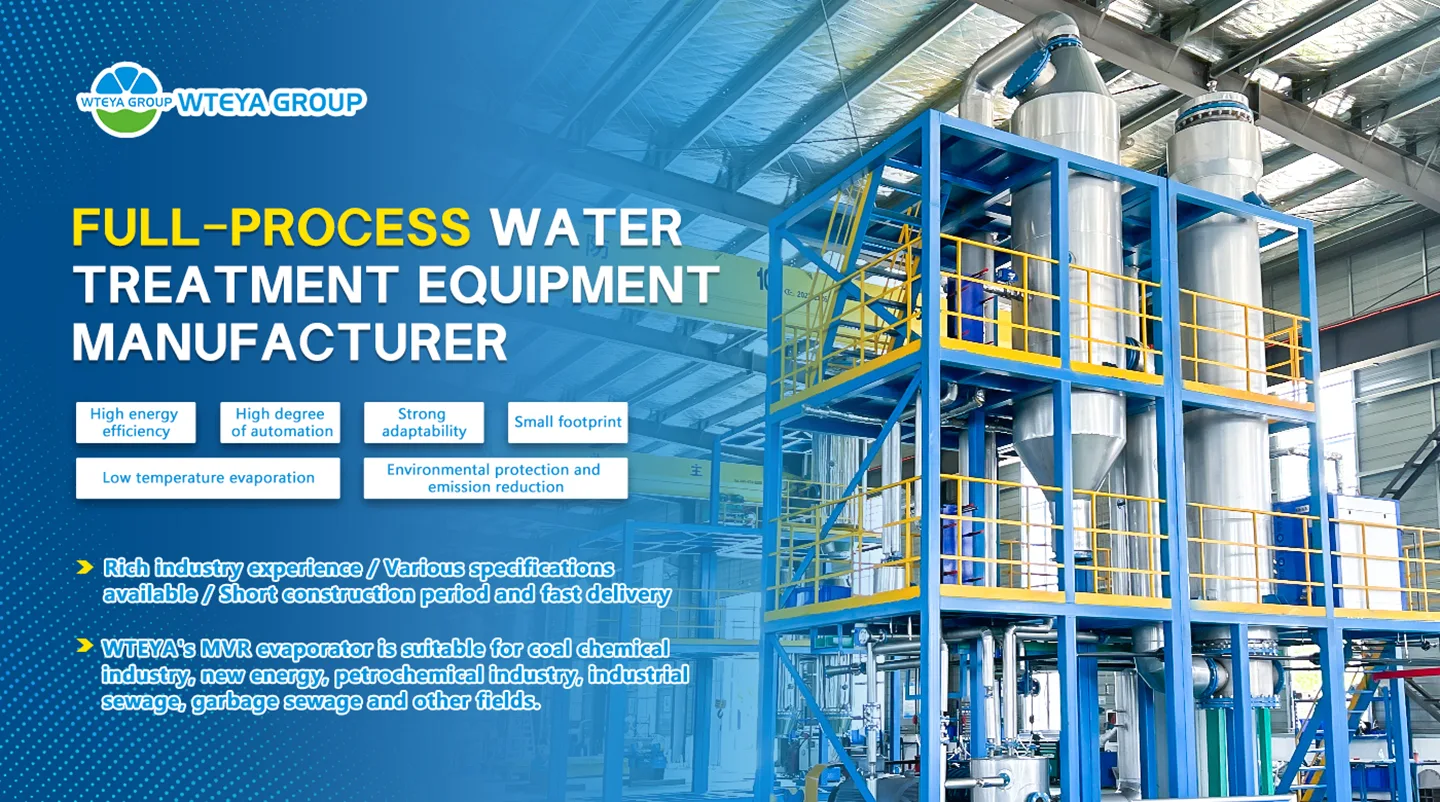
In the assembly area the delegation inspected skids in build: chemical dosing and coagulation units, a dissolved air flotation cell, a forced-circulation wastewater MVR evaporator, and reverse osmosis and nanofiltration membrane skids. Beside a transparent sample tank, our process engineer explained what each stage removes and why the order cannot be rearranged: solids and oil first, or the evaporator fouls; ammonia and alkalinity managed early, or the condensate will not meet discharge limits; concentration last, because everything upstream decides how hard the evaporator has to work.
The group compared plate and tubular designs, asked how the compressor behaves across a wide boiling point range, and examined cleaning-in-place piping. Several questions returned to one practical point: how much operator attention a line needs per shift, and what a site technician can fix without a service engineer.

Technical Session: Landfill Leachate Treatment Variables That Decide the Design
The day closed in the conference room, with the Australian and Chinese flags on the table and process brochures laid out on both sides. The discussion moved quickly from equipment to water chemistry. Mac Waste Group described the spread of streams it handles; WTEYA laid out the four variables that decide the process route for landfill leachate treatment: organic load and its biodegradability, ammonia nitrogen concentration, salinity and chloride, and the swing caused by rainfall infiltration and by seasonal changes in what customers discharge.
Three design questions dominated. First, how far to concentrate the leachate before crystallization stops being economic — the point where the residual stream is small enough to be handled off site at reasonable cost. Second, whether biological pretreatment or ammonia stripping is justified ahead of evaporation, which depends on nitrogen load and discharge standard rather than equipment preference. Third, where the treated water will go: sewer discharge under a trade waste agreement, reuse, or near-zero discharge, each setting a different polishing train.

Points of Agreement and Next Steps
No contract was signed during the visit, and none was expected at this stage. What the two teams did agree was a practical sequence. Mac Waste Group will share representative laboratory analyses from its sites — COD, ammonia nitrogen, total dissolved solids, suspended solids, pH and heavy metals — covering both dry and wet periods, so the design is not based on one favourable sample. WTEYA will prepare a mass-balance-based process route for each stream, with indicative footprint, connected power, chemical consumption and operator requirements, so the comparison against current disposal costs is made on real numbers rather than on equipment price.
Both sides also agreed to evaluate a pilot-scale evaporation trial on a live sample before any commercial decision — the only reliable way to confirm fouling behaviour and condensate quality on a stream this variable.

Why Choose WTEYA
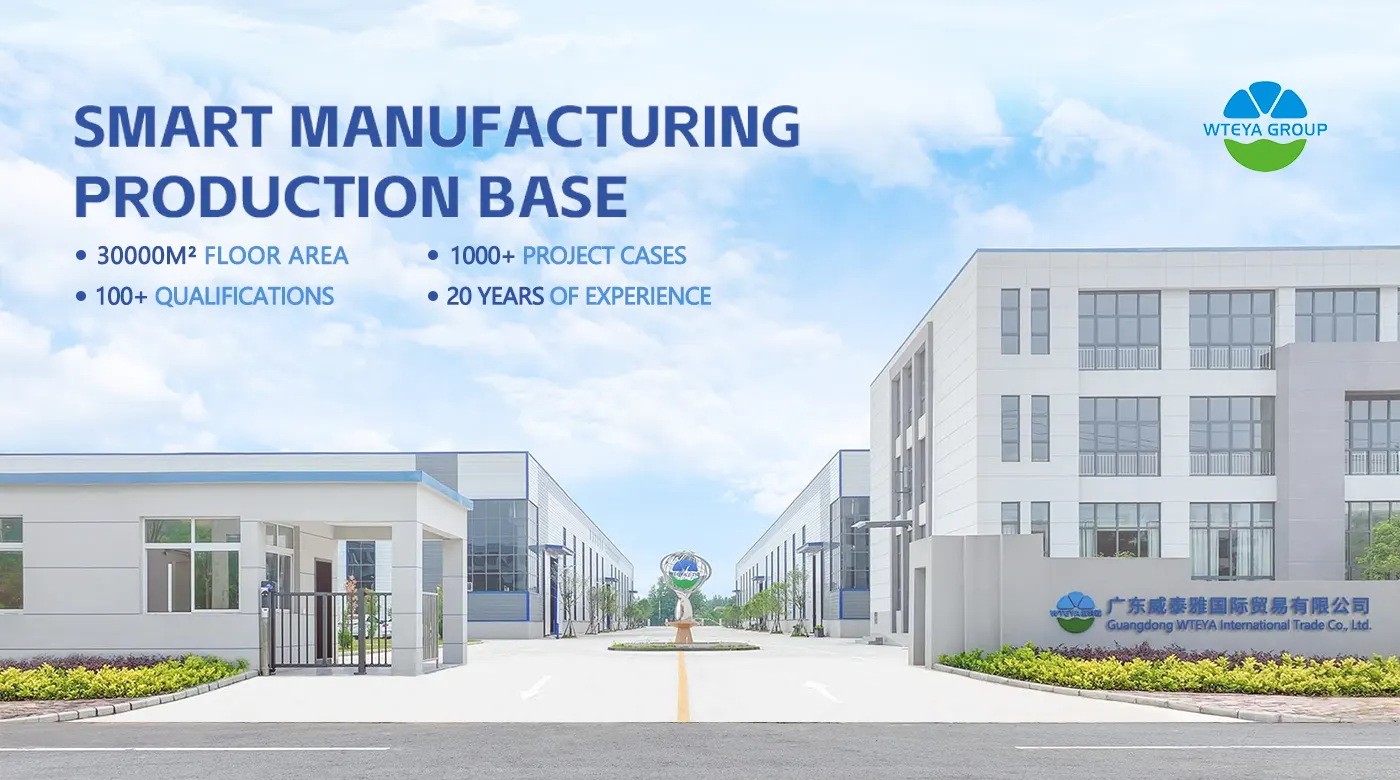
WTEYA has built leachate and high-salinity wastewater systems for nearly 20 years, with more than 100 commissioned projects across municipal landfills, incineration plants, chemical sites and overseas clients. The scope is in-house rather than assembled from third parties: pretreatment, MVR evaporation, membrane separation and crystallization are designed as one line, so responsibility for performance does not stop at a battery limit.
For overseas operators that matters concretely: export documentation and packing handled by the same team that designs the process, remote commissioning support, and a spare parts list defined at handover rather than after the first breakdown. Australian clients have worked with WTEYA before, and the same engineering team supports them today.

Frequently Asked Questions
Q: Can one leachate treatment line handle both septage and landfill leachate?
A: Usually not with a single fixed configuration. The two streams differ in solids, oil and ammonia load, so the pretreatment section is normally designed with separate receiving and screening for tanker waste, while the evaporation and membrane stages are shared. The split is decided by the mass balance, not by the equipment list.
Q: How is capacity sized when the feed varies from load to load?
A: Sizing uses the peak week, not the annual average: leachate volume follows rainfall, and tanker arrivals follow customer schedules. A buffer tank absorbs the short-term swing and the evaporator is specified with margin on compressor and heat exchanger surface.
Q: What does a visitor usually need to bring to a first technical meeting?
A: A laboratory analysis of each main stream, the discharge or reuse standard that applies, and the current cost of disposal. With those three inputs a process route and an operating cost estimate can be prepared; without them any proposal is only an equipment quotation.
Transform Your Wastewater Management
Still using outdated treatment methods? Upgrade to WTEYA's advanced technology and see immediate improvements in efficiency and compliance.
Schedule a video call with our engineers to explore your options.
📱 WhatsApp: +86-1800 2840 855
✉ Email: info@vteya.com
🌐 Website: www.vteya.com
Guangdong WTEYA Environmental Technology Co., Ltd
Contact us
WhatsApp: +86 1800 2840 855
Tel: +86-0769-28636053
+86-0769-28636126
Email: info@wteya.com
Add: Floor 14, F4 building, TianAn digital town,
Nancheng District, Dongguan,Guangdong, China