


It's Time to Face the Global Water Crisis Head-On
Release Time:
2026-06-24 11:33

The Global Water Crisis: A Challenge We Can No Longer Ignore
Over 2 billion people worldwide still lack access to safe drinking water — and that number is growing. Climate change, rapid population growth, and industrial pollution are intensifying water scarcity across every continent. For industries, governments, and communities alike, the message is clear: action is no longer optional.
Why the Crisis Is Accelerating
Several converging forces are driving the global water emergency to new extremes:
- Climate change is altering precipitation patterns, shrinking glaciers, and increasing the frequency of droughts and floods — disrupting the natural freshwater cycle at an unprecedented pace.
- Population growth is pushing per-capita water availability to critical lows, particularly in water-stressed regions across Asia, Africa, the Middle East, and Latin America.
- Industrial and agricultural pollution continues to degrade freshwater sources, rendering once-usable supplies unsafe without costly treatment.
- Ageing infrastructure in many countries leads to significant water loss through leakage, further compounding supply shortfalls.
The combined effect of these trends means that without decisive investment in water technology and management, large portions of the global economy — and billions of people — face a precarious future.

Industrial Water Management: Where the Greatest Impact Lies
Industry accounts for roughly 20–30% of global freshwater withdrawals. In manufacturing-intensive economies, that figure can climb far higher. Yet many industrial facilities still operate with outdated, inefficient water management practices — drawing heavily on freshwater sources while discharging partially treated or untreated effluents.
Transforming industrial water consumption is therefore one of the highest-leverage strategies available. The priorities are clear:
- Water use efficiency — reducing the volume of freshwater consumed per unit of production through process optimisation and closed-loop systems.
- Wastewater recovery and reuse — treating and recycling effluents rather than discharging them, keeping water within the production cycle as long as possible.
- Zero liquid discharge (ZLD) — the most ambitious target, where all wastewater is treated to the point that no liquid effluent leaves the facility, leaving only solid by-products.
Sustainable Water Recycling: Closing the Loop
Advanced water recycling technologies have matured rapidly over the past two decades. Where industries once viewed wastewater as a cost and liability, leading facilities now treat it as a recoverable resource. Modern systems can reclaim high-quality process water, recover valuable salts and minerals from concentrate streams, and reduce freshwater intake to a fraction of previous levels.
The economic case is equally compelling: in regions where freshwater tariffs are rising sharply — or where industrial discharge fees impose significant operating costs — wastewater reuse directly improves the bottom line. Regulatory pressure is also intensifying, with stricter discharge standards being enacted across Asia-Pacific, Europe, and the Americas.
Clean Water Technology: The Engine of Change
Meeting the scale of the water crisis demands more than incremental improvement — it requires a new generation of purpose-built water treatment technologies. Key innovations driving this shift include:
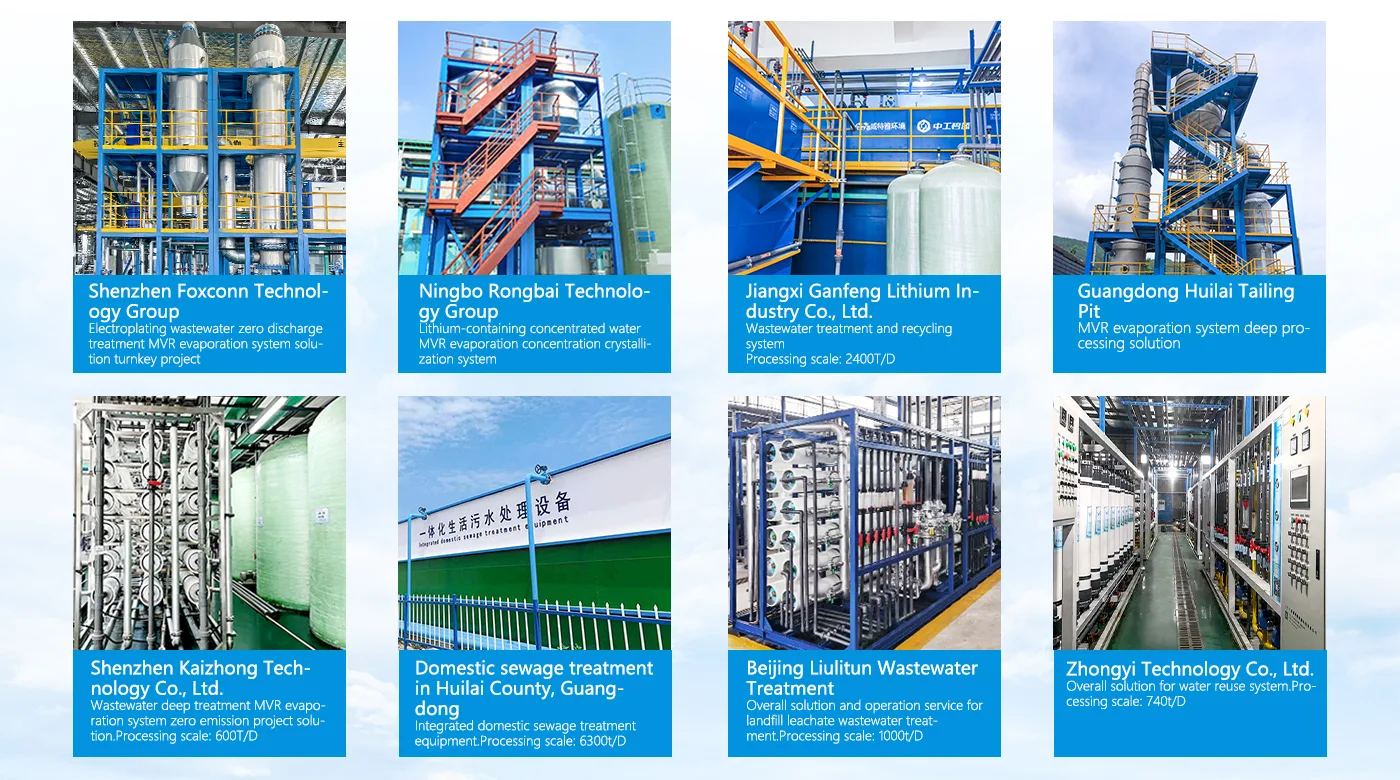
- Mechanical Vapour Recompression (MVR) evaporation — an energy-efficient process for concentrating high-salinity industrial wastewater, widely used in chemical, lithium-battery, electroplating, and food processing industries. MVR systems can reduce energy consumption by 30–60% compared to conventional multi-effect evaporation, making large-scale wastewater concentration economically viable.
- Membrane bioreactor (MBR) and advanced biological treatment — combining membrane filtration with biological degradation to produce consistently high-quality effluent suitable for direct reuse.
- Crystallisation and salt separation — enabling industries to recover and sell by-product salts from concentrate streams, transforming waste management costs into revenue streams.
- Integrated ZLD systems — end-to-end treatment trains that combine biological pre-treatment, evaporation, and crystallisation to achieve genuine zero liquid discharge, even from highly complex industrial effluents.
WTEYA: Engineering the Water Solutions Industries Need
Since 2009, WTEYA has been at the forefront of industrial water treatment engineering in China and globally. With nearly two decades of hands-on experience across more than 2,000 projects in 30+ provinces and countries, WTEYA designs, manufactures, and delivers custom water treatment systems for some of the most demanding industrial environments.
WTEYA's core capabilities address the full spectrum of industrial water challenges:
- High-efficiency MVR evaporators designed for lithium-battery, electroplating, PCB, pharmaceutical, and chemical wastewater applications
- Integrated zero liquid discharge (ZLD) systems for high-salt, high-concentration industrial effluents
- Advanced industrial wastewater treatment solutions combining biological, physical, and chemical processes
- Water reuse systems enabling facilities to dramatically reduce freshwater intake and comply with stringent discharge standards
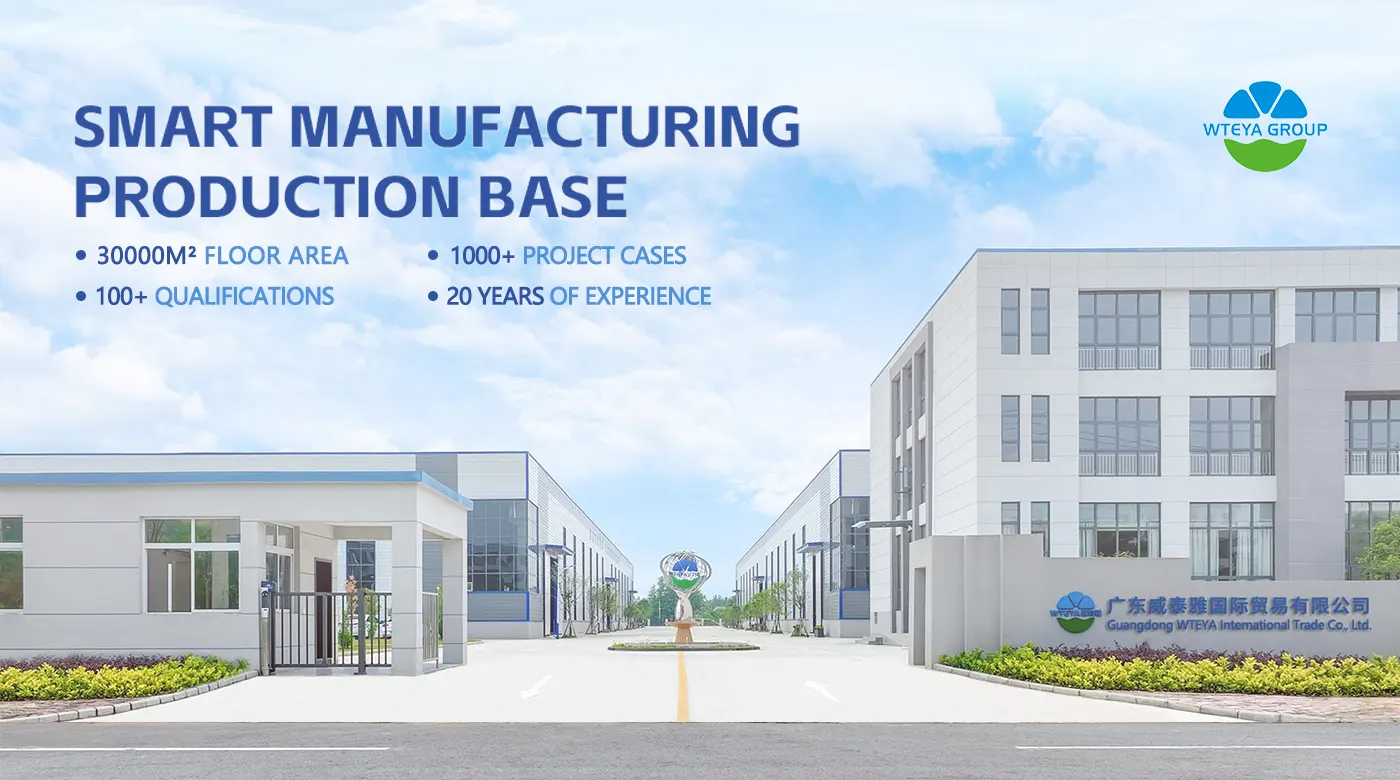
All WTEYA systems are manufactured at the company's 30,000 m² smart production base in Jingmen, Hubei, and supported by a team of 20+ PhD-level experts. With ISO 9001, ISO 14001, CE, and SGS certifications, WTEYA delivers the quality and reliability that large-scale industrial water projects demand.
Every Drop Counts — Especially at Industrial Scale
The global water crisis will not be solved by individual action alone. It requires industrial players to step up — adopting cleaner processes, investing in advanced treatment technologies, and committing to closed-loop water management at scale.
The technology exists. The economics are increasingly favourable. The regulatory direction is unmistakable. The only question is how quickly industry will move.
WTEYA is ready to partner with manufacturers, EPC contractors, and industrial park developers to design and deploy water treatment systems that are built for this challenge — efficient, reliable, and engineered for long-term performance.
Frequently Asked Questions
Q: How to choose the right solution?
A: Consider your industry, capacity requirements, and environmental regulations. Contact WTEYA for expert guidance.
Q: What is the typical project timeline?
A: Project timelines vary based on capacity and complexity. WTEYA provides detailed project schedules during consultation.
Get Your Free Consultation Today
Every day of delay costs money. Our rapid-response team can deliver a preliminary solution design within 48 hours.
Send us your wastewater data and let's start building your custom system today.
📱 WhatsApp: +86-1800 2840 855
✉ Email: info@vteya.com
🌐 Website: www.vteya.com
Front page of Cross
Next go-to page
Related information
Wastewater Evaporation for the Photovoltaic Industry
Wastewater Evaporation for the Photovoltaic Industry Photovoltaic manufacturing is one of the fastest-growing industrial sectors in the world, and it is also one of the most water-intensive.
Mid-Autumn Greetings from WTEYA and Our 2026 Holiday Notice
WTEYA wishes clients and colleagues a happy Mid-Autumn Festival. Offices and the Jingshan plant observe the holiday from 25 to 27 September 2026, with duty engineers on site and service lines kept open.
Mid-Autumn Festival at WTEYA: Fruit Boxes and Mooncakes for Every Office
WTEYA prepares Mid-Autumn Festival gifts for all employees: seasonal fruit boxes for the group headquarters, and mooncakes for colleagues at the Jingshan manufacturing plant and branch sites nationwide.
WTEYA has shipped three 4040 seawater desalination units to Mexico under its cooperation with Rotoplas, a leading Latin American water solutions company, extending the company's Latin America channel and global delivery capability.
How Is MVR Evaporator Capacity Determined?
How Is MVR Evaporator Capacity Determined? MVR evaporator capacity is set by the feed flow the unit must handle, not by the volume of distillate it produces.
How Does a Steam Compressor Work in MVR Systems?
How Does a Steam Compressor Work in MVR Systems? The steam compressor is the heart of every MVR evaporator. It takes the low-grade secondary vapour that a conventional evaporator would simply condense and throw away, raises its pressure and saturation temperature, and feeds it back into the heating...
Guangdong WTEYA Environmental Technology Co., Ltd
Contact us
WhatsApp: +86 1800 2840 855
Tel: +86-0769-28636053
+86-0769-28636126
Email: info@wteya.com
Add: Floor 14, F4 building, TianAn digital town,
Nancheng District, Dongguan,Guangdong, China