


MVR Evaporator for Industrial Wastewater: Key Factors
Release Time:
2026-06-27 10:05

MVR Evaporator for Industrial Wastewater: Key Factors
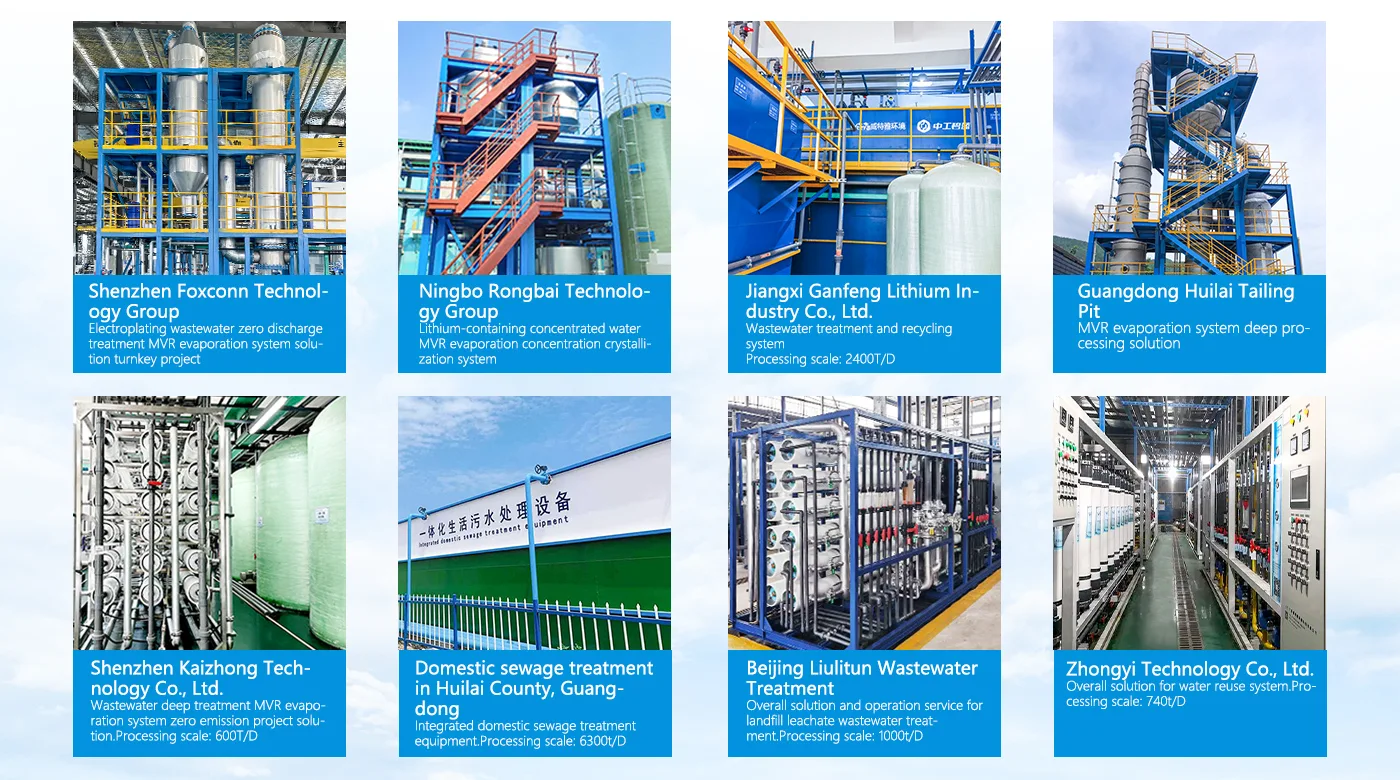
Industrial wastewater treatment is a critical challenge for manufacturers seeking to comply with environmental regulations while maintaining operational efficiency. Among the most effective solutions available, MVR (Mechanical Vapor Recompression) evaporators have emerged as a preferred technology for achieving zero liquid discharge (ZLD) and reducing water usage. As an industry leader with nearly 20 years of experience, WTEYA provides advanced MVR evaporator systems tailored to meet the unique needs of industrial wastewater treatment processes.
Understanding the Role of MVR Evaporators in Industrial Wastewater Treatment
MVR evaporators are designed to recover and reuse water from industrial wastewater streams by utilizing a closed-loop system that minimizes energy consumption. Unlike traditional thermal evaporation methods, MVR technology compresses vapor to increase its temperature and pressure, allowing it to be reused as a heat source. This results in significant energy savings and reduced operating costs. For industries aiming to achieve zero liquid discharge, MVR evaporators offer a reliable and sustainable solution that aligns with both regulatory and environmental goals.

Key Considerations When Selecting an MVR Evaporator System
Choosing the right MVR evaporator requires careful evaluation of several factors. First, the composition and volume of the wastewater must be analyzed to determine the appropriate system size and configuration. Second, the desired level of water recovery and purity will influence the design and performance specifications. Third, energy efficiency and long-term operational costs should be prioritized to ensure a favorable return on investment. Lastly, the ability to integrate the MVR system with existing infrastructure and processes is crucial for seamless implementation. WTEYA's comprehensive approach ensures that each MVR evaporator is customized to meet these essential criteria.
Benefits of Implementing MVR Technology for Zero Liquid Discharge
The adoption of MVR evaporators in industrial wastewater treatment supports the transition toward zero liquid discharge, a goal that many industries are now pursuing to reduce their environmental footprint. By eliminating the need for wastewater discharge, companies can avoid costly penalties and enhance their sustainability profile. Additionally, the high-efficiency operation of MVR systems reduces reliance on external water sources and lowers energy expenses. These advantages make MVR evaporators an attractive option for industries looking to optimize resource use and comply with stringent environmental standards. WTEYA’s expertise in designing and deploying MVR systems has helped numerous clients achieve their ZLD objectives efficiently and effectively.
Ensuring Long-Term Performance and Reliability
To maximize the benefits of an MVR evaporator, it is essential to focus on system reliability and maintenance. High-quality materials, advanced control systems, and regular servicing contribute to the longevity and efficiency of the equipment. Furthermore, selecting a provider with extensive experience in industrial wastewater treatment ensures that the system is built to withstand harsh conditions and deliver consistent performance over time. With nearly 20 years of experience, WTEYA has established itself as a trusted partner for industries seeking durable and high-performing MVR evaporator solutions. Their commitment to innovation and quality helps businesses achieve sustainable operations while meeting evolving regulatory requirements.
Frequently Asked Questions
Q: What is an MVR evaporator?
A: MVR (Mechanical Vapor Recompression) evaporator is an energy-efficient evaporation technology that reduces energy consumption by 30-50% compared to traditional evaporation.
Q: How much energy can MVR save?
A: MVR evaporators typically reduce energy consumption by 30-50% compared to traditional multi-effect evaporators, using electricity instead of steam.
Q: What is the difference between MVR and multi-effect evaporator?
A: MVR uses mechanical vapor recompression for energy efficiency, while multi-effect evaporators use multiple evaporation stages. MVR has lower operating costs.
Take the First Step Towards Compliance
Don't let wastewater challenges hold back your operations. WTEYA has helped 100+ manufacturers achieve compliance and reduce costs by up to 50%.
Request your free technical assessment and discover how we can optimize your MVR evaporation process.
📱 WhatsApp: +86-1800 2840 855
✉ Email: info@vteya.com
🌐 Website: www.vteya.com
Front page of Cross
Next go-to page
Related information
MVR vs Single Effect Evaporator: Energy Consumption Compared
MVR vs Single Effect Evaporator: Energy Consumption Compared Evaporation is an energy business. Whichever evaporator you install, the plant will spend most of its operating budget turning water into vapor and then getting rid of that vapor.
Energy Recovery in Evaporation: 5 Ways to Save Steam
Energy Recovery in Evaporation: 5 Ways to Save Steam In an industrial evaporation plant, thermal energy is usually the largest single operating cost — commonly 60–80% of the total , ahead of electricity, labour and chemicals.
WTEYA Ships 10 SWRO4021 Portable Desalination Units to Puerto Rico
WTEYA GROUP has shipped 10 SWRO4021 portable desalination units to Puerto Rico, built for fast island and emergency water supply with low energy demand.
MVR Evaporator Installation: How Long It Really Takes
MVR Evaporator Installation: How Long It Really Takes Most buyers plan the shipment date carefully and then discover that the on-site installation is what sets the real start of production.
Hazardous Wastewater Evaporation: MVR Design and Compliance
Hazardous Wastewater Evaporation: MVR Design and Compliance Hazardous wastewater is the most demanding feed a thermal system will ever see. It arrives with unknown composition, extreme pH, solvents that flash at low temperature, and heavy metals that must not leave the site in a liquid stream.
LFP Cathode Wastewater: MVR Zero-Discharge Design
LFP cathode production wastewater carries 500-5,000 mg/L total phosphorus, 1,000-10,000 mg/L ammonia nitrogen and 10,000-50,000 mg/L sulfate.
Guangdong WTEYA Environmental Technology Co., Ltd
Contact us
WhatsApp: +86 1800 2840 855
Tel: +86-0769-28636053
+86-0769-28636126
Email: info@wteya.com
Add: Floor 14, F4 building, TianAn digital town,
Nancheng District, Dongguan,Guangdong, China