


Energy Recovery in Evaporation: 5 Ways to Save Steam
Release Time:
2026-11-07 09:06

Energy Recovery in Evaporation: 5 Ways to Save Steam
In an industrial evaporation plant, thermal energy is usually the largest single operating cost — commonly 60–80% of the total, ahead of electricity, labour and chemicals. Yet a well-designed system can recover a large share of that heat before it leaves the battery limits.
This guide sets out where the energy goes in an evaporation train, and five recovery routes that engineers can combine to cut steam demand without compromising product quality or discharge compliance.

⚡ Where the Energy Actually Goes
Every kilogram of water evaporated carries roughly 2,200–2,400 kJ of latent heat, plus the sensible heat needed to bring the feed to boiling point. In a single-effect evaporator, one kilogram of steam evaporates about one kilogram of water, so the steam bill tracks the evaporation load almost one to one.
- Secondary vapor — the largest stream, and the one most worth recompressing or reusing.
- Condensate and distillate — leaves the system at 70–95 °C and is often dumped to drain.
- Blowdown, slurry and salt discharge — carries sensible heat out of the crystallizer.
- Surface losses — typically 2–5% when insulation and cladding are in good condition.
An energy audit that measures steam flow, electrical input and all liquid temperatures is the starting point: without it, recovery projects are sized on guesswork and rarely pay back on schedule.
🔁 Route 1: Mechanical Vapor Recompression
An MVR evaporator takes the secondary vapor, raises its pressure and temperature by a few degrees with a centrifugal or Roots compressor, and returns it to the calandria as the heating medium. Because the latent heat is recycled rather than supplied fresh, specific consumption falls to 20–45 kWh per tonne of evaporated water for most wastewater duties, equivalent to only 0.02–0.05 t of steam per tonne.
The trade-off is electrical demand and compressor turndown. Units are most economic when the boiling point elevation is moderate (roughly 3–12 °C), the evaporation load is stable, and the site electricity price is reasonable relative to steam. For high-salinity wastewater and forced circulation evaporator duties with heavy scaling, MVR still works but needs a larger heat-transfer area and a well-designed de-superheating and washing arrangement.
♻️ Route 2: Multi-Effect and Thermal Staging
Where steam is cheap and electricity expensive, staging remains attractive: a triple-effect arrangement needs only 0.30–0.40 t of steam per tonne of water, and a thermal vapor recompression (TVR) stage can lift that further. A TVR with an entrainment ratio of 0.5–1.5 typically saves 20–40% of motive steam compared with an unassisted single effect.
Staging suits large, steady loads and products that tolerate longer residence time. The practical limit is available temperature difference: each additional effect needs a workable ΔT, and with high boiling point elevation the later effects become too small to justify their cost.
🌡️ Route 3: Condensate and Distillate Heat Recovery
Distillate leaves an evaporator at close to boiling point and is frequently the cheapest recovery opportunity on site. A plate-and-frame or shell-and-tube exchanger can preheat incoming feed from ambient to 60–75 °C, recovering 60–80% of the available sensible heat with an approach temperature of 3–5 °C.
- Payback is usually 6–18 months, because the equipment is small and the piping is short.
- Recovered distillate is also good quality water for membrane cleaning, filter backwash or scrubber make-up.
- Watch for fouling on the feed side; a duty/standby exchanger or automatic backwash keeps availability high.
🔥 Route 4: Heat Pumps and Absorption Upgrading
When the vapor is too low-grade to recompress economically, a closed-loop heat pump can still upgrade it. Mechanical heat pumps deliver a coefficient of performance of 3–6 at evaporation temperatures of 35–50 °C, which suits low-temperature duties and heat-sensitive streams.
Absorption heat transformers and chillers driven by 90–150 °C waste heat are another option where surplus hot water or low-pressure steam is available. They have no compressor and low electrical demand, but need a cooling source and a careful pinch analysis to be worthwhile.
🧊 Route 5: System-Level Integration
Recovery equipment alone does not guarantee savings — the surrounding system determines whether they survive into operation. Five measures carry most of the benefit:
- Vacuum control. Operating at 0.2–0.4 bar absolute lowers the boiling point to 60–75 °C, widening the ΔT available for recovery.
- Scale and fouling management. A fouled surface forces a higher ΔT and more steam; antiscalant dosing, regular CIP and conductivity-based blowdown protect the recovery gain.
- Variable frequency drives on feed, circulation and vacuum pumps, so part-load operation does not waste power.
- Insulation and steam trap maintenance. Leaking traps and bare flanges can silently consume the savings from an entire recovery project.
- Metering. Steam, power and flow meters on each duty let operators see the specific consumption trend and catch drift early.
📊 What It Adds Up To
Consider a plant evaporating 100 t/d of high-salinity wastewater. A single-effect unit would need roughly 100 t of steam per day. Recompressing the vapor with an MVR evaporator, then recovering condensate heat to preheat the feed, typically brings the steam requirement down to 20–30 t/d while adding 2,500–4,000 kWh/d of electrical load.
At 8 USD per tonne of steam and 0.10 USD per kWh, that is a saving in the order of 500–650 USD per day — before counting the reduced cooling load and the recovered distillate. For a zero liquid discharge duty, the same logic applies to the crystallizer circuit, where slurry heat recovery and condensate reuse are often overlooked.
🏆 Why Choose WTEYA
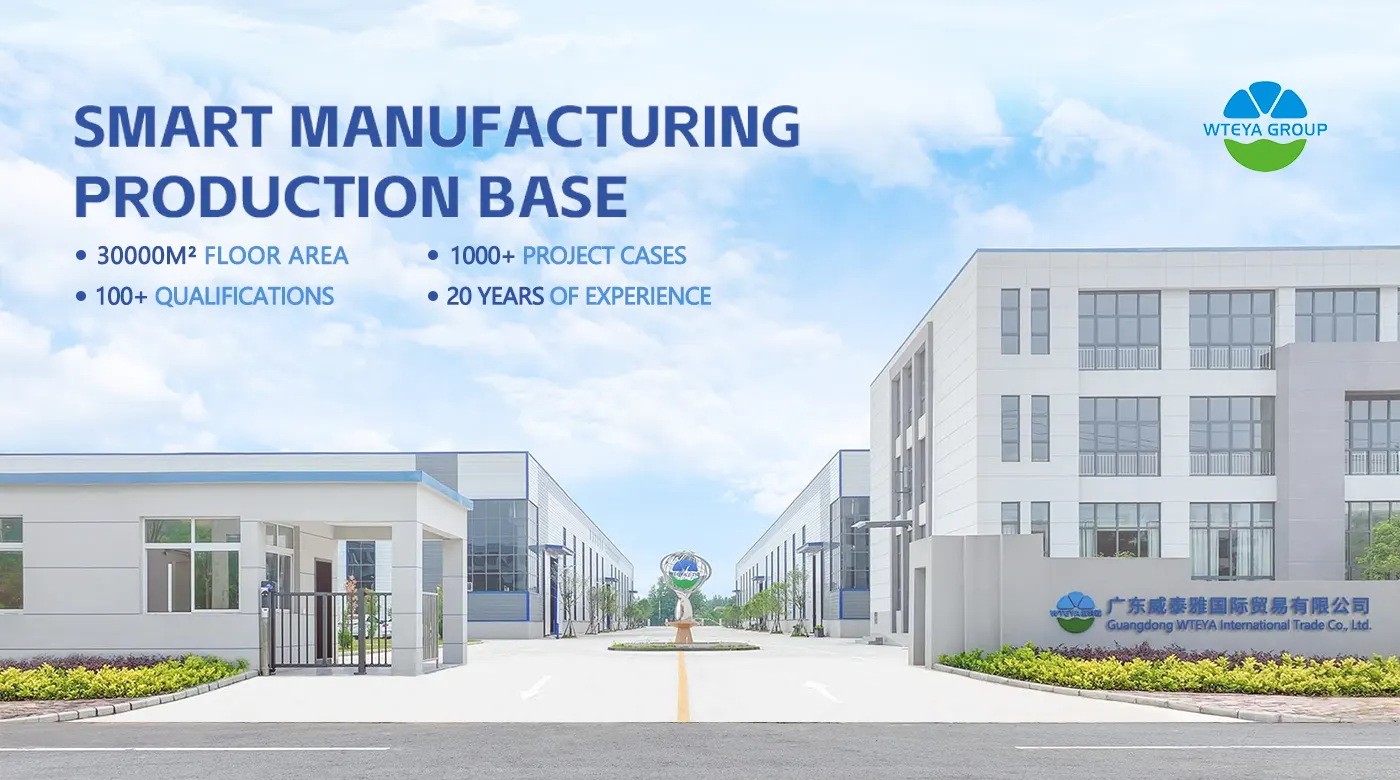
WTEYA has nearly 20 years of experience in evaporation and crystallization, with more than 2,000 customers served. Every system is engineered around the actual water analysis, utility prices and site layout rather than a catalogue design.
Our scope covers process design, equipment manufacture in our own factory, installation, commissioning and operator training. Custom configurations, skid-mounted packages and full OEM & ODM support are available, with typical delivery in 30–60 days depending on materials and capacity.
Frequently Asked Questions
Q: How to choose the right solution?
A: Consider your industry, capacity requirements, and environmental regulations. Contact WTEYA for expert guidance.
Q: What is the typical project timeline?
A: Project timelines vary based on capacity and complexity. WTEYA provides detailed project schedules during consultation.
Transform Your Wastewater Management
Looking for a customized solution for your industry? Our team of experts is ready to help you design the most cost-effective and energy-efficient system for your specific needs.
Contact us today to discuss your project requirements and get a personalized quote.
📱 WhatsApp: +86-1800 2840 855
✉ Email: info@vteya.com
🌐 Website: www.vteya.com
Front page of Cross
Next go-to page
Related information
Energy Recovery in Evaporation: 5 Ways to Save Steam
Energy Recovery in Evaporation: 5 Ways to Save Steam In an industrial evaporation plant, thermal energy is usually the largest single operating cost — commonly 60–80% of the total , ahead of electricity, labour and chemicals.
WTEYA Ships 10 SWRO4021 Portable Desalination Units to Puerto Rico
WTEYA GROUP has shipped 10 SWRO4021 portable desalination units to Puerto Rico, built for fast island and emergency water supply with low energy demand.
MVR Evaporator Installation: How Long It Really Takes
MVR Evaporator Installation: How Long It Really Takes Most buyers plan the shipment date carefully and then discover that the on-site installation is what sets the real start of production.
Hazardous Wastewater Evaporation: MVR Design and Compliance
Hazardous Wastewater Evaporation: MVR Design and Compliance Hazardous wastewater is the most demanding feed a thermal system will ever see. It arrives with unknown composition, extreme pH, solvents that flash at low temperature, and heavy metals that must not leave the site in a liquid stream.
LFP Cathode Wastewater: MVR Zero-Discharge Design
LFP cathode production wastewater carries 500-5,000 mg/L total phosphorus, 1,000-10,000 mg/L ammonia nitrogen and 10,000-50,000 mg/L sulfate.
Can an MVR Evaporator Fit in an Existing Building?
Can an MVR Evaporator Fit in an Existing Building? Retrofitting an MVR evaporator into a building that already exists is one of the most common requests we receive, and the answer is not a simple yes or no.
Guangdong WTEYA Environmental Technology Co., Ltd
Contact us
WhatsApp: +86 1800 2840 855
Tel: +86-0769-28636053
+86-0769-28636126
Email: info@wteya.com
Add: Floor 14, F4 building, TianAn digital town,
Nancheng District, Dongguan,Guangdong, China