



Can an MVR Evaporator Fit in an Existing Building?
Release Time:
2026-10-28 09:05

Can an MVR Evaporator Fit in an Existing Building?
Retrofitting an MVR evaporator into a building that already exists is one of the most common requests we receive, and the answer is not a simple yes or no. It comes down to three numbers: the clear height under the roof beams, the load the floor can carry, and the size of the largest single component that has to pass through a door or a roof opening. A forced circulation unit with a total height of 5–10 m will often fit an existing industrial shed. A falling film unit at 8–15 m usually will not, and no amount of civil work makes a low bay workable.
Getting this wrong is expensive in both directions. Over-estimating the constraint sends projects to a new building they did not need; under-estimating it produces equipment that arrives on site and cannot be lifted into place. The checks below are the ones that decide the outcome before any drawing is issued.

🏗 Height Comes First, Floor Area Second
Most retrofit failures are vertical, not horizontal. Engineers measure the free floor area, find it generous, and then discover the evaporator needs a clear height that the building does not have.
Total height depends on the equipment type. A skid-mounted unit is normally kept within 4–6 m so that it can travel as a single package. A forced circulation evaporator, with its lower separator arrangement, typically runs 5–10 m and is the friendliest option for an existing bay. A falling film evaporator needs a liquid distributor above the tube bundle and a separation section above that, which pushes total height to 8–15 m.
Measure the clear height under the lowest roof beam or purlin, not to the eaves, and then subtract everything that will occupy that space: process piping, cable trays, lighting, fire main, and the lifting height needed to raise the heaviest component during installation and later maintenance. A bay that measures 9 m to the eaves may offer only 7 m of usable height.
📐 What the Floor Actually Has To Carry
The load that matters is the wet operating weight, not the shipping weight. An evaporator standing full of liquid, with insulation, platforms and piping, can weigh substantially more than the same unit on a truck. Foundation bearing capacity for equipment of this class is typically specified at 10 t/m² or more, with the figure confirmed by the structural engineer rather than assumed.
If the building has an existing concrete slab, obtain the structural drawings before anything else. Where the slab is adequate but localised, a steel grillage with spreader beams will often distribute the load into the columns without cutting or thickening the floor. Where the slab is not adequate, the choice is a new isolated foundation or a different equipment arrangement — and that decision has to be taken before the process design is frozen.
Column spacing matters as much as total area. A 6 m grid can pass straight through the footprint of a separator or a crystallizer, forcing the layout into an awkward shape. Checking the grid against the equipment outline at concept stage is far cheaper than discovering the clash at the drawing review.
🔧 Lifting, Bundle Withdrawal and Walkways
Three access requirements are routinely forgotten and each one can cancel a project:
- Lifting — the heaviest single piece, usually the compressor or a heat exchanger shell, needs a crane position, a lifting radius that reaches it, and a hook height above the final elevation.
- Tube bundle withdrawal — a shell-and-tube heat exchanger needs clear space on the tube side equal to the bundle length plus working margin. A wall, a column or a pipe rack in that zone turns a routine cleaning job into a dismantling job.
- Maintenance walkways — allow 1–1.5 m around the equipment for operation, inspection and valve access. Squeezing this dimension saves floor area and costs downtime for the next decade.
Where a roof opening or a removable wall panel is possible, it is frequently cheaper than dismantling equipment into transportable sections and rebuilding it on site.
🌡 Ventilation, Heat and Noise in a Closed Room
An MVR evaporator releases the compressor work as heat inside the room it occupies. In a closed bay this has to be removed by mechanical ventilation sized for the actual heat rejection, not by opening a window. Control cabinets and variable frequency drives should be located away from the hot, humid zone around the evaporator, and the room needs a drainage trench or floor slope for washdown and condensate spill.
Noise is the other constraint that pushes a retrofit outdoors. If the building sits close to a boundary or contains a control room, an acoustic enclosure or a separate compressor room may be required, and both consume the floor area that the layout had counted on.
✅ What To Measure Before You Ask for a Layout
- Clear height under the lowest beam, and the height to the eaves for reference
- Door width and height on the delivery route, plus any corridor or gate the truck must pass
- Column grid and the position of any structural member inside the proposed footprint
- Floor load rating, or the structural drawings if the rating is unknown
- Crane or hoist capacity, and the lifting radius available inside the bay
- Available power in kVA at the point of connection, and the cable route
- Floor drainage, trench or sump location
- Space for feed, concentrate and condensate tanks, which are often larger than expected
- Outdoor area for a cooling system or a crystallizer if either is moved outside
- Truck access and turning space for delivery and for future membrane or bundle replacement
A building drawing plus a photograph of the bay is usually enough to produce a first layout and a height check. It is far cheaper to send those two files at the enquiry stage than to discover the constraint after the purchase order.
🔄 When It Does Not Fit: Four Options That Work
If the height or the lifting route rules the building out, there are still workable paths. The first is to change the evaporator type: a forced circulation or skid-mounted design may meet the same duty within a lower envelope. The second is modular construction, shipping the unit in sections that pass through the available opening and assembling on site. The third is to split the scope, keeping the evaporator indoors and placing the crystallizer, tanks and cooling equipment outside. The fourth, and sometimes the cheapest, is a new light steel shed built to the equipment rather than an old structure modified to accept it.
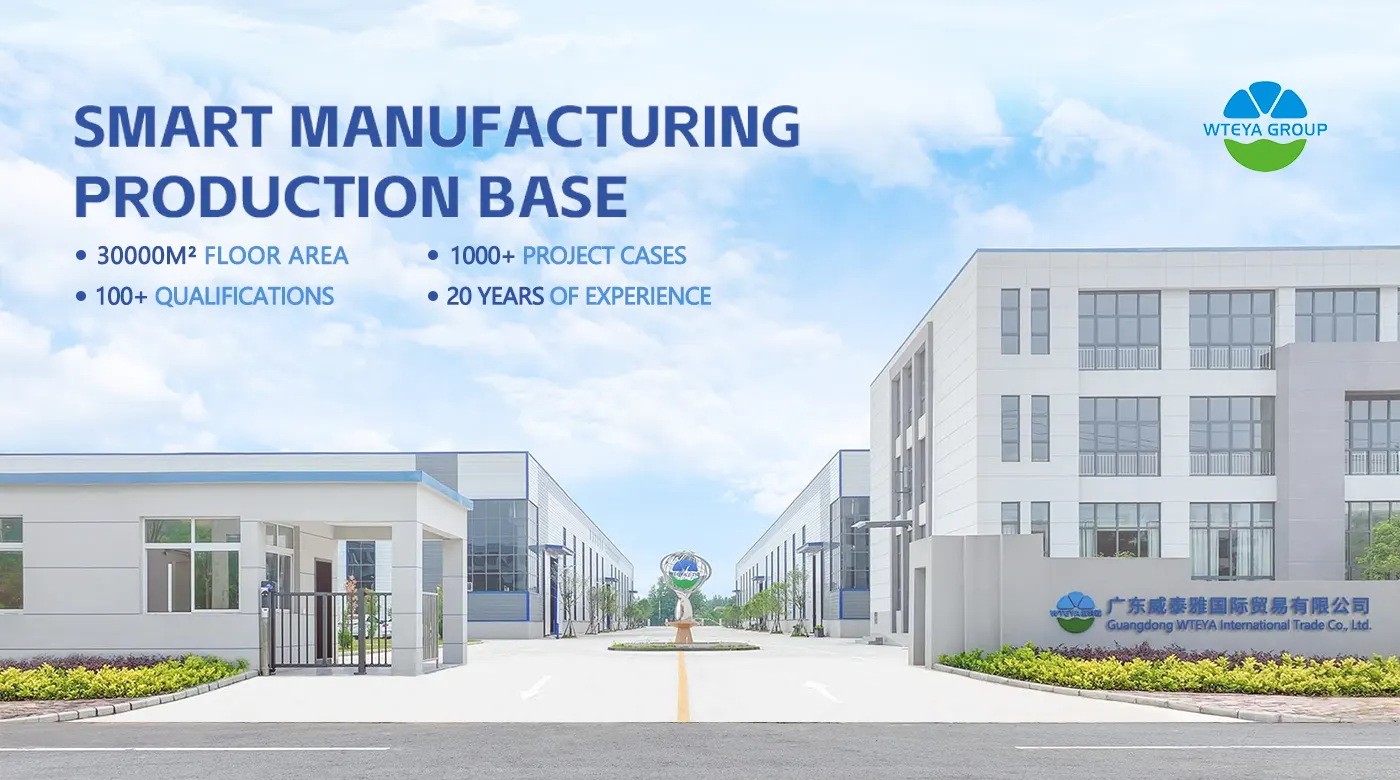
WTEYA has been building evaporation and crystallization systems for nearly 20 years, and a large share of them were installed into buildings that already existed. The layout, the height check and the lifting plan are produced together with the process design, so the civil conditions are confirmed before fabrication starts rather than after the equipment is finished.
Frequently Asked Questions
A: MVR (Mechanical Vapor Recompression) evaporator is an energy-efficient evaporation technology that reduces energy consumption by 30-50% compared to traditional evaporation.
Q: How much energy can MVR save?
A: MVR evaporators typically reduce energy consumption by 30-50% compared to traditional multi-effect evaporators, using electricity instead of steam.
Q: What is the difference between MVR and multi-effect evaporator?
A: MVR uses mechanical vapor recompression for energy efficiency, while multi-effect evaporators use multiple evaporation stages. MVR has lower operating costs.
Let's Build Your Solution Together
Still using outdated treatment methods? Upgrade to WTEYA's advanced technology and see immediate improvements in efficiency and compliance.
Schedule a video call with our engineers to explore your options.
📱 WhatsApp: +86-1800 2840 855
✉ Email: info@vteya.com
🌐 Website: www.vteya.com
📱 WhatsApp: +86-1800 2840 855
✉ Email: info@vteya.com
🌐 Website: www.vteya.com
Front page of Cross
Next go-to page
Related information
Can an MVR Evaporator Fit in an Existing Building?
Can an MVR Evaporator Fit in an Existing Building? Retrofitting an MVR evaporator into a building that already exists is one of the most common requests we receive, and the answer is not a simple yes or no.
MVR Evaporator for Salt Lake Lithium Extraction
MVR Evaporator for Salt Lake Lithium Extraction Salt lake brine is one of the lowest-cost lithium sources in the world, but it is also one of the most awkward fluids to concentrate.
Cutting Fluid Wastewater: MVR Evaporation and Zero Discharge
⚙️ Why Spent Emulsion Resists Conventional Treatment Every machining line that uses water-miscible coolant eventually produces a waste stream that cannot be sewered, cannot be burned as-is, and cannot be treated biologically without a fight.
MVR Evaporator Condensate Reuse: Quality and Options
MVR Evaporator Condensate Reuse: Quality and Options The condensate produced by an MVR evaporator is not a waste stream to be disposed of — it is distilled water of consistent quality.
MVR Evaporator Troubleshooting: Common Problems and Fixes
MVR Evaporator Troubleshooting: Common Problems and Fixes MVR evaporators are mechanically simple compared with steam-driven evaporator trains, but they are sensitive to small changes in vacuum, scaling and compressor stability.
Crystallization for Battery Material Wastewater Recovery
Crystallization for Battery Material Wastewater Recovery Battery manufacturing is a wet chemistry business. Cathode active material plants producing lithium iron phosphate or nickel-cobalt-manganese chemistries, and hydrometallurgical recycling lines recovering metals from spent cells, all consume...
Guangdong WTEYA Environmental Technology Co., Ltd
Contact us
WhatsApp: +86 1800 2840 855
Tel: +86-0769-28636053
+86-0769-28636126
Email: info@wteya.com
Add: Floor 14, F4 building, TianAn digital town,
Nancheng District, Dongguan,Guangdong, China