


MVR Evaporator Troubleshooting: Common Problems and Fixes
Release Time:
2026-10-19 09:03

MVR Evaporator Troubleshooting: Common Problems and Fixes
MVR evaporators are mechanically simple compared with steam-driven evaporator trains, but they are sensitive to small changes in vacuum, scaling and compressor stability. Failures rarely appear without warning: capacity drifts down, specific power climbs, or condensate conductivity creeps upward for days before an alarm stops the plant. Reading those trends early is the difference between a one-hour adjustment and a week of downtime.
This guide covers the faults our service engineers are called to most often — loss of vacuum, scaling, foaming, compressor trips, crystallizer blockages and condensate excursions — and the checks that identify the root cause instead of only resetting the alarm.

🔍 Read the Symptoms Before You Open Anything
Three numbers tell you most of what you need to know. Log them every shift: evaporation capacity in m³/h, specific power in kWh per ton of distillate, and condensate conductivity in μS/cm. A typical MVR system on brine runs at 30–45 kWh per ton of water evaporated, reaches 95–98% water recovery, and produces condensate below 10 μS/cm. When specific power rises by 10–15% at constant feed, or capacity falls by 5% at constant power, stop and investigate.
Also record compressor discharge temperature, calandria differential temperature, circulation pump current and vacuum level. A trend line over three to five days is far more useful than a single reading taken after the alarm sounds.
📉 Capacity Drop or Loss of Vacuum
Loss of vacuum is the most common cause of a sudden capacity drop, because it raises the boiling temperature and reduces the effective temperature difference across the heat exchanger. The usual entry points for air are door and manhole seals, flange gaskets, instrument unions, sight glasses and the mechanical seal of the vacuum pump itself.
Condenser fouling or high cooling water temperature has the same effect and is often mistaken for air in-leakage. Check the cooling water inlet temperature and the condenser approach temperature before dismantling anything. On systems with a surface condenser, a rising approach temperature points directly to fouling on the water side.
- Vacuum decay test — isolate the system, stop the vacuum pump and record the pressure rise per minute. A fast rise indicates leakage; a slow rise with stable pressure suggests pump wear or seal water problems.
- Seal water check — low seal water flow on a liquid ring vacuum pump reduces available vacuum and contaminates the water loop.
- Flange survey — use a soap solution or helium leak detector on suspect joints while the system is under vacuum, not after it is opened.
- Non-condensable accumulation — confirm that vent lines and bleed valves are open and not blocked by scale or crystallized salt.
After sealing a leak, re-run the vacuum decay test before restarting production. Restarting with unresolved in-leakage simply repeats the trip and stresses the compressor.
🧱 Scaling and Fouling on the Heat Exchanger
Scaling appears as a slowly rising differential temperature across the calandria at constant steam-side conditions, followed by falling capacity and higher compressor discharge temperature. Because the compressor must now compress across a larger temperature lift, power per ton rises even though the feed and vacuum appear normal.
The main drivers are supersaturation at the heat transfer surface, insufficient antiscalant dosing, and circulation velocity below the design range. Keep the forced circulation loop at 1.5–2.5 m/s, control the concentration ratio within the design window of roughly 10–30 times, and verify that antiscalant is actually reaching the feed — a blocked dosing line looks exactly like under-dosing.
For cleaning, use an acid wash at pH 2–3 for carbonate and sulfate scales, and an alkaline wash at pH 10–11 for organic deposits. Circulate at the recommended temperature, soak, then rinse to neutral before restarting. Track the heat transfer coefficient after every cleaning: if the recovered coefficient falls short of the previous baseline, the deposit may be sulfate-based or silica-based and needs a different chemistry.
🫧 Foaming and Carryover
Foaming is easy to miss until condensate quality fails. The first sign is condensate conductivity climbing above the 10 μS/cm target, followed by visible foam in the sight glass or a rising level in the distillate tank. Carryover contaminates the distillate and, in severe cases, deposits on the compressor rotor.
Common causes are organic load or surfactants in the feed, excessive liquid level, boiling that is too violent for the vapor space, and damaged or misplaced demister mesh. Reduce the level to the normal operating band, confirm antifoam dosing if the feed chemistry requires it, and inspect the demister for collapse, salt bridging or missing sections. If the problem follows a feed change, treat the source rather than increasing antifoam indefinitely.
⚙️ Compressor Trips, Vibration and High Discharge Temperature
Compressor trips are usually a symptom, not the disease. High discharge temperature often traces back to scaling or lost vacuum, both of which increase the compression ratio. Vibration and current spikes point to bearing wear, rotor deposits, coupling misalignment or operation outside the stable flow range.
Modern PLC control monitors vibration, discharge temperature and motor current, and will unload or trip the compressor when a limit is exceeded. Repeated resets without finding the cause can turn a bearing replacement into a rotor overhaul. Check the trend history before the first trip: a gradual temperature rise suggests fouling, while a step change suggests mechanical damage or a sudden loss of vacuum.
- Verify that the compressor is operating inside its map — low flow at high compression ratio is a classic surge condition.
- Check coupling alignment and bearing temperature after any shutdown that involved hot work or pipe strain.
- Inspect the rotor for salt or polymer deposits if the feed contains volatile organics.
- Confirm that interlock setpoints have not been bypassed during earlier troubleshooting.
🧊 Crystallizer and Discharge Blockages
In crystallizing MVR systems, blockages form in the circulation loop, elutriation leg, discharge line or centrifuge feed. They are caused by over-concentration, low loop temperature, excessive fines in the crystal population, or insufficient residence time. The first indication is often a rising circulation pump current followed by a drop in flow, not a temperature alarm.
Control slurry density with an in-line density meter or refractometer rather than by operator judgement, maintain the designed residence time, and adjust seeding when the crystal size distribution shifts toward fines. On shutdown, flush the loop and discharge lines with mother liquor or warm condensate before the system cools; salt that solidifies in a dead leg is far harder to remove than salt that is washed out.
🧪 Condensate Quality Excursions
A conductivity or COD spike in the distillate means either carryover from the evaporator or a leak between the condensate circuit and the cooling water circuit. Compare the conductivity response with the foam history and the level history: a spike that follows a level excursion points to carryover, while a steady rise at stable operation points to a plate exchanger leak.
Isolate the suspect exchanger, pressure-test the condensate side and inspect the plates for pitting or gasket damage. Return the condensate to the process only after it is back below the specification, and record the event so that the trend can be linked to the next maintenance interval.
🛠️ Shutdown, Cleaning and Restart Discipline
Most repeat failures come from restarting too quickly after a cleaning or repair. Rinse to neutral, confirm that no cleaning chemical remains in dead legs, and check that all instrument taps are clear before pulling vacuum. Start the vacuum system first, establish stable vacuum, then introduce feed, and only then bring the compressor online and ramp it gradually.
After commissioning or a major overhaul, run a 72-hour continuous performance test to establish the baseline for capacity, specific power and condensate quality. That baseline is what makes future trend analysis meaningful; without it, every shift looks normal until the plant is already off-spec.
🏆 Why Choose WTEYA
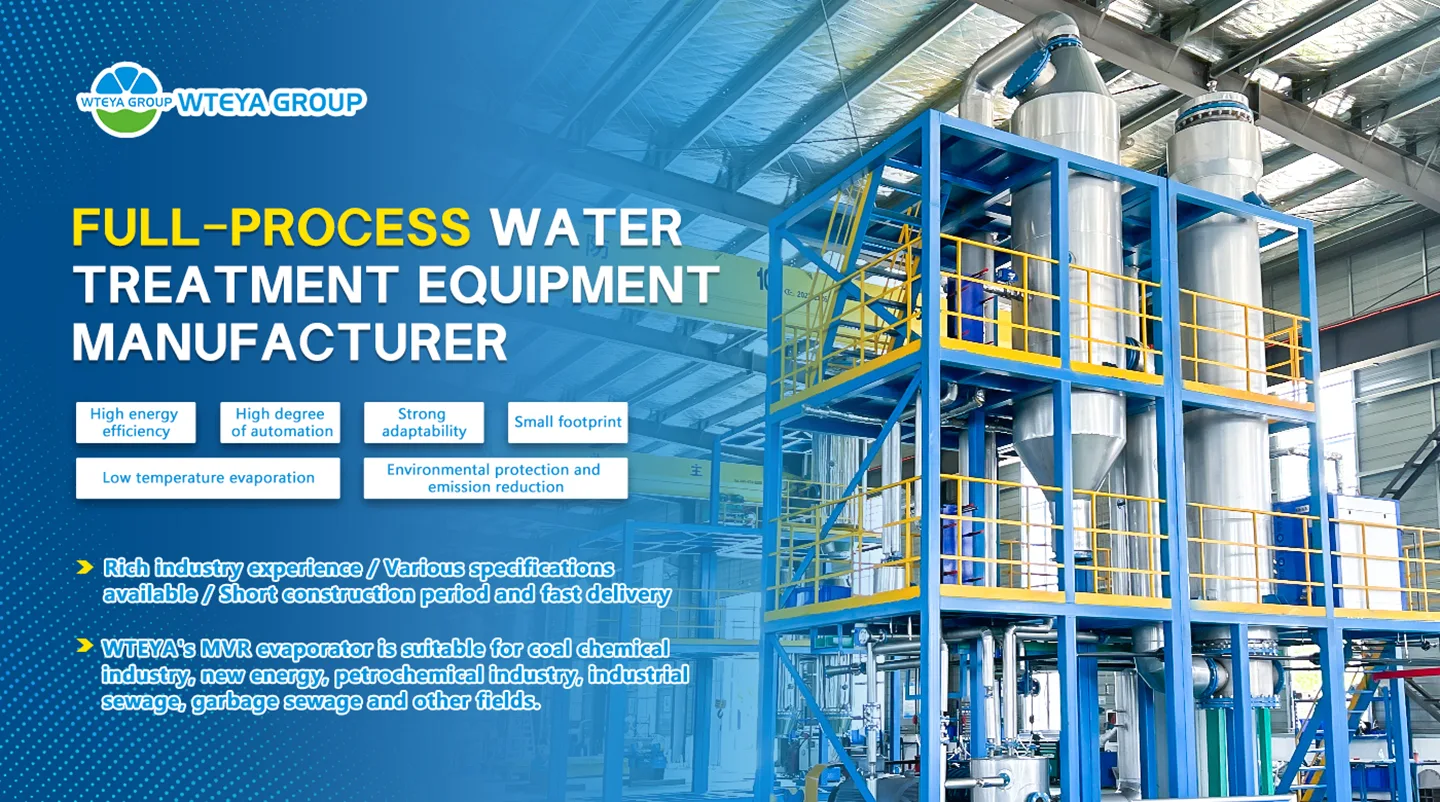
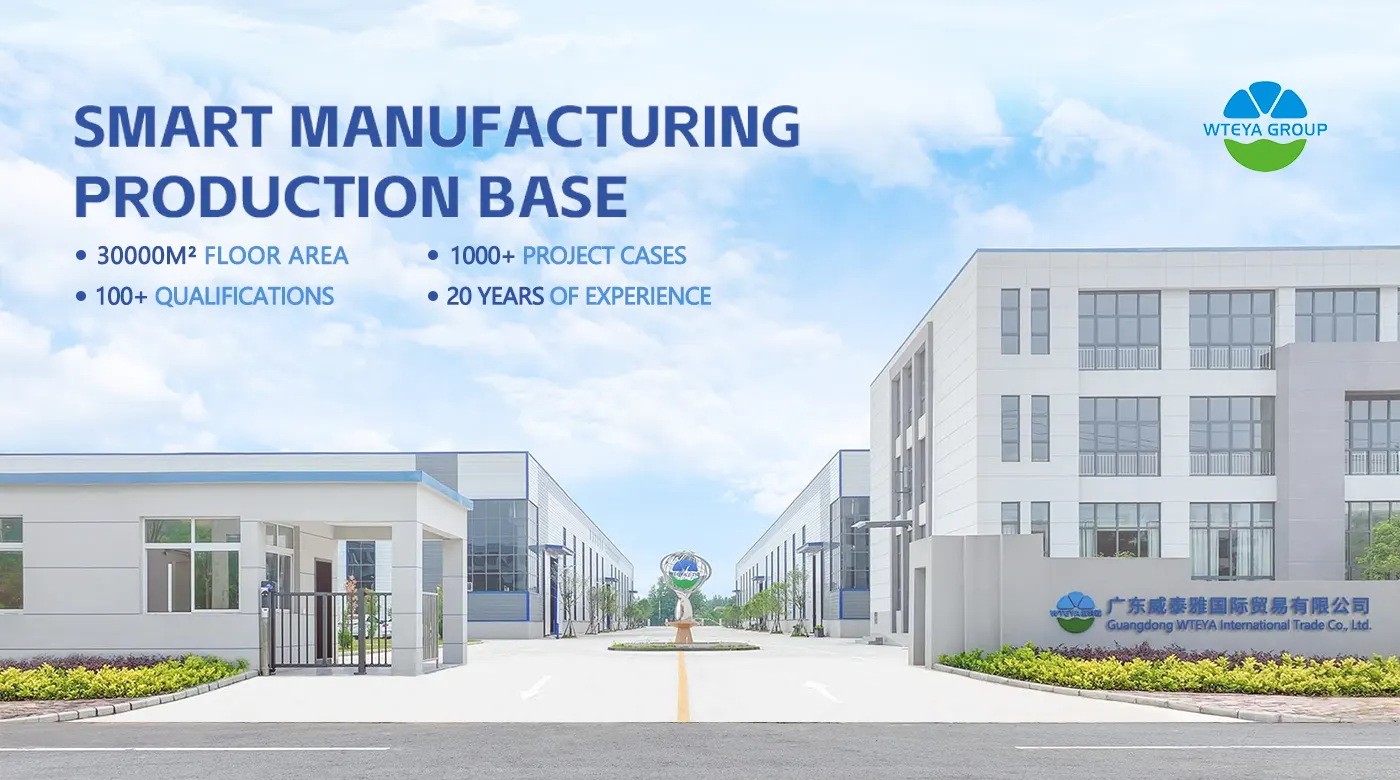
WTEYA has nearly 20 years of experience in evaporation and crystallization equipment, with a 30,000 m² manufacturing base in Jingshan, 42 branches and more than 500 employees. We have delivered systems to over 2,000 customers across 30 provinces and hold nearly 200 patents. Our service team supports troubleshooting remotely through PLC data and on site when mechanical intervention is required.
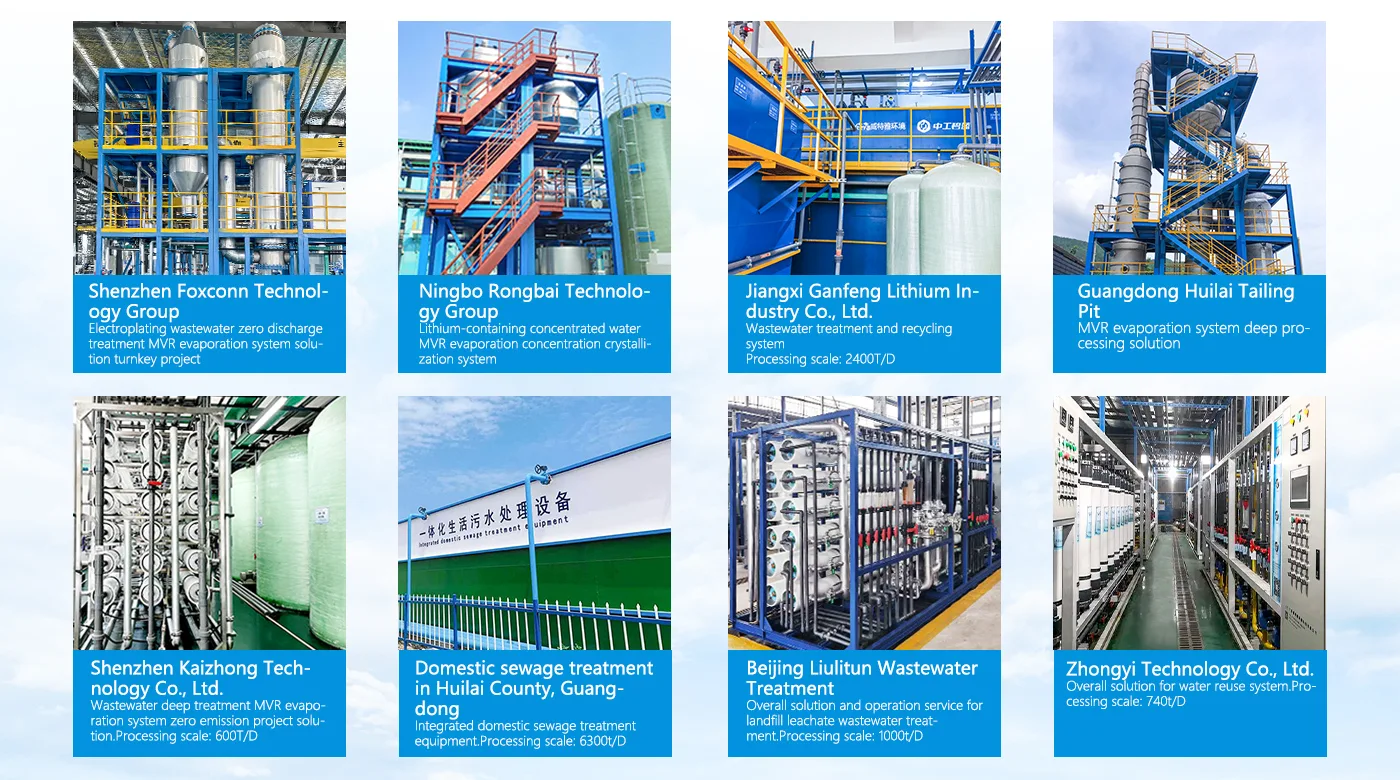
Every system is engineered around the actual water analysis, whether the requirement is a standard MVR evaporator, a forced circulation crystallizer, or a complete zero liquid discharge train. Customized designs and full OEM & ODM services are available for projects with unusual chemistry, site constraints or discharge limits.
Frequently Asked Questions
A: MVR (Mechanical Vapor Recompression) evaporator is an energy-efficient evaporation technology that reduces energy consumption by 30-50% compared to traditional evaporation.
Q: How much energy can MVR save?
A: MVR evaporators typically reduce energy consumption by 30-50% compared to traditional multi-effect evaporators, using electricity instead of steam.
Q: What is the difference between MVR and multi-effect evaporator?
A: MVR uses mechanical vapor recompression for energy efficiency, while multi-effect evaporators use multiple evaporation stages. MVR has lower operating costs.
Get Your Free Consultation Today
Looking for a customized solution for MVR evaporation? Our team of experts is ready to help you design the most cost-effective and energy-efficient system for your specific needs.
Contact us today to discuss your project requirements and get a personalized quote.
📱 WhatsApp: +86-1800 2840 855
✉ Email: info@vteya.com
🌐 Website: www.vteya.com
Front page of Cross
Next go-to page
Related information
MVR Evaporator Troubleshooting: Common Problems and Fixes
MVR Evaporator Troubleshooting: Common Problems and Fixes MVR evaporators are mechanically simple compared with steam-driven evaporator trains, but they are sensitive to small changes in vacuum, scaling and compressor stability.
Crystallization for Battery Material Wastewater Recovery
Crystallization for Battery Material Wastewater Recovery Battery manufacturing is a wet chemistry business. Cathode active material plants producing lithium iron phosphate or nickel-cobalt-manganese chemistries, and hydrometallurgical recycling lines recovering metals from spent cells, all consume...
WTEYA 4021 Desalination Systems Reach Four Global Markets
WTEYA 4021 seawater desalination systems reach four global markets in one batch, with shipments to the United States, Greece, Colombia and Peru covering the Americas and Europe.
How Automated Is an MVR Evaporator? PLC Control
How Automated Is an MVR Evaporator? PLC Control An MVR evaporator is the most automated category of evaporation equipment in service today.
Tubular Heat Exchanger vs Plate: Which for Your Evaporator?
Tubular Heat Exchanger vs Plate: Which for Your Evaporator? In almost every MVR evaporator and forced circulation evaporator, the heat exchanger is where the plant economics are decided.
Rare Earth Wastewater Treatment with MVR Technology
Rare Earth Wastewater Treatment with MVR Technology The separation and refining of rare earth elements is one of the most water-intensive stages in the metals chain.
Guangdong WTEYA Environmental Technology Co., Ltd
Contact us
WhatsApp: +86 1800 2840 855
Tel: +86-0769-28636053
+86-0769-28636126
Email: info@wteya.com
Add: Floor 14, F4 building, TianAn digital town,
Nancheng District, Dongguan,Guangdong, China