


Hazardous Wastewater Evaporation: MVR Design and Compliance
Release Time:
2026-11-02 09:03

Hazardous Wastewater Evaporation: MVR Design and Compliance
Hazardous wastewater is the most demanding feed a thermal system will ever see. It arrives with unknown composition, extreme pH, solvents that flash at low temperature, and heavy metals that must not leave the site in a liquid stream. Mechanical vapor recompression (MVR) has become the default volume-reduction step in hazardous waste facilities because it recovers the water fraction as clean distillate while concentrating everything else into a small, transportable or disposable residue.
Getting it right is a design problem, not an equipment purchase. The evaporator must survive chemistry that attacks standard stainless steel, keep the compressor stable when boiling point elevation shifts, and produce a residue that passes leaching tests. This guide covers the stream categories, the pretreatment that determines success, materials, operating parameters, and the compliance documentation that regulators now expect.

⚙️ What Makes a Waste Stream Hazardous
Regulation defines hazardous waste by listed category or by characteristic: ignitability, corrosivity, reactivity, and toxicity. In practice, the streams that reach an evaporator fall into a small number of families, and each one stresses the system differently.
- Spent acids and caustic — pH below 2 or above 12, high dissolved solids, aggressive to 304 and even 316L stainless steel.
- Oily and emulsified wastewater — machining coolant, tank cleaning, bilge water; oil films foul heat transfer surfaces and cause foaming.
- Solvent-bearing streams — methanol, acetone, toluene, dichloromethane; flammable and often partially miscible with water.
- Heavy-metal rinse water and plating baths — chromium, nickel, copper, zinc at hundreds to thousands of mg/L, usually acidic.
- Landfill leachate concentrate — the reverse osmosis reject from leachate treatment, with COD in the tens of thousands and high ammonia nitrogen.
- Dye and intermediate process liquor — intense colour, high sulphate, refractory organics that resist biological treatment.
Typical ranges for these feeds are COD of 10,000 to 200,000 mg/L, total dissolved solids of 30,000 to 200,000 mg/L, and suspended solids that can exceed 5,000 mg/L before pretreatment. No single evaporator configuration handles all of them, which is why a feed characterisation report comes before any quotation.
🔬 Where MVR Fits in a Hazardous Waste Facility
The economics of hazardous waste turn on volume. Every cubic metre you do not ship out is a cubic metre you do not pay to transport, incinerate, or landfill. MVR reduces liquid volume by 90 to 95 percent, leaving a concentrate that is typically 20 to 30 percent of the original mass and a distillate clean enough for reuse or discharge to a biological plant.
The typical arrangement is: equalisation and homogenisation, chemical pretreatment, MVR evaporation to concentrate, crystallization where the salt load justifies it, and finally solid-liquid separation for the residue. MVR sits in the middle because it is the step that removes water at the lowest energy cost — a well-designed unit consumes 25 to 50 kWh per tonne of water evaporated, compared with 0.3 to 0.4 tonnes of steam per tonne of water for a three-effect system.
Two boundaries matter. First, MVR is a water-removal machine, not a destruction technology; organics and metals are concentrated, not eliminated, so the residue still needs a disposal route. Second, the compressor has a narrow stable operating window, so the feed must be homogenised — a batch of spent solvent arriving mid-shift can destabilise the whole train.
🧪 Pretreatment: The Part That Decides Success
Most hazardous wastewater evaporator failures trace back to pretreatment, not to the evaporator itself. Four steps do most of the work.
Neutralisation and precipitation. Adjust pH to the metal hydroxide minimum — usually 8.5 to 10 for mixed metals — and remove the precipitate before evaporation. Removing metals upstream keeps them out of the salt cake and simplifies residue classification.
Oil removal. Free oil is skimmed; emulsified oil needs demulsification, typically by acidification to pH 2 to 3 followed by gravity separation, or by dissolved air flotation. Residual oil should be below 50 to 100 mg/L before the evaporator, otherwise the heat exchanger fouls within weeks.
Volatile organic control. Solvents with a boiling point below about 100°C will partition into the vapour and contaminate the distillate. Either strip them upstream in a packed column, or design the evaporator with a partial condenser and a VOC destruction path.
Softening or scale inhibition. Calcium and magnesium sulphate scale is the classic MVR problem. Either soften the feed, seed the brine with gypsum crystals, or accept a periodic chemical cleaning cycle of 30 to 60 days.
🏭 MVR Configuration and Materials for Aggressive Streams
For hazardous service the falling-film or forced-circulation configuration is preferred over rising-film, because higher circulation velocity keeps crystals in suspension and reduces fouling on the tube wall. Circulation velocities of 1.5 to 2.5 m/s in the tubes are typical, with evaporation temperatures held at 70 to 90°C under vacuum to limit corrosion rates and protect heat-sensitive organics.
Material selection follows the chloride and fluoride load more than anything else. Below 500 mg/L chloride, 316L is normally adequate. Between 500 and 50,000 mg/L, duplex 2205 or 2507 is the practical choice. Above 50,000 mg/L chloride, or with fluoride present, titanium Grade 2 becomes necessary. Where chlorinated solvents or strong acids appear, Hastelloy C-276 on the wetted parts and PTFE gaskets are the safe specification. These choices add capital cost, but a tube bundle replacement after eighteen months costs more.
Two mechanical details deserve attention in hazardous service. The compressor should be a centrifugal or positive-displacement unit with a turndown of at least 50 percent, so the system can follow a feed that varies through the shift. And the vapour line should be trace-heated and fully welded — solvent-laden vapour leaking from a flanged joint is both a safety and a permit issue.
📊 Key Operating Parameters
These are the numbers that should appear in any hazardous waste MVR design basis. They are engineering ranges, and the actual values are set by feed characterisation and pilot testing.
- Specific energy: 25 to 50 kWh per tonne of evaporated water, rising as boiling point elevation increases.
- Volume reduction: 90 to 95 percent, with concentrate at 20 to 30 percent solids.
- Distillate quality: COD typically 100 to 1,000 mg/L after evaporation, needing polishing before discharge.
- Salt cake moisture: 3 to 5 percent after centrifugation or filtration in crystallizing service.
- Boiling point elevation: 3 to 12°C for concentrated brines, which directly raises compressor duty.
- Cleaning interval: 30 to 60 days with citric acid at pH 2 to 3, alternating with caustic at pH 10 to 11.
- Turnaround and lead time: 30 to 60 days for fabrication of a standard skid, longer for alloy-heavy units.
Boiling point elevation is the parameter most often underestimated at the proposal stage. A brine that boils 10°C higher than pure water forces the compressor to work across a larger temperature lift, and the specific energy consumption can rise by a third. Pilot testing with the real feed is the only reliable way to fix this number.
🛡️ Compliance: Emissions, Residues and Documentation
Hazardous waste treatment is regulated on three fronts, and the evaporator touches all of them.
Air emissions. Non-condensable gases leaving the system carry residual VOCs. The standard arrangement is a condensate stripper plus activated carbon, or routing the vent to an existing thermal oxidiser or scrubber. Emission limits for the site apply to the evaporator vent as a point source, so the design must state the expected VOC load.
Residue classification. The concentrate or salt cake must be tested for leaching toxicity before a disposal route is confirmed. Evaporation changes the matrix — metals that were dissolved become part of a salt crystal — so the residue should be tested as produced, not inferred from the feed analysis.
Record keeping. Manifests, chain-of-custody documents, operating logs and cleaning records form the evidence trail. A system with automatic logging of temperature, pressure, feed rate and distillate quality makes audits straightforward; a system operated on paper logs does not.
Designers should also plan for upset conditions explicitly. A power failure, a compressor trip, or a feed interruption will leave hot concentrated brine in the vessel. The system needs a controlled cool-down and a flush sequence, and the operating procedure needs to be written before commissioning rather than after the first incident.
🏆 Why Choose WTEYA
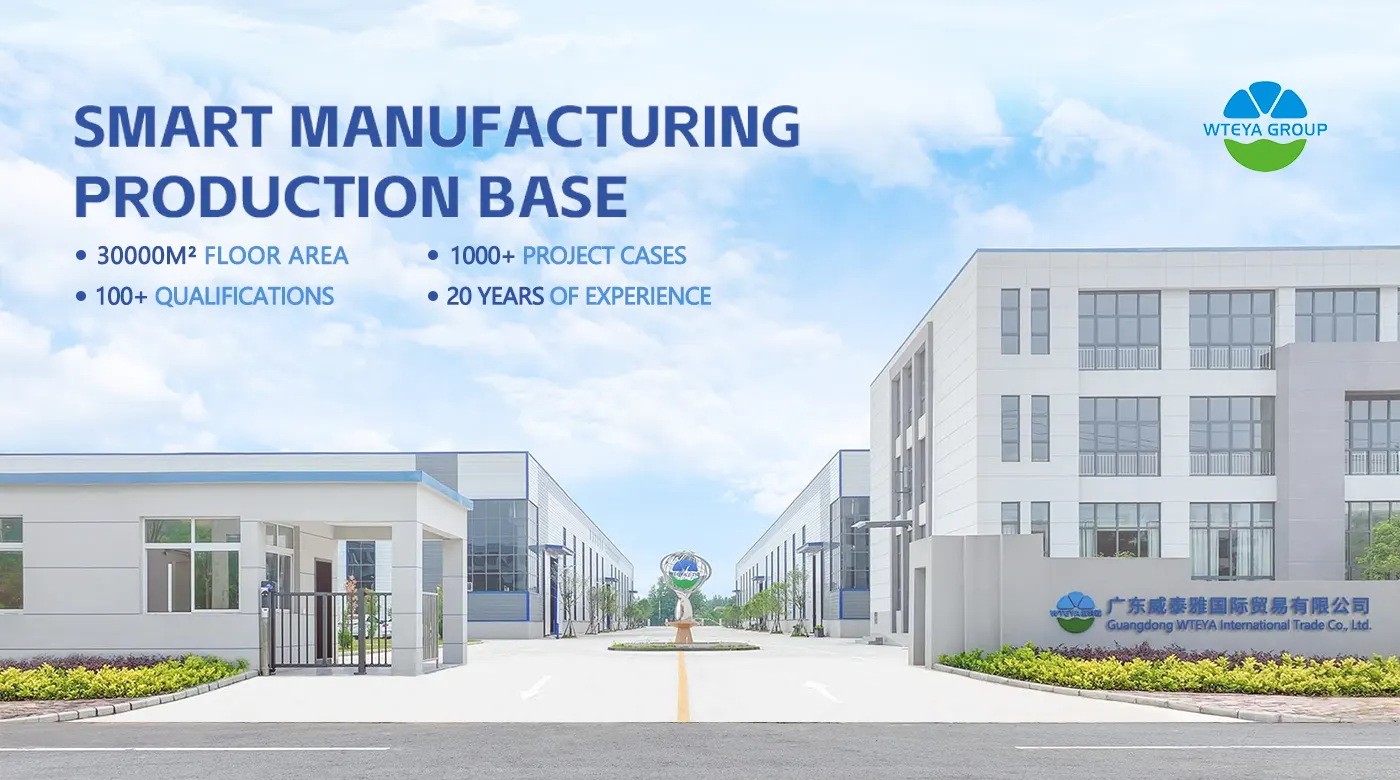
WTEYA has spent nearly twenty years building evaporation and crystallization systems for exactly these difficult streams, with more than 2,000 customers served across 30 provinces and a fabrication base of 30,000 square metres in Jingshan. The company designs around a feed analysis rather than a catalogue: pretreatment train, evaporator configuration, alloy selection, and residue handling are specified together so that the plant meets its permit rather than just its capacity number.
Because the equipment is built in-house, custom configurations — forced circulation, crystallizing MVR, multi-effect hybrid, and skid-mounted containerised units — are standard engineering work rather than exceptions. WTEYA also provides full OEM and ODM support for partners who need the system under their own brand, including documentation packages and spare parts planning.
Frequently Asked Questions
A: MVR (Mechanical Vapor Recompression) evaporator is an energy-efficient evaporation technology that reduces energy consumption by 30-50% compared to traditional evaporation.
Q: How much energy can MVR save?
A: MVR evaporators typically reduce energy consumption by 30-50% compared to traditional multi-effect evaporators, using electricity instead of steam.
Q: What is the difference between MVR and multi-effect evaporator?
A: MVR uses mechanical vapor recompression for energy efficiency, while multi-effect evaporators use multiple evaporation stages. MVR has lower operating costs.
Start Saving on Operating Costs
Every day of delay costs money. Our rapid-response team can deliver a preliminary solution design within 48 hours.
Send us your wastewater data and let's start building your custom system today.
📱 WhatsApp: +86-1800 2840 855
✉ Email: info@vteya.com
🌐 Website: www.vteya.com
Front page of Cross
Next go-to page
Related information
Hazardous Wastewater Evaporation: MVR Design and Compliance
Hazardous Wastewater Evaporation: MVR Design and Compliance Hazardous wastewater is the most demanding feed a thermal system will ever see. It arrives with unknown composition, extreme pH, solvents that flash at low temperature, and heavy metals that must not leave the site in a liquid stream.
LFP Cathode Wastewater: MVR Zero-Discharge Design
LFP cathode production wastewater carries 500-5,000 mg/L total phosphorus, 1,000-10,000 mg/L ammonia nitrogen and 10,000-50,000 mg/L sulfate.
Can an MVR Evaporator Fit in an Existing Building?
Can an MVR Evaporator Fit in an Existing Building? Retrofitting an MVR evaporator into a building that already exists is one of the most common requests we receive, and the answer is not a simple yes or no.
MVR Evaporator for Salt Lake Lithium Extraction
MVR Evaporator for Salt Lake Lithium Extraction Salt lake brine is one of the lowest-cost lithium sources in the world, but it is also one of the most awkward fluids to concentrate.
Cutting Fluid Wastewater: MVR Evaporation and Zero Discharge
⚙️ Why Spent Emulsion Resists Conventional Treatment Every machining line that uses water-miscible coolant eventually produces a waste stream that cannot be sewered, cannot be burned as-is, and cannot be treated biologically without a fight.
MVR Evaporator Condensate Reuse: Quality and Options
MVR Evaporator Condensate Reuse: Quality and Options The condensate produced by an MVR evaporator is not a waste stream to be disposed of — it is distilled water of consistent quality.
Guangdong WTEYA Environmental Technology Co., Ltd
Contact us
WhatsApp: +86 1800 2840 855
Tel: +86-0769-28636053
+86-0769-28636126
Email: info@wteya.com
Add: Floor 14, F4 building, TianAn digital town,
Nancheng District, Dongguan,Guangdong, China