


LFP Cathode Wastewater: MVR Zero-Discharge Design
Release Time:
2026-10-31 09:03

LFP Cathode Wastewater: MVR Zero-Discharge Design
Lithium iron phosphate has become the dominant cathode chemistry for stationary storage and for entry-level electric vehicles, and every tonne of cathode material produced generates several tonnes of wastewater. That wastewater is not ordinary rinse water. It carries phosphate, ammonia nitrogen, sulfate and fine particulate solids that make conventional biological treatment slow and unreliable. For plants that must meet zero liquid discharge, the practical route is staged pre-treatment followed by mechanical vapor recompression evaporation and crystallization.
Why LFP Wastewater Is Different
Most industrial brines are dominated by a single salt. LFP wastewater is a mixture of nutrients and salts: total phosphorus is typically 500–5,000 mg/L, ammonia nitrogen 1,000–10,000 mg/L, sulfate 10,000–50,000 mg/L and TDS 20,000–80,000 mg/L, with COD from residual organics and binding agents. The nutrient load is what complicates the design, because phosphate scales heat transfer surfaces and free ammonia strips into the vapor side of any open evaporator.
Treating this stream biologically means long residence times, large tanks and a sludge that still requires disposal. Evaporation avoids the biology altogether, but only if scaling and ammonia partitioning are handled deliberately rather than left to the cleaning schedule.

Four Streams That Must Be Separated
- Synthesis mother liquor — highest phosphorus and ammonia, lowest suspended solids, and the stream that must reach crystallization.
- Wash water from filtration and drying — high volume, low concentration, and the best candidate for reuse after treatment.
- Evaporator condensate — usually the cleanest stream; its quality decides whether it returns to the process.
- Cooling tower blowdown and cleaning water — variable quality, often high in suspended solids.
Mixing all four into one equalization tank is the most common design error. Separating mother liquor from wash water can reduce the evaporator duty by 30–50%, because only the concentrated stream needs to be driven all the way to salt.
Pre-Treatment: Ammonia and Phosphorus First
Ammonia is removed before evaporation. Air or steam stripping at pH 10.5–11.5 with lime or caustic dosing typically removes 90–95% of ammonia nitrogen, and the stripped gas is absorbed in sulfuric acid to produce an ammonium sulfate solution that can be sold or returned to the process.
Phosphorus is removed by chemical precipitation. Lime raises pH and precipitates calcium phosphate, while magnesium dosing forms struvite at a Mg:P molar ratio of 1.1–1.3 and pH 8.5–9.5. Either route can bring total phosphorus below 50 mg/L, which is normally sufficient to protect the evaporator from calcium phosphate scale.
Solids separation follows: coagulation, sedimentation or dissolved air flotation, then multimedia filtration or ultrafiltration. Feed turbidity below 5 NTU protects both the heat transfer surfaces and the compressor, and it keeps fines out of the crystallization stage.
MVR Evaporation and Crystallization Design
The pre-treated stream is concentrated in a falling-film MVR evaporator to 20–25% total solids, then finished in a forced-circulation crystallizer where supersaturation is controlled by circulation rate rather than by temperature shock. Specific power consumption for MVR on this duty usually falls between 25 and 45 kWh per tonne of water evaporated, compared with 0.3–0.4 tonnes of steam per tonne of water for a four-effect system.
Because sodium sulfate solubility falls as temperature rises, the crystallizer is normally operated hot with a dedicated salt separator. The recovered sulfate is dewatered to a cake of 3–5% moisture. Ammonium sulfate recovered upstream and the mixed salt from crystallization are both saleable or disposable as solids, which is what makes the zero discharge claim auditable rather than nominal.
Condensate is the third product. With proper demisting it typically shows ammonia nitrogen below 10 mg/L, total phosphorus below 1 mg/L and conductivity under 50 µS/cm, which is clean enough for washing. Overall water recovery of 90–95% is realistic when wash water is segregated and reused.
Materials, Scaling and Wash Cycles
Wetted parts in contact with the concentrated liquor are usually 2205 duplex stainless steel, with titanium specified where chloride exceeds 20,000 mg/L. Compressor impellers and vapor-side components are 316L or duplex depending on the ammonia and chloride load.
Calcium phosphate and magnesium ammonium phosphate are the two scales that matter, and both are controlled by pre-treatment rather than by mechanical cleaning. A caustic and chelant wash every 15–30 days keeps heat transfer coefficients stable, and continuous fines removal prevents seed material from being carried into the condensate.
Key Numbers at a Glance
- Total phosphorus, raw feed: 500–5,000 mg/L
- Ammonia nitrogen, raw feed: 1,000–10,000 mg/L
- Sulfate: 10,000–50,000 mg/L
- Stripping pH: 10.5–11.5, with 90–95% ammonia removal
- Struvite dosing: Mg:P 1.1–1.3 at pH 8.5–9.5
- MVR specific power: 25–45 kWh per tonne evaporated
- Concentration before crystallization: 20–25% solids
- Salt cake moisture: 3–5%
- Overall water recovery: 90–95%
- Typical equipment lead time: 30–60 days
Why Choose WTEYA
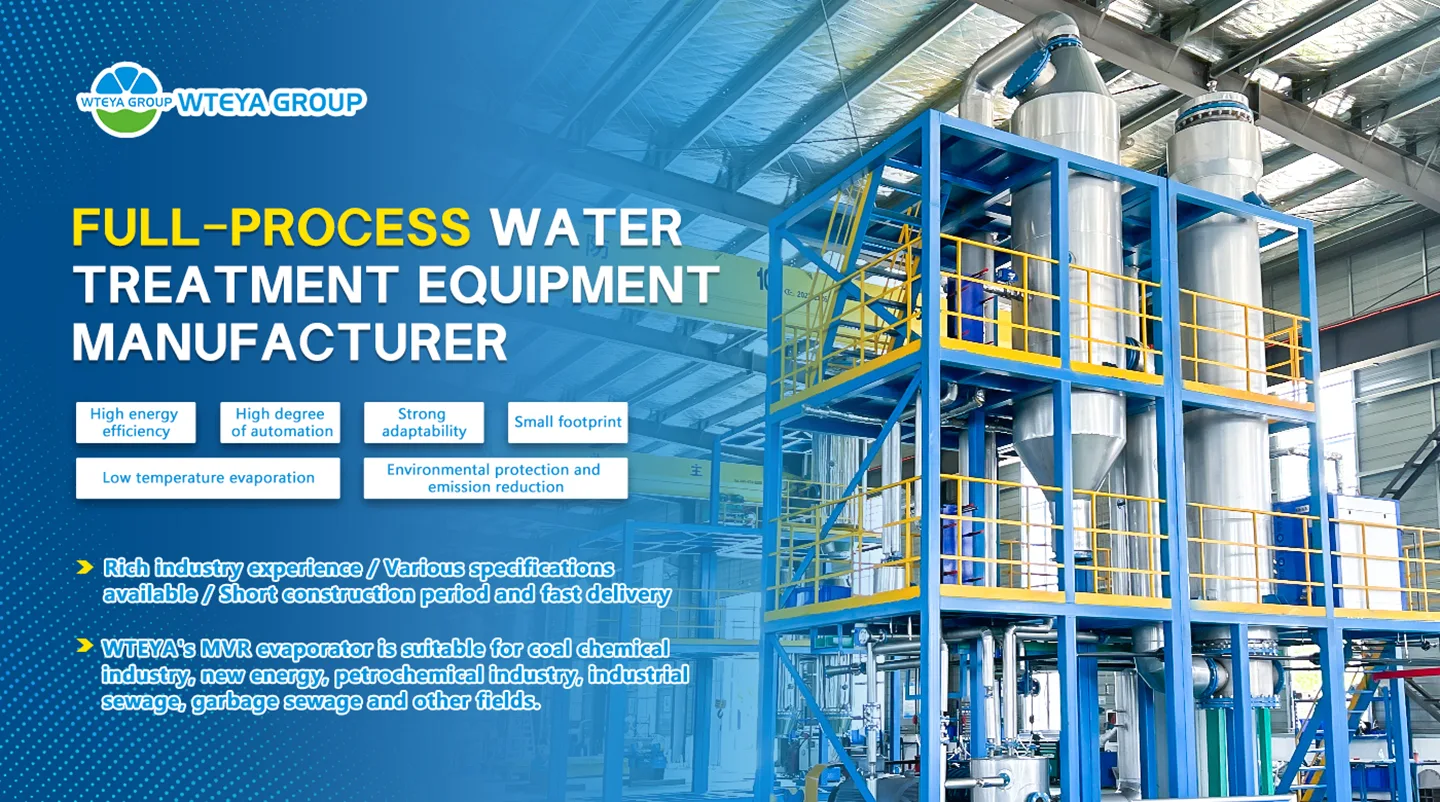
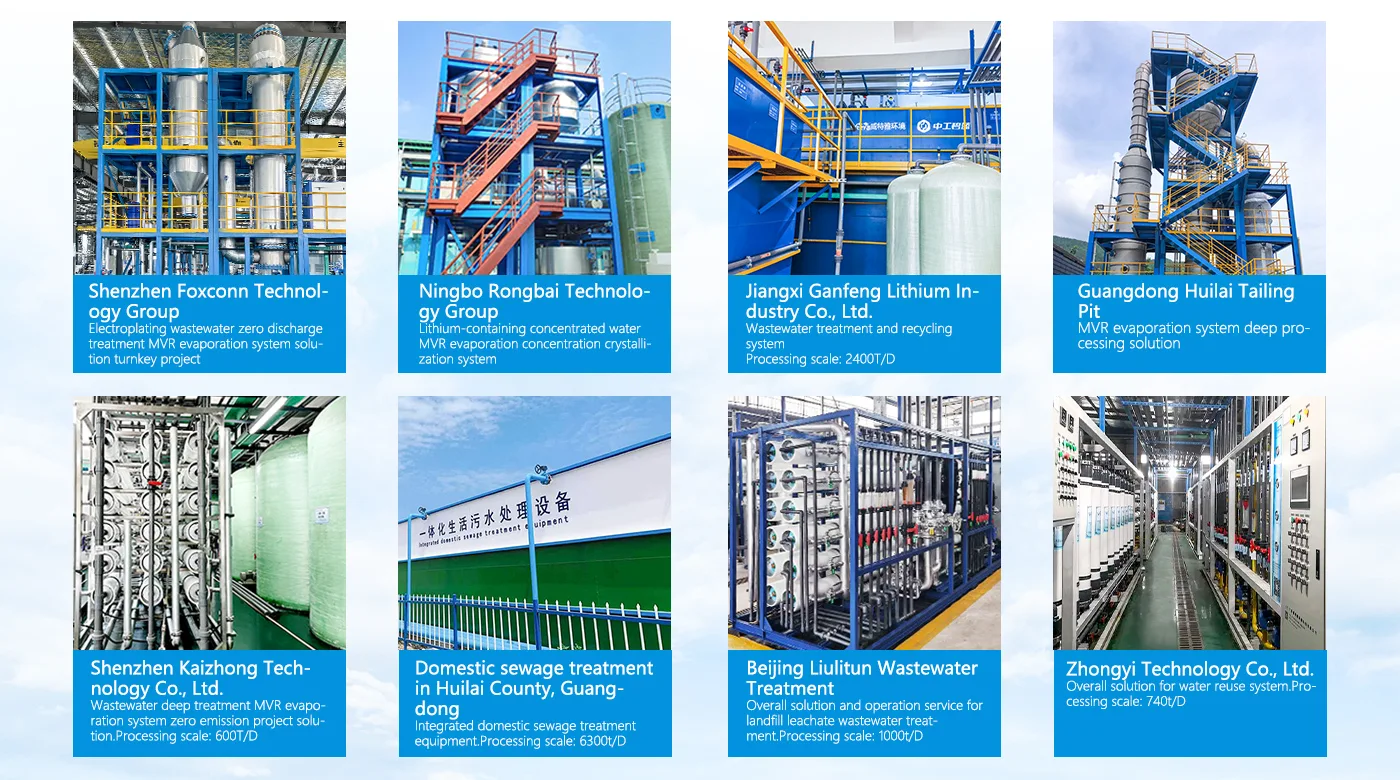
WTEYA has built evaporation and crystallization systems for lithium battery, salt lake lithium and new energy material plants since 2009, with nearly 200 patents and more than 2,000 customers across China and overseas markets. Every LFP project starts with a water analysis and a pilot trial, so the pre-treatment, evaporator and crystallizer are sized on measured data instead of assumptions.
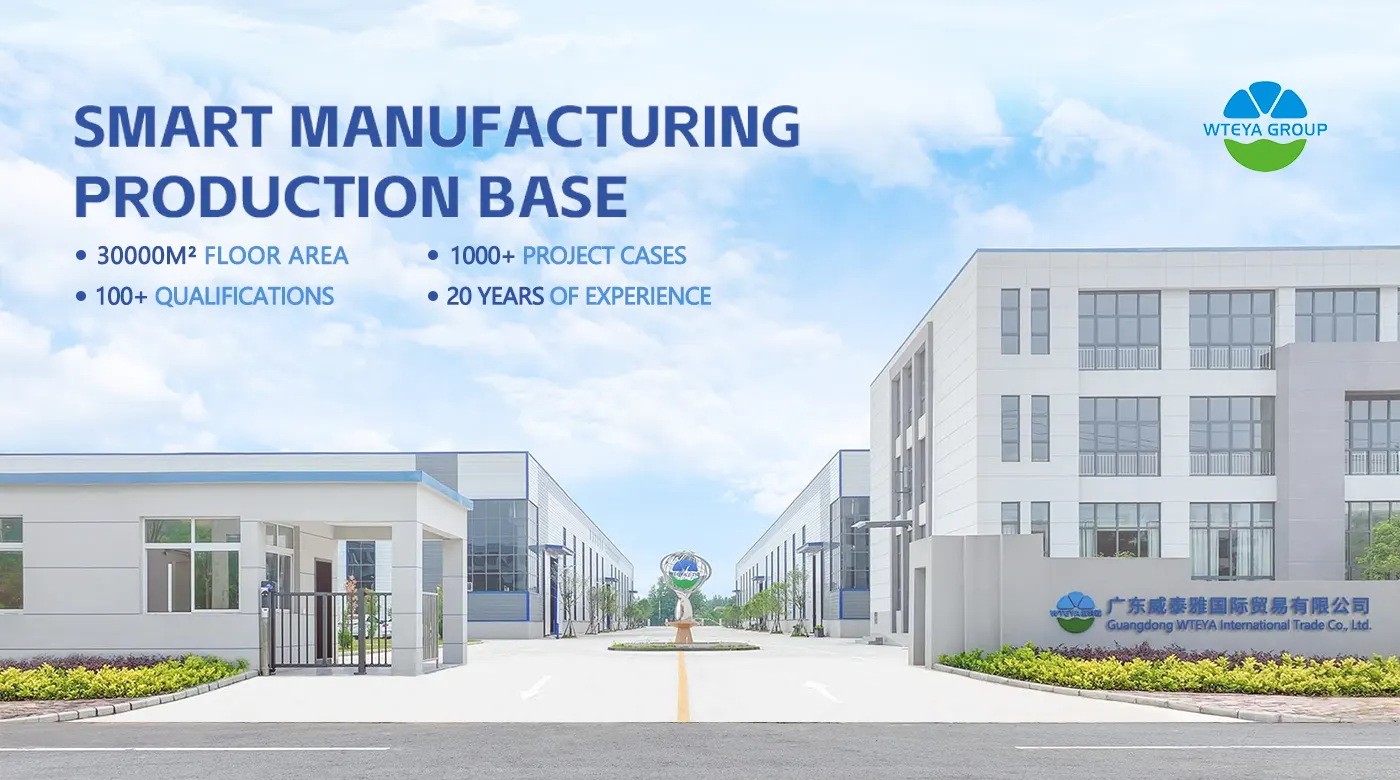
Systems are manufactured in the company's 30,000 m² Jingshan base, factory-tested before shipment, and supported by 42 branch offices and service teams. Custom configurations, skid-mounted designs and full OEM & ODM cooperation are available for project developers and integrators.
Frequently Asked Questions
A: MVR (Mechanical Vapor Recompression) evaporator is an energy-efficient evaporation technology that reduces energy consumption by 30-50% compared to traditional evaporation.
Q: How much energy can MVR save?
A: MVR evaporators typically reduce energy consumption by 30-50% compared to traditional multi-effect evaporators, using electricity instead of steam.
Q: What is the difference between MVR and multi-effect evaporator?
A: MVR uses mechanical vapor recompression for energy efficiency, while multi-effect evaporators use multiple evaporation stages. MVR has lower operating costs.
Get Your Free Consultation Today
Every day of delay costs money. Our rapid-response team can deliver a preliminary solution design within 48 hours.
Send us your wastewater data and let's start building your custom system today.
📱 WhatsApp: +86-1800 2840 855
✉ Email: info@vteya.com
🌐 Website: www.vteya.com
Front page of Cross
Next go-to page
Related information
LFP Cathode Wastewater: MVR Zero-Discharge Design
LFP cathode production wastewater carries 500-5,000 mg/L total phosphorus, 1,000-10,000 mg/L ammonia nitrogen and 10,000-50,000 mg/L sulfate.
Can an MVR Evaporator Fit in an Existing Building?
Can an MVR Evaporator Fit in an Existing Building? Retrofitting an MVR evaporator into a building that already exists is one of the most common requests we receive, and the answer is not a simple yes or no.
MVR Evaporator for Salt Lake Lithium Extraction
MVR Evaporator for Salt Lake Lithium Extraction Salt lake brine is one of the lowest-cost lithium sources in the world, but it is also one of the most awkward fluids to concentrate.
Cutting Fluid Wastewater: MVR Evaporation and Zero Discharge
⚙️ Why Spent Emulsion Resists Conventional Treatment Every machining line that uses water-miscible coolant eventually produces a waste stream that cannot be sewered, cannot be burned as-is, and cannot be treated biologically without a fight.
MVR Evaporator Condensate Reuse: Quality and Options
MVR Evaporator Condensate Reuse: Quality and Options The condensate produced by an MVR evaporator is not a waste stream to be disposed of — it is distilled water of consistent quality.
MVR Evaporator Troubleshooting: Common Problems and Fixes
MVR Evaporator Troubleshooting: Common Problems and Fixes MVR evaporators are mechanically simple compared with steam-driven evaporator trains, but they are sensitive to small changes in vacuum, scaling and compressor stability.
Guangdong WTEYA Environmental Technology Co., Ltd
Contact us
WhatsApp: +86 1800 2840 855
Tel: +86-0769-28636053
+86-0769-28636126
Email: info@wteya.com
Add: Floor 14, F4 building, TianAn digital town,
Nancheng District, Dongguan,Guangdong, China