


Common Mistakes in ZLD System Maintenance
Release Time:
2026-06-07 10:07

Common Mistakes in ZLD System Maintenance
Zero Liquid Discharge (ZLD) systems are essential for industries aiming to comply with environmental regulations while optimizing water reuse. However, improper maintenance can lead to inefficiencies, increased operational costs, and system failures. Understanding common mistakes in ZLD system maintenance is crucial for ensuring long-term performance and sustainability. WTEYA, with nearly 20 years of experience in industrial wastewater treatment, has seen firsthand how these errors can impact operations. By avoiding these pitfalls, businesses can maximize the benefits of their ZLD systems.
Ignoring Regular Equipment Inspections
One of the most common mistakes in ZLD system maintenance is neglecting regular equipment inspections. Components such as MVR evaporators, pumps, and heat exchangers require consistent monitoring to ensure optimal function. Without routine checks, small issues like leaks or clogging can escalate into major problems that disrupt the entire process. WTEYA emphasizes the importance of scheduled maintenance to identify and address potential issues before they cause downtime or costly repairs.

Overlooking Water Quality Monitoring
Industrial wastewater treatment is complex, and the quality of influent water can vary significantly. Many operators fail to monitor water quality regularly, leading to unpredictable system behavior. For example, high concentrations of suspended solids or corrosive substances can damage critical components like the MVR evaporator. WTEYA recommends implementing real-time monitoring systems to track key parameters such as pH, conductivity, and total dissolved solids. This proactive approach helps maintain the efficiency and longevity of ZLD systems.
Using Incompatible Chemicals for Treatment
Chemical dosing is a vital part of ZLD system maintenance, but using the wrong chemicals can be detrimental. Incompatible chemicals may cause scaling, corrosion, or even chemical reactions that compromise system integrity. It's essential to follow manufacturer guidelines and consult with experts in industrial wastewater treatment. WTEYA has worked with industry leaders to develop customized chemical programs that align with specific process requirements, ensuring both compliance and operational efficiency.
Underestimating the Importance of Staff Training
Even the most advanced ZLD systems can fail if personnel are not properly trained. Lack of knowledge about system operations, safety protocols, and troubleshooting procedures can lead to incorrect maintenance practices. WTEYA advocates for ongoing training programs to ensure that staff understand the intricacies of ZLD technology, including the role of MVR evaporators in achieving zero liquid discharge. Well-trained teams are better equipped to handle day-to-day operations and respond effectively to unexpected challenges.
Failing to Plan for System Upgrades and Repairs
As industrial processes evolve, so do the demands on ZLD systems. Many companies make the mistake of not planning for future upgrades or repairs, resulting in outdated systems that struggle to meet current standards. Proactive planning allows for seamless integration of new technologies, such as more efficient MVR evaporators or advanced filtration units. WTEYA’s extensive experience in industrial wastewater treatment highlights the value of long-term system planning to avoid disruptions and ensure continued compliance with environmental regulations.
Frequently Asked Questions
Q: What is Zero Liquid Discharge (ZLD)?
A: Zero Liquid Discharge (ZLD) is an advanced wastewater treatment process that eliminates all liquid waste from a facility, recovering up to 95-99% of water for reuse.
Q: How much does a ZLD system cost?
A: The cost of a ZLD system depends on capacity, industry, and specific requirements. Contact WTEYA for a customized quote.
Q: Which industries need ZLD systems?
A: Industries such as chemical manufacturing, electroplating, PCB/electronics, battery production, and textiles benefit most from ZLD systems.
Get Your Free Consultation Today
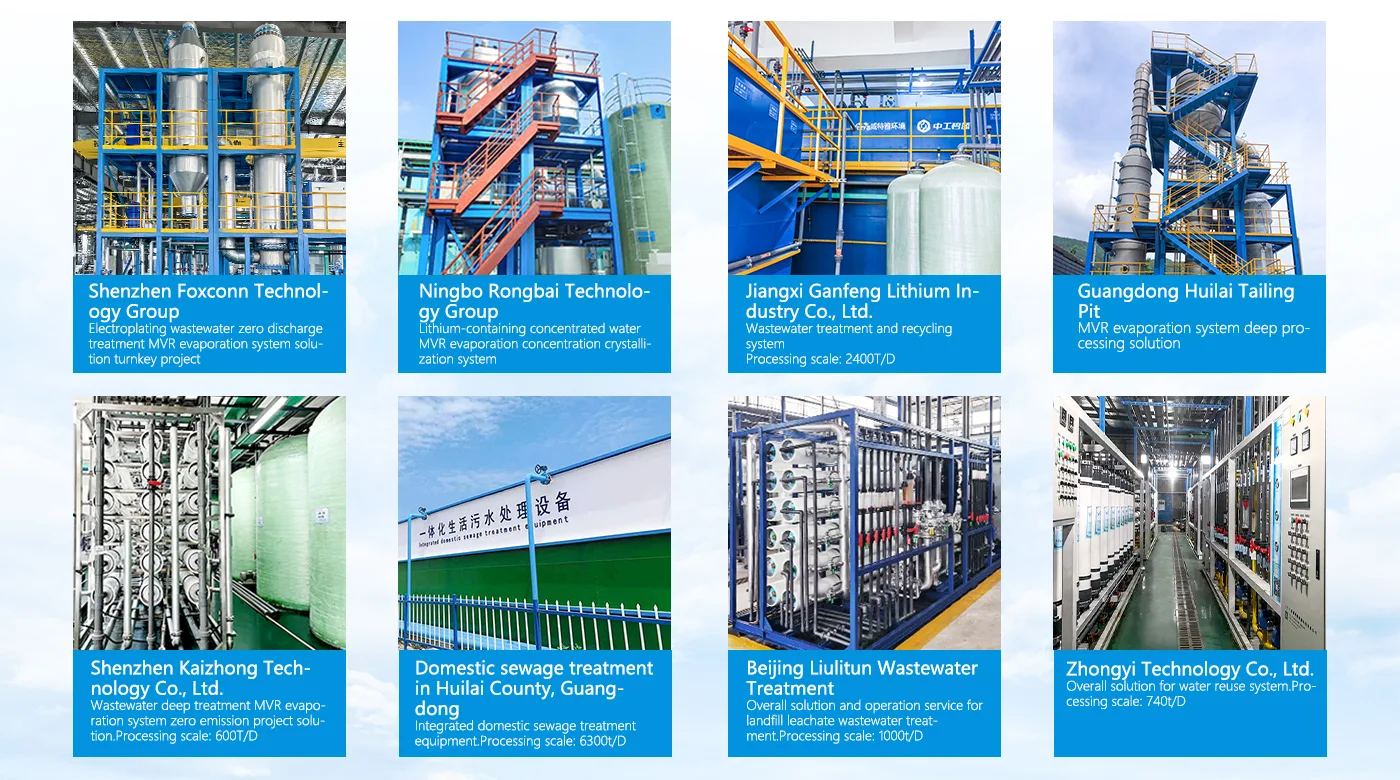
Join industry leaders like Foxconn, BYD, and Huawei who trust WTEYA for their critical wastewater treatment needs.
Get the same expertise working for your zero liquid discharge facility. Contact us now.
📱 WhatsApp: +86-1800 2840 855
✉ Email: info@vteya.com
🌐 Website: www.vteya.com
Front page of Cross
Next go-to page
Related information
MVR Evaporator Condensate Reuse: Quality and Options
MVR Evaporator Condensate Reuse: Quality and Options The condensate produced by an MVR evaporator is not a waste stream to be disposed of — it is distilled water of consistent quality.
MVR Evaporator Troubleshooting: Common Problems and Fixes
MVR Evaporator Troubleshooting: Common Problems and Fixes MVR evaporators are mechanically simple compared with steam-driven evaporator trains, but they are sensitive to small changes in vacuum, scaling and compressor stability.
Crystallization for Battery Material Wastewater Recovery
Crystallization for Battery Material Wastewater Recovery Battery manufacturing is a wet chemistry business. Cathode active material plants producing lithium iron phosphate or nickel-cobalt-manganese chemistries, and hydrometallurgical recycling lines recovering metals from spent cells, all consume...
WTEYA 4021 Desalination Systems Reach Four Global Markets
WTEYA 4021 seawater desalination systems reach four global markets in one batch, with shipments to the United States, Greece, Colombia and Peru covering the Americas and Europe.
How Automated Is an MVR Evaporator? PLC Control
How Automated Is an MVR Evaporator? PLC Control An MVR evaporator is the most automated category of evaporation equipment in service today.
Tubular Heat Exchanger vs Plate: Which for Your Evaporator?
Tubular Heat Exchanger vs Plate: Which for Your Evaporator? In almost every MVR evaporator and forced circulation evaporator, the heat exchanger is where the plant economics are decided.
Guangdong WTEYA Environmental Technology Co., Ltd
Contact us
WhatsApp: +86 1800 2840 855
Tel: +86-0769-28636053
+86-0769-28636126
Email: info@wteya.com
Add: Floor 14, F4 building, TianAn digital town,
Nancheng District, Dongguan,Guangdong, China