


FGD Wastewater Zero Discharge: An MVR-Based Approach
Release Time:
2026-11-14 09:03

FGD Wastewater Zero Discharge: An MVR-Based Approach
Flue gas desulfurization (FGD) wastewater is one of the most aggressive streams a power plant or industrial boiler house has to manage. It is acidic, saturated with gypsum, loaded with chloride and heavy metals, and it arrives continuously, 24 hours a day, for as long as the scrubber runs. Conventional treatment reduces the load but still discharges a saline stream that regulators increasingly refuse to accept. A zero liquid discharge (ZLD) train built around mechanical vapor recompression closes that loop, and this article explains how the three stages fit together and what the numbers look like in practice.
🌊 Why FGD Wastewater Is Difficult to Treat
The limestone-gypsum wet scrubbing process contacts flue gas with an alkaline slurry. Chloride from the coal or the makeup water accumulates in the slurry loop because it is highly soluble and is not removed with the gypsum. Once chloride reaches 10,000 to 30,000 mg/L, the slurry becomes corrosive to the absorber internals and a bleed stream must be drawn off. That bleed is the wastewater problem.
A typical bleed carries total dissolved solids of 30,000 to 60,000 mg/L, mostly chloride and sodium, together with calcium and magnesium at or near gypsum saturation. It also carries mercury, selenium, arsenic and other trace metals stripped from the flue gas, plus suspended solids, ammonia and a residual chemical oxygen demand. Three properties make it hard: the high chloride attacks standard stainless steels, the near-saturated calcium sulfate scales heat transfer surfaces on contact, and the heavy metals must be immobilized before any salt can be recovered.

🧪 Stage 1: Three-Step Pre-Treatment Before Evaporation
Evaporation is only as stable as the pre-treatment in front of it. In a properly designed train, the bleed is first neutralized with lime to a pH of 9.0 to 9.5, which precipitates most of the dissolved metals as hydroxides and converts free sulfate into gypsum solids. A sulfide or organosulfur reagent is then dosed to capture mercury and other metals that do not precipitate cleanly as hydroxides, followed by coagulation and sedimentation to drop the solids out.
The third step is softening: soda ash and a small amount of caustic reduce calcium hardness and magnesium hardness to below 50 mg/L expressed as calcium carbonate. Skipping this step is the most common cause of scaling inside an MVR evaporator, because any hardness left in the feed will deposit on the tubes as the brine concentrates. Sludge from the clarifier is dewatered and sent to a hazardous waste facility, and the clear overflow moves forward to evaporation.
⚙️ Stage 2: Concentration in an MVR Evaporator
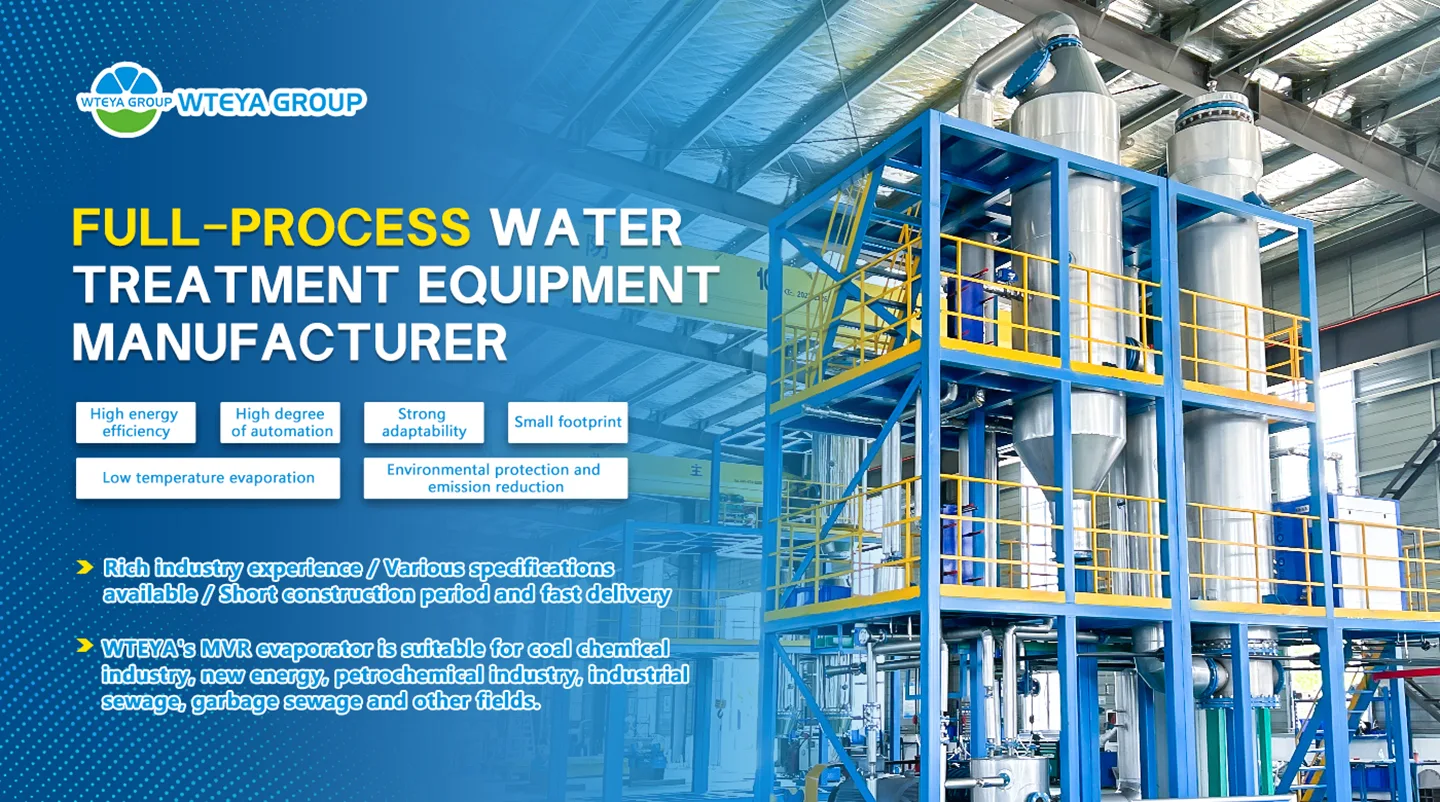
The pretreated stream is concentrated in a mechanical vapor recompression evaporator. Vapor boiled off the brine is compressed to a slightly higher pressure and temperature, then returned to the same heat exchanger as the heating medium. Because the latent heat is recycled rather than supplied by fresh steam, the electrical demand of an MVR evaporator typically falls in the range of 20 to 50 kWh per ton of water evaporated, depending on boiling point elevation and compressor efficiency. Compared with a multi-effect train driven by plant steam, this corresponds to an energy cost reduction of 30% to 60%.
Two design choices matter for this duty. First, a forced circulation evaporator body keeps the brine velocity above 1.5 to 2.5 m/s across the tubes, which suppresses crystallization fouling and allows the unit to run at higher solids concentration. Second, all wetted parts in contact with chloride-bearing brine are specified in duplex stainless steel, 2205, or titanium depending on the chloride level and temperature, so that the corrosion allowance is designed in rather than discovered later.
The evaporator is normally run to a solids concentration of 20% to 25% before the brine is transferred to the crystallizer. Condensate leaving the unit has a total dissolved solids content below 50 mg/L and is returned to the scrubber makeup or to the plant's demineralized water system, which is where most of the water recovery in a ZLD train is realized.
🔧 Stage 3: Crystallization and Salt Handling
The concentrated brine enters a forced circulation crystallizer, where further evaporation pushes the dissolved salts past saturation so that crystals form in suspension rather than on the heat transfer surface. A well-run crystallizer produces a mixed salt with a dry solids content above 95%, which can be landfilled, sold as a de-icing or industrial-grade mixture, or split into separate sodium chloride and sodium sulfate fractions if the plant has a market for them.
Mother liquor is recycled back to the crystallizer rather than discharged, so the only liquid output of the whole train is the treated condensate. Solids are centrifuged, dried and bagged. Because the salt is a mixed chloride-sulfate product, its disposal route is usually driven by local regulation rather than by product value, and it is worth fixing that route before the plant is designed rather than after commissioning.
💡 Operating Data and Cost Framework
The economics of an FGD zero discharge train are dominated by three lines: electrical power for the compressor, chemical consumption in pre-treatment, and solids disposal. Power typically accounts for 40% to 55% of the operating cost, chemicals for 20% to 30%, and disposal for the remainder. Continuous monitoring of compressor power per ton of condensate is the single most useful indicator of performance, because a gradual rise almost always traces back to scaling, non-condensable accumulation or a worn compressor.
Water recovery across the full train normally reaches 90% to 95% of the bleed volume, with the balance leaving as moisture in the dewatered sludge and the dried salt. Equipment availability above 95% is achievable when the softening stage is properly controlled and the brine concentration is kept inside the design window instead of being pushed for marginal gains.
🏆 Why Choose WTEYA
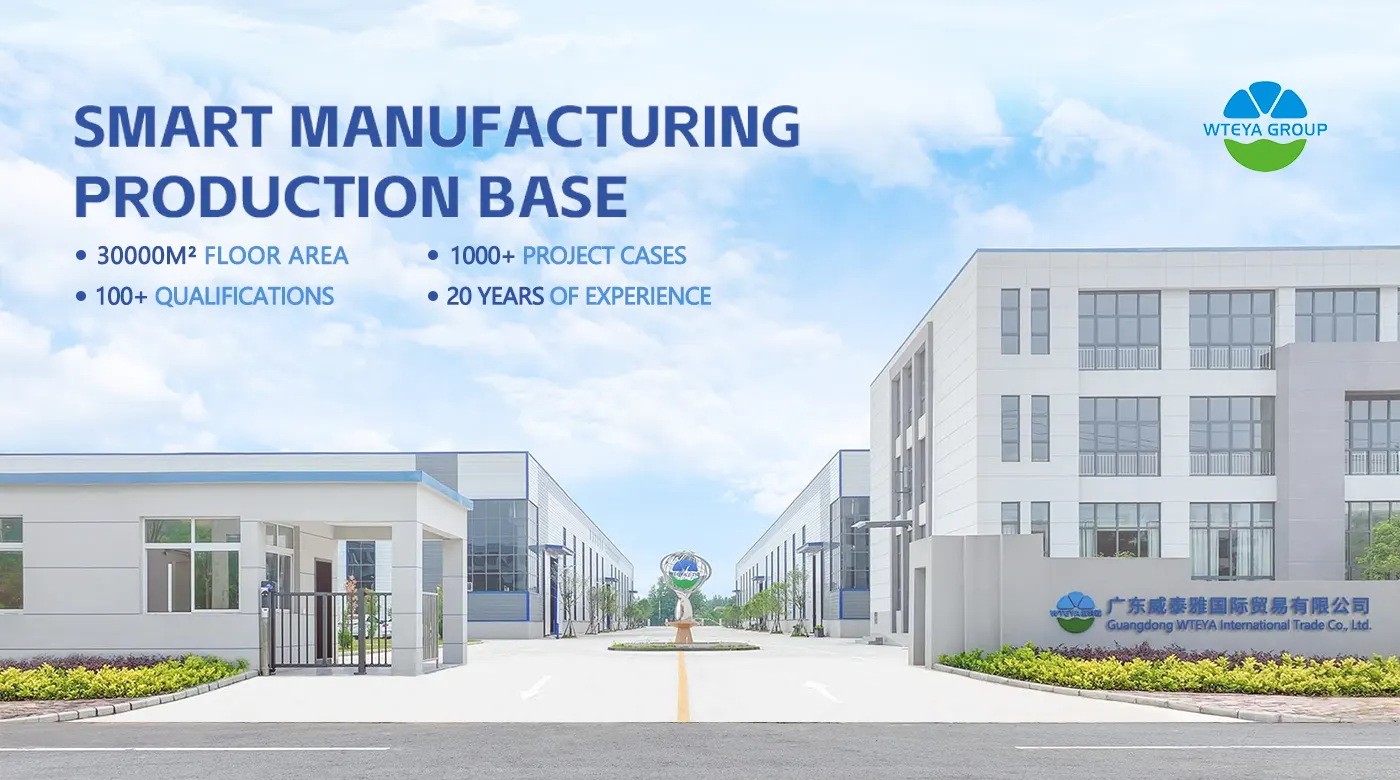
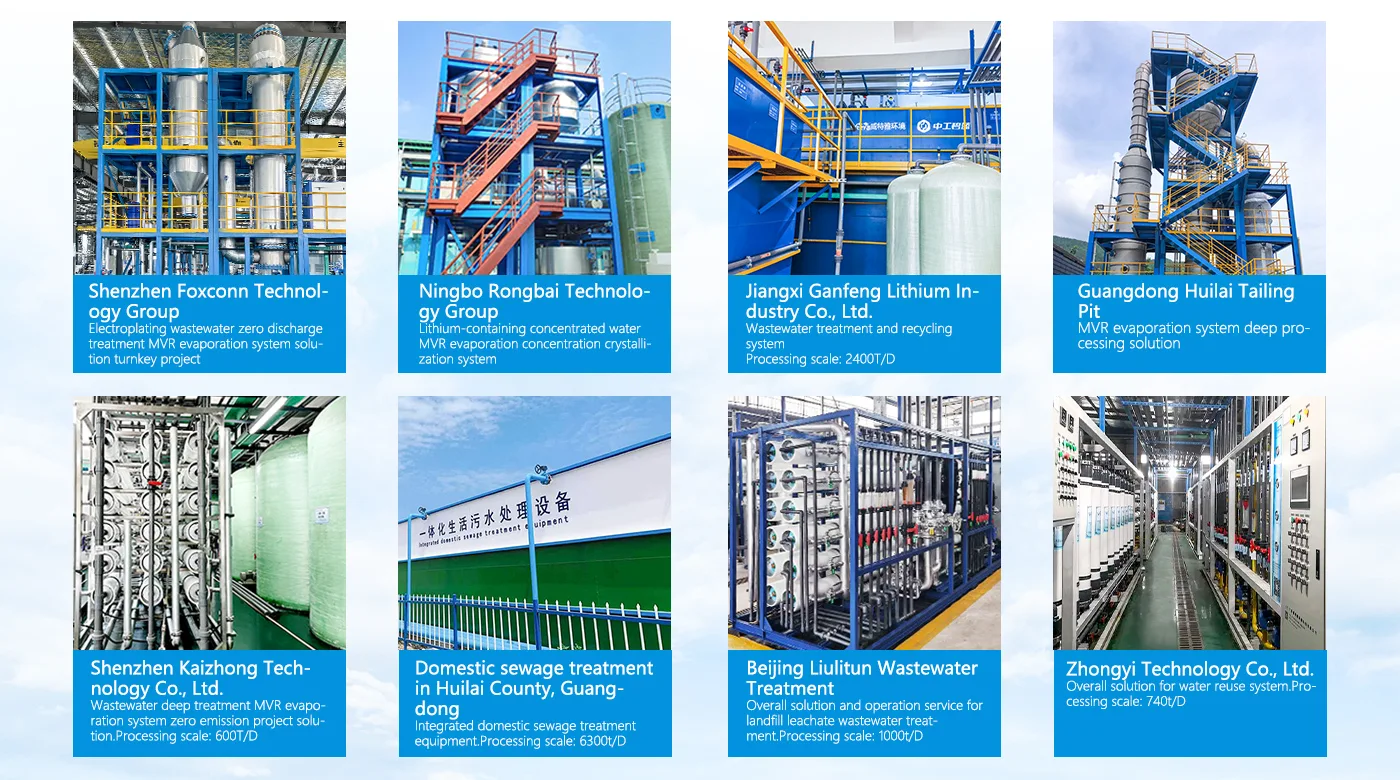
WTEYA has been building evaporation and crystallization equipment for nearly 20 years and has delivered more than 2,000 projects across 30 provinces and a growing list of export markets. For high-salinity wastewater duties such as FGD bleed, the company designs the complete zero liquid discharge train in house, from pre-treatment chemistry through evaporator, crystallizer, condensate polishing and salt handling, with material selection matched to the chloride and temperature profile of each site.
Every project starts with a water analysis and a pilot or bench-scale verification where needed, so that the scaling risk and the achievable concentration are known before the equipment is sized. Systems are built in the company's own workshop, commissioned by its own engineers, and supported through a spare parts and service network that keeps availability high over the full service life.
❓ Frequently Asked Questions
Can an existing FGD system be retrofitted with zero discharge?
Yes. The usual approach is to keep the existing neutralization and clarification stages, add or upgrade softening, and install the evaporator and crystallizer downstream. Retrofit projects generally require additional plot space, a power upgrade for the compressor, and a revised salt disposal agreement.
How much chloride can the evaporator handle?
Chloride is not a limit for evaporation itself; it is a material selection issue. Above roughly 20,000 mg/L, duplex or titanium wetted parts become the practical choice, and the compressor and piping metallurgy follow the same logic.
What happens to the condensate?
Condensate with total dissolved solids below 50 mg/L is normally reused as scrubber makeup or demineralized water feed. Where ammonia or volatile organics are present, a stripping or biological polishing step is added before reuse.
Transform Your Wastewater Management
Looking for a customized solution for MVR evaporation? Our team of experts is ready to help you design the most cost-effective and energy-efficient system for your specific needs.
Contact us today to discuss your project requirements and get a personalized quote.
📱 WhatsApp: +86-1800 2840 855
✉ Email: info@vteya.com
🌐 Website: www.vteya.com
Front page of Cross
Next go-to page
Related information
FGD Wastewater Zero Discharge: An MVR-Based Approach
FGD Wastewater Zero Discharge: An MVR-Based Approach Flue gas desulfurization (FGD) wastewater is one of the most aggressive streams a power plant or industrial boiler house has to manage. It is acidic, saturated with gypsum, loaded with chloride and heavy metals, and it arrives
How Much Floor Space Does an MVR Evaporator Need?
Answer: The floor space an MVR evaporator needs depends on evaporation capacity and equipment type. A rough planning figure is 10–20 m² of floor area per 1 t/h of evaporation capacity .
MVR vs Single Effect Evaporator: Energy Consumption Compared
MVR vs Single Effect Evaporator: Energy Consumption Compared Evaporation is an energy business. Whichever evaporator you install, the plant will spend most of its operating budget turning water into vapor and then getting rid of that vapor.
Energy Recovery in Evaporation: 5 Ways to Save Steam
Energy Recovery in Evaporation: 5 Ways to Save Steam In an industrial evaporation plant, thermal energy is usually the largest single operating cost — commonly 60–80% of the total , ahead of electricity, labour and chemicals.
WTEYA Ships 10 SWRO4021 Portable Desalination Units to Puerto Rico
WTEYA GROUP has shipped 10 SWRO4021 portable desalination units to Puerto Rico, built for fast island and emergency water supply with low energy demand.
MVR Evaporator Installation: How Long It Really Takes
MVR Evaporator Installation: How Long It Really Takes Most buyers plan the shipment date carefully and then discover that the on-site installation is what sets the real start of production.
Guangdong WTEYA Environmental Technology Co., Ltd
Contact us
WhatsApp: +86 1800 2840 855
Tel: +86-0769-28636053
+86-0769-28636126
Email: info@wteya.com
Add: Floor 14, F4 building, TianAn digital town,
Nancheng District, Dongguan,Guangdong, China