


500 T/D Tangshan Leachate Treatment ZLD System Project
Release Time:
2026-07-09 11:06

500 T/D Tangshan Leachate Treatment Zero Liquid Discharge System Project
Project Overview
The Tangshan Jianzigu Municipal Solid Waste Landfill Environmental Remediation Project represents one of the largest leachate treatment initiatives in North China. Located in Tangshan City, Hebei Province, the Jianzigu landfill has accumulated decades of municipal solid waste, generating substantial volumes of highly contaminated leachate that require comprehensive, full-quantification treatment before safe discharge.
The project specifications are demanding: 50,000 tons of accumulated leachate must be processed, with a daily treatment capacity of 500 tons per day. The compliant water production rate must reach ≥95% — meaning at least 475 tons of every 500 tons treated must achieve discharge standards. This is not partial treatment or batch concentration; this is full-quantification processing where the entire leachate volume is treated to compliant standards, with residual waste minimized to solid crystalline byproduct for compliant disposal.
WTEYA was selected as the technology provider, delivering an integrated physical-chemical treatment + MVR evaporation system that achieves full-quantification processing, zero liquid discharge, and sustained 95% compliant water recovery.

The Challenge: Decades of Accumulated Leachate
Landfill leachate from mature, long-operating facilities like Jianzigu presents uniquely difficult treatment challenges:
- Extremely high COD: Organic pollutant concentrations reaching tens of thousands of mg/L — far beyond the capacity of conventional biological treatment alone
- High ammonia nitrogen: Mature landfill leachate typically contains ammonia nitrogen levels of 1,000-3,000 mg/L, requiring specialized nitrogen removal processes
- Refractory organic compounds: Humic substances, phenols, and persistent organic pollutants that resist biological degradation — requiring advanced oxidation or thermal separation
- Heavy metals: Trace but regulated concentrations of lead, cadmium, chromium, mercury, and arsenic — each requiring specific removal chemistry
- High salinity and TDS: Dissolved salt accumulation from decades of waste decomposition, interfering with biological processes and requiring thermal separation for final removal
- Variable composition: Rainfall-dependent flow variations, seasonal temperature effects on biological activity, and evolving waste chemistry as the landfill ages
- Massive volume: 50,000 tons of accumulated leachate represents a sustained treatment campaign requiring months of continuous, reliable operation
The "physical-chemical treatment as primary approach" specified for this project reflects a critical engineering insight: for mature landfill leachate with high salinity and refractory organics, biological treatment alone is insufficient. A physical-chemical-first strategy — leveraging chemical precipitation, advanced oxidation, membrane separation, and thermal evaporation — provides more reliable, consistent, and comprehensive pollutant removal.

Process Design: Physical-Chemical + MVR Integrated ZLD System
WTEYA's solution for the Jianzigu project employs a multi-stage integrated process designed to handle 500 T/D of high-strength leachate through full-quantification treatment:
Stage 1: Chemical Conditioning and Pre-Treatment
- pH adjustment and chemical dosing: Precise pH control followed by coagulant and flocculant addition to aggregate suspended solids and colloidal organics
- Heavy metal precipitation: Targeted chemical precipitation of regulated metals (Cr, Pb, Cd, As) using specialized precipitation agents
- Ammonia stripping: High-efficiency ammonia nitrogen removal through pH-adjusted air stripping — reducing ammonia levels by 90%+ before downstream processing
- Advanced oxidation: Oxidation of refractory organic compounds using chemical oxidation agents, breaking down humic substances and persistent pollutants that resist biological treatment
Stage 2: Membrane Separation and Concentration
- Ultrafiltration (UF): Removal of remaining suspended solids, colloids, and macromolecular organics — protecting downstream RO membranes from fouling
- DTRO (Disk-Tube Reverse Osmosis): High-pressure membrane concentration achieving 70-75% clean permeate recovery while concentrating pollutants into a smaller volume for thermal treatment
- RO permeate: Clean water meeting preliminary discharge standards — accounting for the majority of the 95% compliant water production rate
- RO retentate: Concentrated pollutant stream proceeding to MVR evaporation for final ZLD processing
Stage 3: MVR Evaporation and Crystallization — Zero Liquid Discharge Achievement
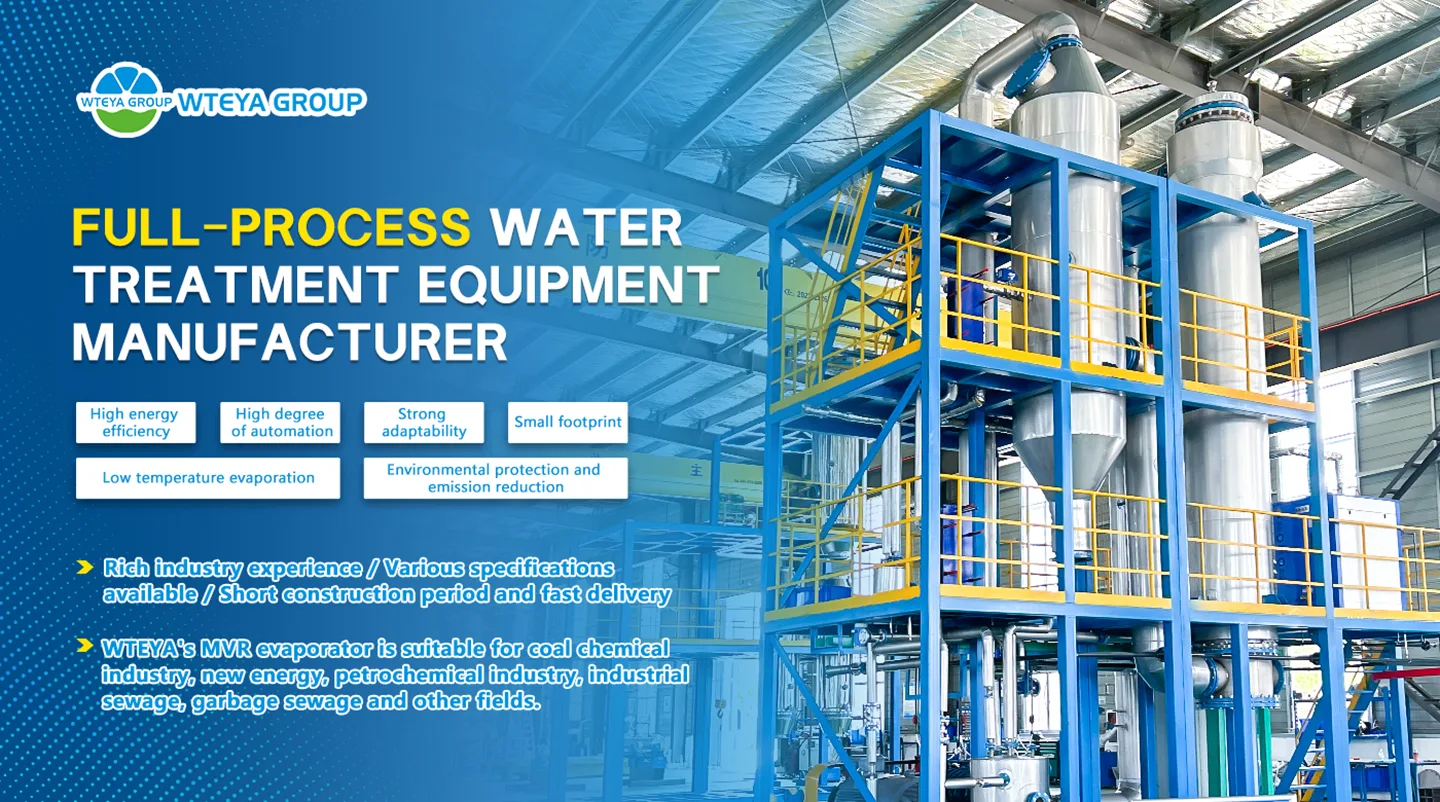
The concentrated DTRO retentate — containing all remaining dissolved salts, refractory organics, and residual metals — is processed through WTEYA's MVR (Mechanical Vapor Recompression) forced circulation evaporation and crystallization system.
- MVR forced circulation evaporator: High-velocity circulation prevents scaling on heat transfer surfaces in this high-salt, high-pollutant service — ensuring sustained operational reliability over months of continuous 500 T/D processing
- Energy recovery: MVR technology recycles secondary steam through mechanical recompression, reducing energy consumption by 30-60% compared to conventional thermal evaporation — critical for the economic viability of 500 T/D scale operations
- Low-temperature evaporation: Reduced temperature difference across heating surfaces minimizes corrosion, scaling, and thermal degradation — extending equipment life in aggressive leachate concentrate service
- Crystallization system: Final brine concentration produces solid crystalline salt — the only residual product from the entire treatment process, compliant with hazardous waste disposal regulations
- Distillate recovery: MVR condensate water is recycled back into the treatment process, contributing to the overall 95% compliant water production rate
This is where zero liquid discharge is truly achieved. After MVR processing, no liquid effluent remains — only clean condensate water for reuse and solid crystalline waste for compliant disposal.
Stage 4: Final Compliance Verification
- Continuous online monitoring: Real-time measurement of COD, ammonia nitrogen, heavy metals, TDS, and all regulated parameters
- Compliance assurance: Every batch of discharge water verified against national and provincial effluent standards before release
- Automated reporting: Continuous compliance documentation for regulatory review and project auditing

Why Physical-Chemical Treatment as the Primary Approach
The Jianzigu project specification explicitly requires a physical-chemical-first treatment strategy — and this reflects sound engineering judgment for mature landfill leachate:
Reliability advantage: Biological treatment systems are sensitive to temperature, toxicity, and organic loading variations. For 50,000 tons of accumulated leachate with unpredictable composition changes, biological treatment reliability cannot be guaranteed. Physical-chemical processes — precipitation, oxidation, membrane separation, thermal evaporation — are fundamentally more robust against influent variability.
Performance advantage: Mature landfill leachate contains high concentrations of refractory organics and dissolved salts that biological processes simply cannot remove. Physical-chemical treatment addresses these pollutants directly — through chemical reaction, membrane rejection, or thermal separation — achieving removal rates that biological treatment alone cannot match.
ZLD compatibility: Physical-chemical treatment produces clearly defined intermediate streams (permeate, concentrate, solid waste) that are compatible with downstream ZLD processing. Biological treatment produces mixed effluent and sludge that complicate ZLD system design and operation.
Operational simplicity: Physical-chemical processes require less operator expertise, less biological process management, and respond more predictably to influent changes — critical for sustained multi-month treatment campaigns at 500 T/D scale.

Project Scale and Operational Demands
Processing 50,000 tons of accumulated leachate at 500 T/D represents a sustained 100-day continuous treatment campaign. The operational requirements are significant:
- Continuous operation: 24-hour-per-day processing with minimal downtime for maintenance and CIP cleaning
- Sustained performance: Consistent 95% compliant water production rate maintained across the entire 100-day campaign — not just for the first week
- Scaling resistance: MVR forced circulation design and automated CIP cycles prevent progressive fouling and performance degradation over extended operation
- Chemical supply management: Continuous supply of treatment chemicals (coagulants, oxidants, precipitation agents) with automated dosing control
- Solid waste management: Crystalline salt production and compliant hazardous waste disposal logistics sustained throughout the campaign
- Performance monitoring: Continuous effluent quality verification and regulatory compliance documentation
WTEYA's system is designed for this operational reality — not merely for peak performance under ideal conditions, but for sustained, reliable, compliant operation across every day of the 100-day campaign.
Environmental and Economic Impact
The Jianzigu project delivers transformative environmental benefits:
- 50,000 tons of accumulated leachate eliminated: Complete remediation of a decades-long environmental liability
- 95% compliant water recovery: At least 47,500 tons of water meeting discharge standards — returning clean water to the local environment
- Zero liquid discharge: No residual concentrated liquid waste requiring ongoing storage, management, or secondary treatment
- Solid crystalline waste only: Minimal residual volume in compliant solid form for regulated hazardous waste disposal
- 30-60% energy savings: MVR technology reduces thermal treatment energy consumption versus conventional approaches — lowering operating costs and carbon footprint
- Environmental remediation completion: The project fulfills the landfill's environmental remediation mandate — resolving a long-standing community and regulatory concern

Why WTEYA for Large-Scale Leachate ZLD
500 T/D leachate treatment with full-quantification requirements demands a technology partner with proven large-scale project delivery capability. WTEYA brings:
- Nearly 20 years of experience in industrial wastewater treatment and evaporation technology
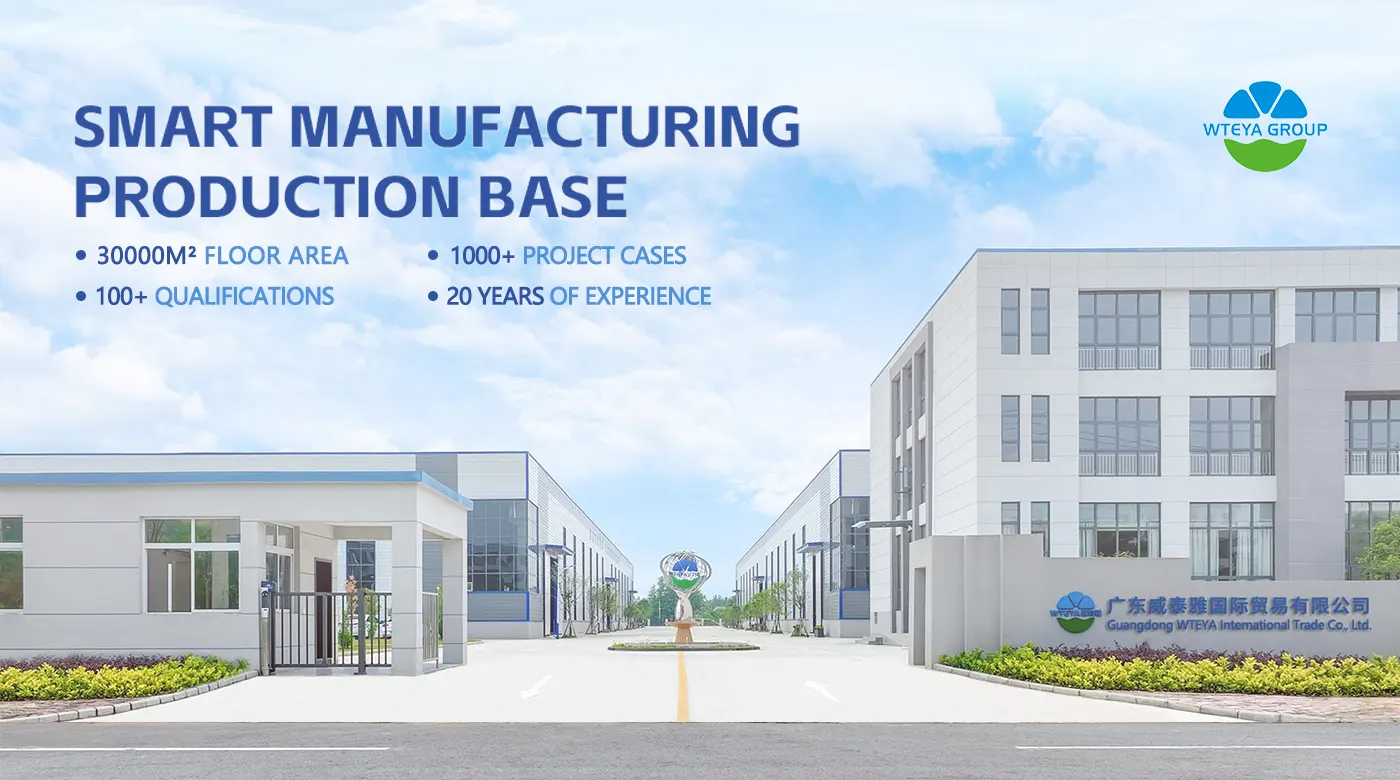
- 30,000 m² manufacturing facility in Hubei Jingmen — producing MVR evaporators, crystallizers, and integrated treatment systems at scale
- 200+ successful wastewater projects across landfill leachate, electroplating, PCB, lithium battery, photovoltaic, and petrochemical industries
- Nearly 200 patents covering evaporation, crystallization, and separation technologies
- Full lifecycle delivery: From process design and equipment manufacturing through commissioning, training, and sustained O&M support
- ISO 9001/14001/45001 certified quality, environmental, and occupational health management systems
From 24 T/D to 500 T/D — and beyond — WTEYA scales leachate treatment solutions to match project demands. Our engineering team provides customized process design, detailed cost analysis, and implementation timelines tailored to each project's specific leachate composition, regulatory requirements, and remediation objectives.
Contact WTEYA today to discuss your landfill leachate treatment or environmental remediation project. Whether you need a 24 T/D single-unit installation or a 500 T/D full-quantification treatment campaign, we deliver solutions that work — reliably, efficiently, and in full regulatory compliance.
Frequently Asked Questions
Q: What is Zero Liquid Discharge (ZLD)?
A: Zero Liquid Discharge (ZLD) is an advanced wastewater treatment process that eliminates all liquid waste from a facility, recovering up to 95-99% of water for reuse.
Q: How much does a ZLD system cost?
A: The cost of a ZLD system depends on capacity, industry, and specific requirements. Contact WTEYA for a customized quote.
Q: Which industries need ZLD systems?
A: Industries such as chemical manufacturing, electroplating, PCB/electronics, battery production, and textiles benefit most from ZLD systems.
Ready to Reduce Your Environmental Footprint?
Every day of delay costs money. Our rapid-response team can deliver a preliminary solution design within 48 hours.
Send us your wastewater data and let's start building your custom system today.
📱 WhatsApp: +86-1800 2840 855
✉ Email: info@vteya.com
🌐 Website: www.vteya.com
Front page of Cross
Next go-to page
Related information
MVR Evaporator Setup: 5 Mistakes to Avoid
MVR Evaporator Setup: 5 Mistakes to Avoid Setting up an MVR evaporator is a critical step in optimizing industrial wastewater treatment processes.
MVR Evaporator for Zero Liquid Discharge: Key Tips
MVR Evaporator for Zero Liquid Discharge: Key Tips Implementing a zero liquid discharge (ZLD) system is a critical step for industries aiming to reduce environmental impact and comply with stringent wastewater regulations.
MVR Evaporator for Industrial Wastewater: Top Tips
MVR Evaporator for Industrial Wastewater: Top Tips Industrial wastewater treatment is a critical challenge for manufacturers seeking to comply with environmental regulations while maintaining operational efficiency.
Why MVR Evaporator Wins Over Traditional Methods
Why MVR Evaporator Wins Over Traditional Methods In the rapidly evolving landscape of industrial wastewater treatment, businesses are constantly seeking more efficient and sustainable solutions.
How to Implement MVR Evaporator in Industrial Settings
How to Implement MVR Evaporator in Industrial Settings Implementing MVR evaporators in industrial settings is a strategic move for companies aiming to optimize water recovery, reduce operational costs, and meet stringent environmental regulations.
5T/H Ronbay MVR Evaporation System EPC Turnkey Project
5T/H Ronbay MVR Evaporation System EPC Turnkey Project. Project Overview The lithium battery industry has rapidly become one of the most strategically important manufacturing sectors worldwide — and with its growth comes an urgent challenge: managing the high-salinity wastewater generated during...
Guangdong WTEYA Environmental Technology Co., Ltd
Contact us
WhatsApp: +86 1800 2840 855
Tel: +86-0769-28636053
+86-0769-28636126
Email: info@wteya.com
Add: Floor 14, F4 building, TianAn digital town,
Nancheng District, Dongguan,Guangdong, China