



5T/H Ronbay MVR Evaporation System EPC Turnkey Project
Release Time:
2026-07-09 14:18

5T/H Ronbay MVR Evaporation System EPC Turnkey Project
Project Overview
The lithium battery industry has rapidly become one of the most strategically important manufacturing sectors worldwide — and with its growth comes an urgent challenge: managing the high-salinity wastewater generated during lithium compound production. At Ronbay's production facility, the manufacturing of lithium battery cathode materials generates lithium-containing concentrated wastewater that cannot be discharged without advanced treatment. The regulatory and economic imperatives are clear: zero liquid discharge is required, and the valuable lithium sulfate (Li₂SO₄) contained in the wastewater must be recovered as a saleable product rather than wasted.
WTEYA was selected as the EPC (Engineering, Procurement, Construction) general contractor for this critical project — delivering a complete turnkey solution encompassing process design, electrical and automation system design, equipment procurement and fabrication, installation and commissioning, and civil engineering coordination. The core system is a 5 m³/h MVR (Mechanical Vapor Recompression) forced circulation evaporation and crystallization system designed to concentrate lithium-containing wastewater and produce lithium sulfate crystals as the final product.
This is not a partial solution or a component supply contract. This is a complete turnkey project where every element — from initial process calculations through final commissioning and performance verification — is designed, delivered, and supervised by WTEYA's engineering team.

The Challenge: Lithium-Containing Wastewater Treatment in Battery Material Production
Lithium battery cathode material production generates wastewater streams that are uniquely challenging for conventional treatment approaches:
- High lithium concentration: The wastewater contains significant lithium values — typically as lithium sulfate — that represent both an environmental liability (if discharged) and an economic opportunity (if recovered)
- Complex salt matrix: Alongside lithium, the concentrated wastewater contains sulfate salts, residual process chemicals, and trace impurities that affect crystallization behavior and product quality
- ZLD regulatory requirement: Environmental regulations prohibit discharge of lithium-containing process wastewater — requiring complete volume elimination through evaporation and crystallization
- Product quality demands: Recovered lithium sulfate must meet purity specifications for reuse in battery material production — meaning the crystallization system must produce clean, well-defined crystals rather than mixed waste salt
- Energy cost sensitivity: Lithium battery material production is energy-intensive, and wastewater treatment energy costs directly impact production economics — making energy-efficient MVR technology essential
- Continuous operation requirement: Battery material production runs continuously, and the wastewater treatment system must match production uptime — 24/7 reliability with minimal maintenance interruption
The conventional approach — multi-effect evaporation or outsourcing to wastewater treatment contractors — fails on multiple fronts: high energy costs, inconsistent product quality, and operational dependency on external parties. An integrated EPC turnkey solution from a qualified technology provider eliminates these problems by delivering a purpose-designed system under single-point responsibility.

EPC Scope: Complete Turnkey Delivery
WTEYA's EPC contract scope covers every aspect of the 5 m³/h MVR evaporation system — from conceptual design through operational handover. All design, installation, and commissioning work is performed under the supervision and guidance of WTEYA's engineering and technical personnel:
1. Process Engineering and System Design
- Process calculation and flow design: Detailed thermal calculations, mass balance modeling, and process flow optimization for the 5 m³/h evaporation rate — ensuring the system operates at design capacity under actual wastewater composition conditions
- Equipment specification: Selection and specification of all major equipment — MVR evaporator body, vapor compressor, heat exchanger, crystallizer, condensate system, pumps, and instrumentation — based on calculated process requirements
- Piping and layout design: 3D layout modeling, piping isometric drawings, and structural support design — ensuring efficient process flow, accessible maintenance points, and compliance with industrial safety standards
- Process control philosophy: Definition of all control loops, alarm setpoints, interlock logic, and operational sequences — forming the foundation for the automation system design
2. Electrical and Automation System Design
- Power distribution design: Electrical load calculations, transformer and switchgear specification, motor sizing, cable routing, and power quality analysis — ensuring reliable power supply for continuous MVR operation
- Automation and control system: PLC/DCS system architecture, I/O assignment, control algorithm development, HMI interface design, and data historian configuration — providing full automated operation with remote monitoring capability
- Instrumentation specification: Temperature, pressure, flow, level, conductivity, and density measurement points — all specified with appropriate range, accuracy, and materials of construction for lithium sulfate service
- Safety instrumented systems: Emergency shutdown logic, overpressure protection, and process safety interlocks — ensuring safe operation under all foreseeable upset conditions
3. Equipment Procurement and Fabrication
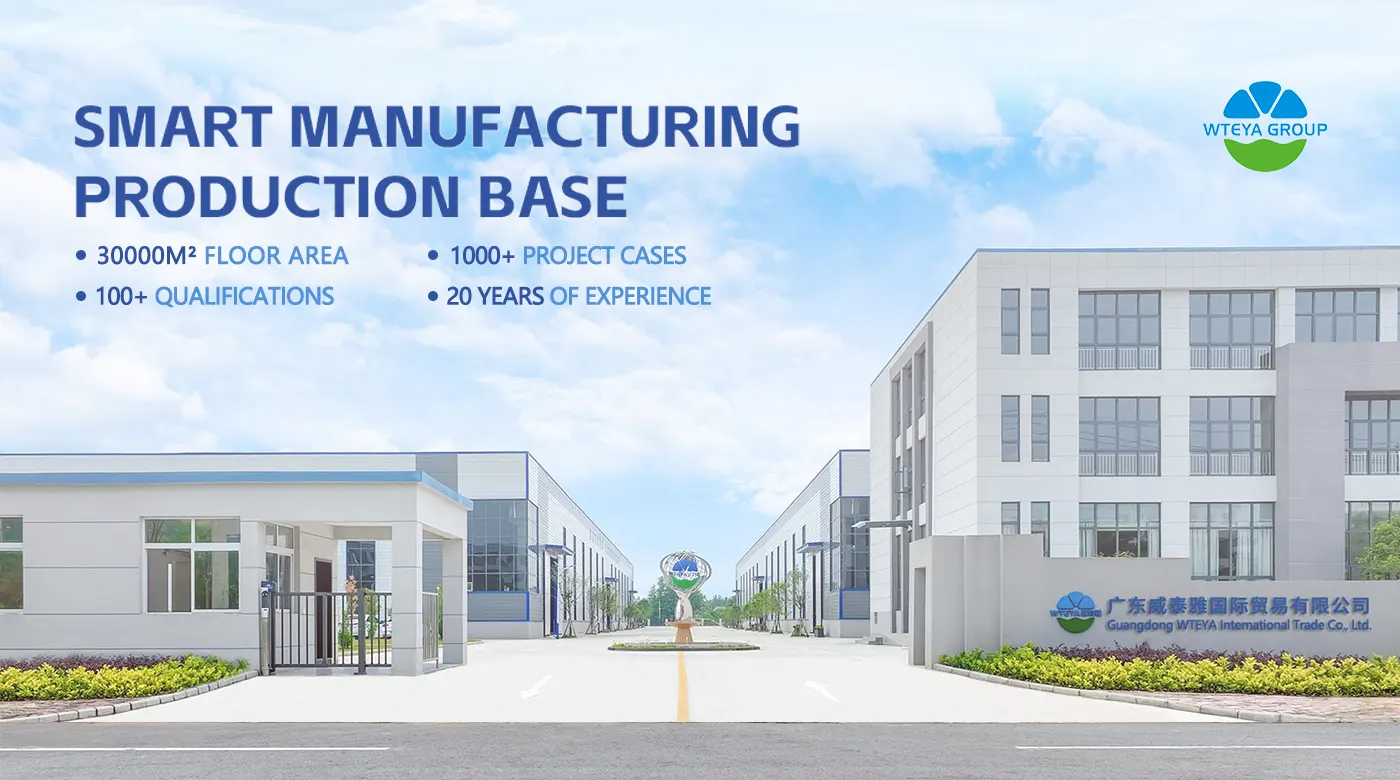
- Core equipment manufacturing: WTEYA's 30,000 m² manufacturing facility in Hubei Jingmen produces the MVR evaporator body, forced circulation pump, vapor compressor, and crystallizer — all fabricated to project-specific design specifications
- Auxiliary equipment procurement: Pumps, valves, instrumentation, electrical components, and piping materials — sourced from qualified suppliers with documented quality certifications
- Quality control: Factory inspection, welding quality verification, pressure testing, and dimensional checks on all fabricated and procured equipment — documented in manufacturing quality records
- Pre-assembly and testing: Sub-system assembly and functional testing at the manufacturing facility before shipment — reducing field installation time and identifying issues before on-site work begins
4. Installation and Commissioning
- On-site installation: Equipment placement, piping installation, electrical wiring, instrument mounting, and structural connections — all performed by WTEYA installation teams under engineering supervision
- Civil engineering coordination: Foundation design guidance, building structural requirements, and civil work interface management — ensuring the installed system integrates properly with the facility infrastructure
- Commissioning sequence: Step-by-step commissioning protocol — from individual equipment verification through sub-system testing to full integrated system performance runs
- Performance verification: Full-capacity performance testing at 5 m³/h evaporation rate, demonstrating lithium sulfate crystal production quality, condensate water purity, energy consumption targets, and continuous operation reliability
- Operator training: Comprehensive training program covering system operation, maintenance procedures, troubleshooting, and safety protocols — delivered by WTEYA commissioning engineers

MVR Evaporation and Crystallization System: Technical Design
The centerpiece of the project is the 5 m³/h MVR forced circulation evaporation and crystallization system, designed specifically for lithium sulfate concentration and crystallization from lithium-containing concentrated wastewater:
MVR Forced Circulation Evaporator
- Design evaporation capacity: 5 m³/h (condensate water production rate) — the system is dimensioned to handle this capacity reliably under actual operating conditions, not merely at theoretical peak
- Forced circulation design: High-velocity circulation through the heat exchanger prevents crystal scaling on tube surfaces — critical in lithium sulfate service where crystal growth on heat transfer surfaces would rapidly degrade performance
- MVR vapor recompression: Secondary steam from the evaporator is compressed by the mechanical vapor compressor and recycled as heating steam — reducing energy consumption by 30-60% compared to conventional multi-effect evaporation
- Low-temperature operation: Reduced boiling temperature minimizes thermal degradation of lithium sulfate product quality and reduces corrosion rates on equipment surfaces
- Material selection: Corrosion-resistant materials selected for lithium sulfate service — including titanium-grade heat exchanger tubes, stainless steel evaporator body, and corrosion-resistant pump components
Crystallization System
- Continuous crystallizer: Oslo or forced circulation crystallizer design producing well-defined lithium sulfate (Li₂SO₄) crystals with controlled particle size distribution
- Crystal separation: Centrifuge or vacuum filter separation of lithium sulfate crystals from mother liquor — producing a clean, saleable product stream
- Mother liquor recycling: Centrifuge filtrate returned to the evaporator for continued concentration — maximizing lithium recovery and eliminating liquid waste discharge
- Product quality control: Crystal washing, drying, and quality verification ensuring recovered lithium sulfate meets reuse specifications for battery material production
Condensate Water Recovery
- High-purity condensate: MVR evaporator condensate water is clean, low-TDS process water suitable for reuse in battery material production — reducing fresh water consumption and contributing to the zero liquid discharge objective
- Heat recovery: Condensate heat energy recovered through heat exchangers — further improving system energy efficiency

Why MVR for Lithium Battery Wastewater
The selection of MVR technology for this project is driven by three decisive factors:
Energy economics: Battery material production is inherently energy-intensive, and every kilowatt-hour saved in wastewater treatment directly reduces production costs. MVR's 30-60% energy savings versus conventional thermal evaporation makes lithium sulfate recovery economically viable — turning a cost center (waste disposal) into a value center (product recovery).
Product quality: MVR's low-temperature, controlled evaporation environment produces cleaner lithium sulfate crystals with better particle size distribution than high-temperature multi-effect systems. This product quality advantage translates directly into higher reuse value — the recovered lithium sulfate can be fed back into the battery material production process.
ZLD compliance: MVR + crystallization achieves complete zero liquid discharge — no concentrated liquid waste requiring storage, transport, or secondary treatment. The system produces only two outputs: saleable lithium sulfate crystals and reusable condensate water. This is the definitive ZLD solution for lithium-containing wastewater.

Project Execution: EPC Turnkey Approach Advantages
The EPC turnkey delivery model provides distinct advantages over component-by-component or multi-contractor approaches:
- Single-point responsibility: One contractor — WTEYA — is responsible for the entire system's design, performance, and delivery. There are no interfaces between multiple contractors where design gaps, installation conflicts, or commissioning delays can occur
- Integrated design: Process, mechanical, electrical, and automation design are performed by a single engineering team — ensuring seamless integration between all system elements and eliminating coordination failures
- Accelerated schedule: Without multi-contractor interface delays, the project proceeds from design through commissioning in a streamlined, sequential execution — reducing total project duration
- Performance guarantee: WTEYA guarantees the system will achieve the specified 5 m³/h evaporation rate, lithium sulfate product quality, and zero liquid discharge performance — because every element was designed and delivered under our engineering control
- Engineering supervision: All installation and commissioning work is performed under the direct supervision of WTEYA design and technical personnel — ensuring that the installed system matches the designed system
This turnkey approach transforms what could be a fragmented, multi-year implementation risk into a controlled, guaranteed, single-source delivery — where the client receives a fully operational system with verified performance, trained operators, and comprehensive documentation.

Environmental and Economic Impact
The Ronbay MVR EPC project delivers substantial dual-value outcomes:
- Zero liquid discharge achieved: No lithium-containing wastewater discharged to the environment — complete regulatory compliance and environmental protection
- Lithium sulfate product recovery: Valuable lithium compound recovered as saleable product rather than waste — generating revenue from what would otherwise be a disposal cost
- Condensate water reuse: 5 m³/h of clean condensate water returned to battery material production — reducing fresh water consumption and water procurement costs
- 30-60% energy savings: MVR technology reduces wastewater treatment energy consumption versus conventional approaches — lowering operating costs and carbon footprint
- Production uptime assurance: Reliable, continuous MVR operation matches battery material production schedules — eliminating wastewater treatment bottlenecks that could constrain production capacity

Why WTEYA for MVR EPC Turnkey Projects
Executing an MVR evaporation system EPC turnkey project requires a technology provider with comprehensive capabilities across every discipline — process engineering, equipment manufacturing, automation, installation, and commissioning. WTEYA delivers:
- Nearly 20 years of EPC project experience in industrial wastewater treatment and MVR evaporation technology — from process design through operational handover
- 30,000 m² manufacturing facility in Hubei Jingmen — producing MVR evaporators, crystallizers, and integrated systems at industrial scale under ISO 9001 quality management
- Full in-house engineering capability: Process, mechanical, electrical, and automation design performed by WTEYA engineering teams — no subcontracted design work or external engineering dependency
- Nearly 200 patents covering evaporation, crystallization, and separation technologies — including innovations specifically applicable to lithium battery wastewater treatment
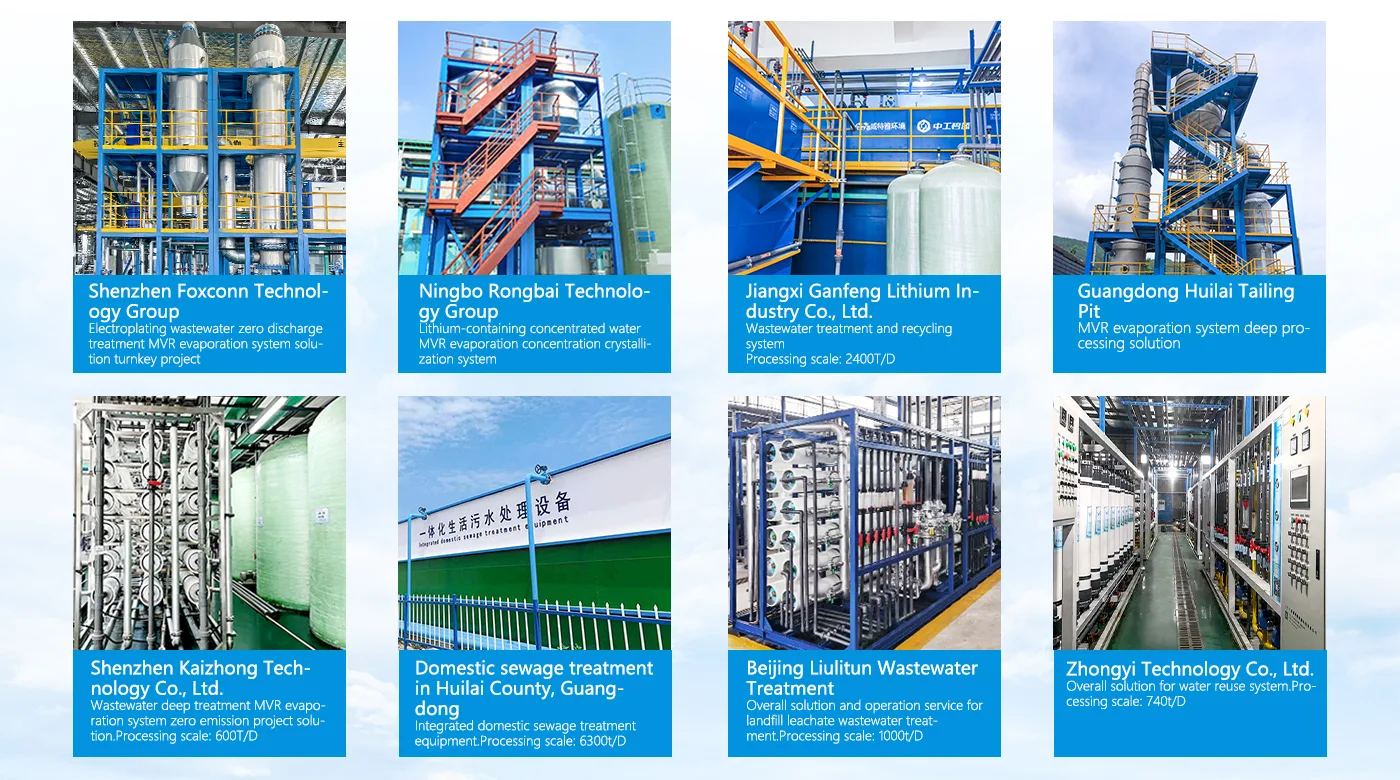
- Proven track record with lithium battery industry clients: Ronbay, CATL (宁德时代), Ganfeng Lithium (赣锋锂业), and other leading battery material producers — demonstrating domain-specific expertise in lithium wastewater treatment and product recovery
- ISO 9001/14001/45001 certified quality, environmental, and occupational health management systems — ensuring project execution meets international standards
From 5 m³/h single-system installations to multi-hundred m³/h integrated ZLD facilities — WTEYA scales MVR EPC solutions to match project demands. Our engineering team provides customized process design, detailed cost analysis, and implementation timelines tailored to each client's specific wastewater composition, product recovery requirements, and production integration objectives.
Contact WTEYA today to discuss your lithium battery wastewater treatment or MVR evaporation EPC project. Whether you need a 5 m³/h lithium sulfate recovery system or a full-scale zero liquid discharge facility, we deliver turnkey solutions that perform — reliably, efficiently, and with guaranteed results.


Frequently Asked Questions
Q: What is an MVR evaporator?
A: MVR (Mechanical Vapor Recompression) evaporator is an energy-efficient evaporation technology that reduces energy consumption by 30-50% compared to traditional evaporation.
Q: How much energy can MVR save?
A: MVR evaporators typically reduce energy consumption by 30-50% compared to traditional multi-effect evaporators, using electricity instead of steam.
Q: What is the difference between MVR and multi-effect evaporator?
A: MVR uses mechanical vapor recompression for energy efficiency, while multi-effect evaporators use multiple evaporation stages. MVR has lower operating costs.
Ready to Reduce Your Environmental Footprint?
Every day of delay costs money. Our rapid-response team can deliver a preliminary solution design within 48 hours.
Send us your wastewater data and let's start building your custom system today.
📱 WhatsApp: +86-1800 2840 855
✉ Email: info@vteya.com
🌐 Website: www.vteya.com
Front page of Cross
Next go-to page
Related information
MVR Evaporator Setup: 5 Mistakes to Avoid
MVR Evaporator Setup: 5 Mistakes to Avoid Setting up an MVR evaporator is a critical step in optimizing industrial wastewater treatment processes.
MVR Evaporator for Zero Liquid Discharge: Key Tips
MVR Evaporator for Zero Liquid Discharge: Key Tips Implementing a zero liquid discharge (ZLD) system is a critical step for industries aiming to reduce environmental impact and comply with stringent wastewater regulations.
MVR Evaporator for Industrial Wastewater: Top Tips
MVR Evaporator for Industrial Wastewater: Top Tips Industrial wastewater treatment is a critical challenge for manufacturers seeking to comply with environmental regulations while maintaining operational efficiency.
Why MVR Evaporator Wins Over Traditional Methods
Why MVR Evaporator Wins Over Traditional Methods In the rapidly evolving landscape of industrial wastewater treatment, businesses are constantly seeking more efficient and sustainable solutions.
How to Implement MVR Evaporator in Industrial Settings
How to Implement MVR Evaporator in Industrial Settings Implementing MVR evaporators in industrial settings is a strategic move for companies aiming to optimize water recovery, reduce operational costs, and meet stringent environmental regulations.
5T/H Ronbay MVR Evaporation System EPC Turnkey Project
5T/H Ronbay MVR Evaporation System EPC Turnkey Project. Project Overview The lithium battery industry has rapidly become one of the most strategically important manufacturing sectors worldwide — and with its growth comes an urgent challenge: managing the high-salinity wastewater generated during...
Guangdong WTEYA Environmental Technology Co., Ltd
Contact us
WhatsApp: +86 1800 2840 855
Tel: +86-0769-28636053
+86-0769-28636126
Email: info@wteya.com
Add: Floor 14, F4 building, TianAn digital town,
Nancheng District, Dongguan,Guangdong, China