


50T/D Zunhua Landfill Leachate Treatment MVR + RO ZLD Project
Release Time:
2026-07-09 11:35

50T/D Zunhua Landfill Leachate Treatment MVR + RO Zero Liquid Discharge Project
Project Overview
The Zunhua Municipal Solid Waste Sanitary Landfill in Zunhua City, Hebei Province, required a reliable, full-quantification leachate treatment solution with a daily processing capacity of 50 tons per day. The landfill generates persistent, high-strength leachate containing complex organic pollutants, elevated ammonia nitrogen, heavy metals, and high dissolved salt concentrations — characteristic of mature landfill operations in northern China's climate.
WTEYA delivered an integrated MVR Evaporator + RO Membrane Deep Treatment system that achieves zero liquid discharge and provides a guaranteed water production assurance system. The core evaporation unit is a 5T/H MVR evaporator — operating continuously to thermally separate concentrated pollutants while recovering clean condensate water for reuse or compliant discharge.

The Challenge: Zunhua Landfill Leachate Characteristics
Municipal landfill leachate from the Zunhua facility presents multiple treatment challenges that conventional biological processes alone cannot resolve:
- High COD concentrations: Organic pollutant levels far exceeding biological treatment capacity — requiring thermal and membrane separation for reliable removal
- Elevated ammonia nitrogen: Concentrations of 1,000-2,500 mg/L that demand specialized nitrogen removal before downstream membrane and evaporation processing
- Refractory organics: Humic acids, phenols, and persistent compounds resistant to biological degradation — necessitating advanced oxidation or thermal destruction
- High salinity and TDS: Dissolved mineral salts accumulated through years of waste decomposition — interfering with biological processes and requiring MVR thermal separation for final removal
- Heavy metals: Trace regulated concentrations of chromium, lead, and cadmium requiring targeted chemical precipitation
- Seasonal variation: Temperature-driven changes in leachate composition and volume that demand robust, adaptable treatment processes
For these complex, high-salinity leachate streams, a physical-chemical treatment strategy with MVR evaporation as the terminal ZLD step provides the most reliable, consistent, and comprehensive pollutant removal.

Process Design: MVR Evaporator + RO Deep Treatment ZLD System
WTEYA's solution for the Zunhua project employs a multi-stage integrated treatment train designed for 50 T/D full-quantification processing:
Stage 1: Chemical Conditioning and Pre-Treatment
- pH adjustment and coagulation: Precise pH control followed by coagulant and flocculant dosing to aggregate suspended solids and colloidal organics
- Heavy metal precipitation: Targeted chemical precipitation of regulated metals using specialized agents — ensuring compliant metal levels before membrane processing
- Ammonia nitrogen removal: High-efficiency ammonia stripping or breakpoint chlorination — reducing ammonia concentrations by over 90% to protect downstream membrane and evaporation systems
- Advanced oxidation: Chemical oxidation of refractory organic compounds — breaking down humic substances and persistent pollutants that resist biological degradation
Stage 2: RO Membrane Deep Treatment
- Ultrafiltration (UF) pre-treatment: Removal of remaining suspended solids and colloids — protecting RO membranes from fouling and extending operational life
- Reverse Osmosis (RO) deep purification: High-pressure membrane separation achieving 70-75% clean permeate recovery — producing water that meets preliminary discharge standards
- RO permeate: Clean, low-TDS water constituting the majority of compliant water production
- RO retentate: Concentrated pollutant stream containing residual salts, organics, and metals — directed to MVR evaporation for final ZLD processing
Stage 3: 5T/H MVR Evaporation — Zero Liquid Discharge Achievement
The concentrated RO retentate — containing all remaining dissolved salts and refractory pollutants — is processed through WTEYA's 5T/H MVR (Mechanical Vapor Recompression) forced circulation evaporator.
- 5T/H MVR forced circulation evaporator: Designed for continuous, reliable operation in high-salt leachate concentrate service — high-velocity circulation prevents scaling on heat transfer surfaces, ensuring sustained performance over extended operating campaigns
- MVR energy recovery: Secondary steam is mechanically recompressed and recycled as heating steam, reducing energy consumption by 30-60% compared to conventional multi-effect evaporation — critical for economic viability at 50 T/D project scale
- Low-temperature evaporation: Reduced temperature differentials across heating surfaces minimize corrosion, scaling, and thermal degradation — extending equipment service life in aggressive leachate concentrate environments
- Crystallization output: Final brine concentration produces solid crystalline salt — the only residual product from the entire treatment process, compliant with hazardous waste disposal regulations
- Distillate recovery: MVR condensate water is clean, low-TDS distillate recycled into the treatment process or discharged in compliance — contributing to overall water recovery rates
After MVR processing, no liquid effluent remains — only clean condensate water for reuse and solid crystalline salt for compliant disposal. This is where true zero liquid discharge is achieved.
Stage 4: Water Production Assurance System
- Continuous online monitoring: Real-time measurement of COD, ammonia nitrogen, heavy metals, TDS, and all regulated discharge parameters
- Compliance verification: Every batch of produced water verified against national and provincial effluent standards before release or reuse
- Automated quality control: Sensor-driven process adjustments ensuring consistent water quality regardless of influent variability
- Production assurance documentation: Continuous compliance records for regulatory review and operational auditing

Why MVR + RO for Landfill Leachate ZLD
The combination of RO membrane deep treatment with MVR evaporation as the terminal ZLD step represents the optimal engineering approach for 50 T/D landfill leachate treatment:
RO provides high-efficiency primary separation: Reverse osmosis removes 70-75% of pollutants as clean permeate at relatively low energy cost — handling the bulk of water production efficiently and economically.
MVR provides terminal ZLD assurance: MVR evaporation processes the concentrated RO retentate to absolute zero liquid discharge — achieving complete pollutant removal that membrane treatment alone cannot deliver. No concentrated liquid waste remains for secondary treatment or long-term storage.
Synergistic energy efficiency: RO handles the majority of volume separation at low energy cost per ton. MVR handles only the concentrated fraction with high-efficiency vapor recompression — minimizing total system energy consumption for the complete 50 T/D ZLD process.
Operational reliability: The combined system provides redundancy and operational flexibility — if RO membrane performance varies with influent changes, the MVR system compensates by processing a larger or more concentrated retentate stream while maintaining zero liquid discharge performance.

Environmental and Economic Impact
The Zunhua project delivers comprehensive environmental and economic benefits:
- 50 T/D full-quantification processing: Every ton of leachate is treated to compliant standards — no partial treatment, no concentrated liquid residuals
- Zero liquid discharge: No residual concentrated liquid waste requiring ongoing storage, secondary treatment, or environmental risk management
- 30-60% energy savings: MVR vapor recompression reduces thermal treatment energy consumption versus conventional multi-effect or single-effect evaporation — lowering both operating costs and carbon footprint
- Water production assurance: Guaranteed compliant water output verified through continuous monitoring and automated quality control
- Minimal solid waste: Only crystalline salt as residual product — significantly reducing hazardous waste disposal volume compared to sludge-producing biological treatment alternatives
- Environmental compliance: Full compliance with national and Hebei Province leachate discharge regulations

Why WTEYA for Landfill Leachate ZLD Projects
50 T/D leachate treatment with zero liquid discharge requirements demands a technology provider with proven project delivery experience and reliable equipment performance. WTEYA brings:
- Nearly 20 years of experience in industrial wastewater treatment and evaporation technology
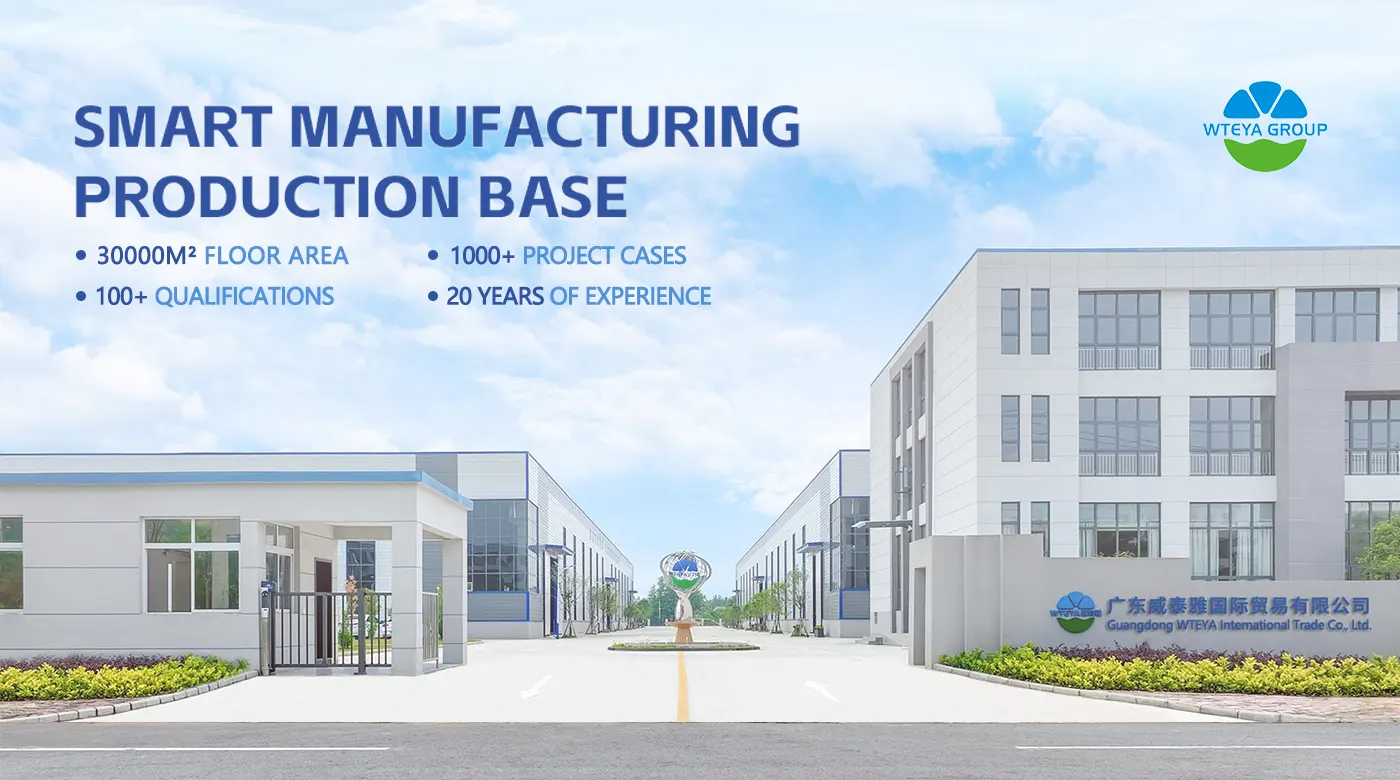
- 30,000 m² manufacturing facility in Hubei Jingmen — producing MVR evaporators, crystallizers, and integrated treatment systems
- 200+ successful wastewater projects across landfill leachate, electroplating, PCB, lithium battery, and petrochemical industries
- Nearly 200 patents covering evaporation, crystallization, and separation technologies
- Full lifecycle delivery: From process design and equipment manufacturing through commissioning, training, and sustained O&M support
- ISO 9001/14001/45001 certified quality, environmental, and occupational health management systems
From 24 T/D to 500 T/D — WTEYA scales leachate treatment solutions to match project demands. Whether your project requires a single MVR evaporator unit or a full-quantification integrated ZLD system, our engineering team provides customized process design, detailed cost analysis, and implementation timelines tailored to your specific leachate composition and regulatory requirements.
Contact WTEYA today to discuss your landfill leachate treatment project. We deliver solutions that achieve zero liquid discharge, ensure water production compliance, and reduce operating costs through advanced MVR evaporation technology.

Frequently Asked Questions
Q: What is Zero Liquid Discharge (ZLD)?
A: Zero Liquid Discharge (ZLD) is an advanced wastewater treatment process that eliminates all liquid waste from a facility, recovering up to 95-99% of water for reuse.
Q: How much does a ZLD system cost?
A: The cost of a ZLD system depends on capacity, industry, and specific requirements. Contact WTEYA for a customized quote.
Q: Which industries need ZLD systems?
A: Industries such as chemical manufacturing, electroplating, PCB/electronics, battery production, and textiles benefit most from ZLD systems.

Take the First Step Towards Compliance
Join industry leaders like Foxconn, BYD, and Huawei who trust WTEYA for their critical wastewater treatment needs.
Get the same expertise working for your landfill leachate facility. Contact us now.
📱 WhatsApp: +86-1800 2840 855
✉ Email: info@vteya.com
🌐 Website: www.vteya.com
Front page of Cross
Next go-to page
Related information
MVR Evaporator Setup: 5 Mistakes to Avoid
MVR Evaporator Setup: 5 Mistakes to Avoid Setting up an MVR evaporator is a critical step in optimizing industrial wastewater treatment processes.
MVR Evaporator for Zero Liquid Discharge: Key Tips
MVR Evaporator for Zero Liquid Discharge: Key Tips Implementing a zero liquid discharge (ZLD) system is a critical step for industries aiming to reduce environmental impact and comply with stringent wastewater regulations.
MVR Evaporator for Industrial Wastewater: Top Tips
MVR Evaporator for Industrial Wastewater: Top Tips Industrial wastewater treatment is a critical challenge for manufacturers seeking to comply with environmental regulations while maintaining operational efficiency.
Why MVR Evaporator Wins Over Traditional Methods
Why MVR Evaporator Wins Over Traditional Methods In the rapidly evolving landscape of industrial wastewater treatment, businesses are constantly seeking more efficient and sustainable solutions.
How to Implement MVR Evaporator in Industrial Settings
How to Implement MVR Evaporator in Industrial Settings Implementing MVR evaporators in industrial settings is a strategic move for companies aiming to optimize water recovery, reduce operational costs, and meet stringent environmental regulations.
5T/H Ronbay MVR Evaporation System EPC Turnkey Project
5T/H Ronbay MVR Evaporation System EPC Turnkey Project. Project Overview The lithium battery industry has rapidly become one of the most strategically important manufacturing sectors worldwide — and with its growth comes an urgent challenge: managing the high-salinity wastewater generated during...
Guangdong WTEYA Environmental Technology Co., Ltd
Contact us
WhatsApp: +86 1800 2840 855
Tel: +86-0769-28636053
+86-0769-28636126
Email: info@wteya.com
Add: Floor 14, F4 building, TianAn digital town,
Nancheng District, Dongguan,Guangdong, China