


How to Optimize MVR for Zero Liquid Discharge
Release Time:
2026-07-30 10:05

How to Optimize MVR for Zero Liquid Discharge
As industries continue to face increasing pressure to reduce environmental impact, the adoption of advanced wastewater treatment technologies has become essential. Among these, MVR (Mechanical Vapor Recompression) evaporators have emerged as a powerful solution for achieving zero liquid discharge (ZLD). By integrating MVR systems into industrial wastewater treatment processes, companies can not only meet regulatory standards but also enhance operational efficiency and sustainability. WTEYA, with nearly 20 years of experience in developing cutting-edge water treatment solutions, offers expert insights on how to optimize MVR for ZLD.
Understanding MVR Evaporator Technology
MVR evaporators are designed to recover and reuse water from industrial wastewater by compressing vapor and using it as a heat source. This process significantly reduces energy consumption compared to traditional thermal evaporation methods. For industries aiming for ZLD, MVR technology is a game-changer because it minimizes the amount of waste that needs to be disposed of, ultimately leading to a closed-loop system. The efficiency of an MVR system depends on factors such as feedwater quality, system design, and operational parameters. WTEYA's expertise in this area ensures that each system is tailored to specific industry needs, maximizing performance while minimizing costs.

Key Strategies for Optimizing MVR for ZLD
To achieve optimal performance in a zero liquid discharge setup, several strategies must be considered. First, pre-treatment of influent water is crucial. Contaminants such as suspended solids, oils, and heavy metals can affect the efficiency of the MVR system. Implementing effective pretreatment steps like filtration, coagulation, and chemical precipitation helps ensure the longevity and effectiveness of the MVR unit. Additionally, regular maintenance and monitoring of the system are necessary to prevent fouling and maintain high evaporation rates. WTEYA’s comprehensive approach to MVR optimization includes ongoing support and system upgrades to keep operations running smoothly.
Integrating MVR with Other Treatment Processes
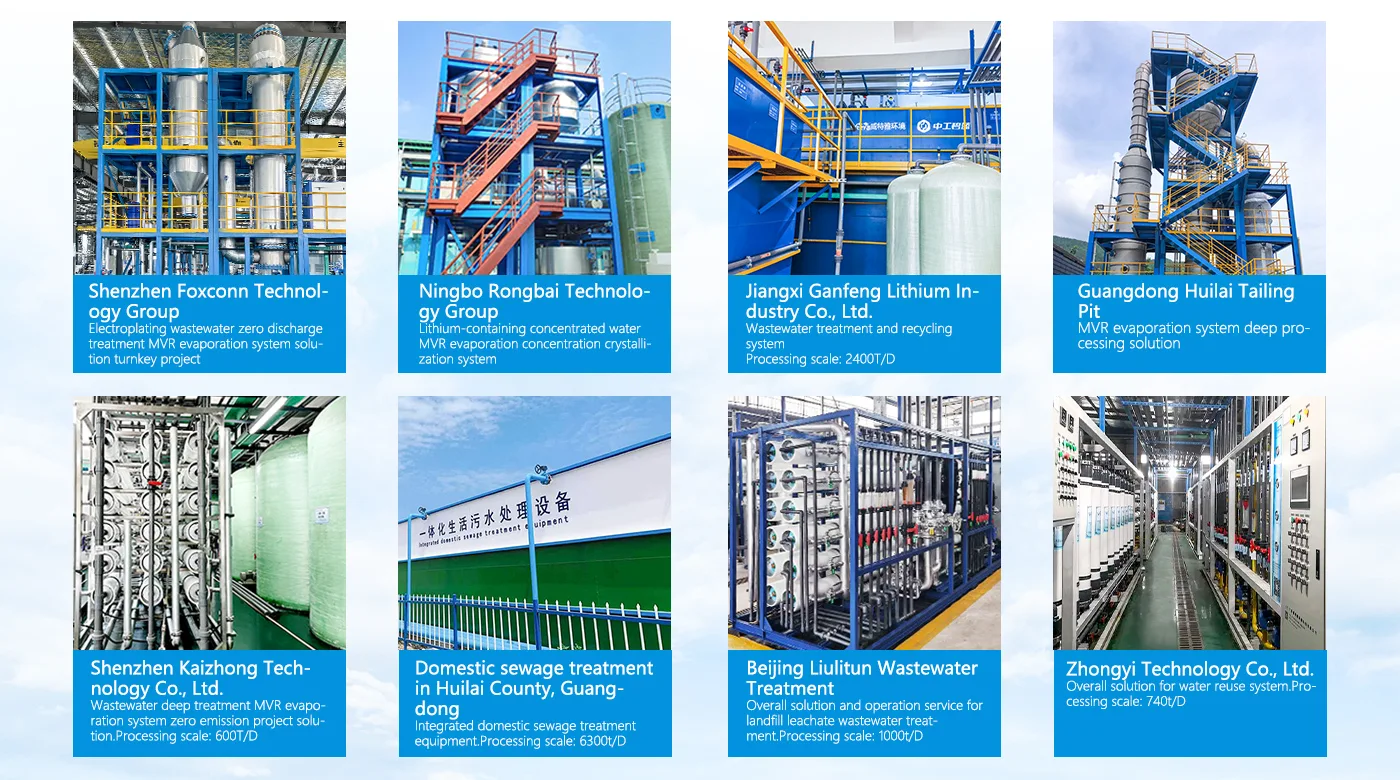
For industries seeking full compliance with ZLD requirements, integrating MVR with other wastewater treatment technologies is essential. This may include reverse osmosis, ion exchange, or advanced oxidation processes. These complementary systems work together to remove contaminants that the MVR alone cannot handle, ensuring that all water is treated and reused effectively. WTEYA has successfully implemented such integrated systems across various sectors, helping clients achieve their sustainability goals without compromising productivity. The synergy between MVR and other technologies enhances overall system reliability and supports long-term environmental responsibility.
Benefits of MVR for Zero Liquid Discharge Implementation
Adopting MVR for ZLD brings numerous benefits, including reduced water consumption, lower disposal costs, and a smaller environmental footprint. Industries that implement MVR-based ZLD systems often see significant improvements in resource efficiency and regulatory compliance. Moreover, the energy savings associated with MVR technology contribute to long-term cost reductions. As global regulations become stricter, companies that invest in MVR for ZLD are better positioned to meet future challenges. WTEYA’s extensive experience in designing and deploying MVR systems ensures that clients receive reliable, scalable solutions that align with their operational and environmental objectives.
Frequently Asked Questions
Q: What is an MVR evaporator?
A: MVR (Mechanical Vapor Recompression) evaporator is an energy-efficient evaporation technology that reduces energy consumption by 30-50% compared to traditional evaporation.
Q: How much energy can MVR save?
A: MVR evaporators typically reduce energy consumption by 30-50% compared to traditional multi-effect evaporators, using electricity instead of steam.
Q: What is the difference between MVR and multi-effect evaporator?
A: MVR uses mechanical vapor recompression for energy efficiency, while multi-effect evaporators use multiple evaporation stages. MVR has lower operating costs.
Take the First Step Towards Compliance
Still using outdated treatment methods? Upgrade to WTEYA's advanced technology and see immediate improvements in efficiency and compliance.
Schedule a video call with our engineers to explore your options.
📱 WhatsApp: +86-1800 2840 855
✉ Email: info@vteya.com
🌐 Website: www.vteya.com
Front page of Cross
Next go-to page
Related information
Can an MVR Evaporator Fit in an Existing Building?
Can an MVR Evaporator Fit in an Existing Building? Retrofitting an MVR evaporator into a building that already exists is one of the most common requests we receive, and the answer is not a simple yes or no.
MVR Evaporator for Salt Lake Lithium Extraction
MVR Evaporator for Salt Lake Lithium Extraction Salt lake brine is one of the lowest-cost lithium sources in the world, but it is also one of the most awkward fluids to concentrate.
Cutting Fluid Wastewater: MVR Evaporation and Zero Discharge
⚙️ Why Spent Emulsion Resists Conventional Treatment Every machining line that uses water-miscible coolant eventually produces a waste stream that cannot be sewered, cannot be burned as-is, and cannot be treated biologically without a fight.
MVR Evaporator Condensate Reuse: Quality and Options
MVR Evaporator Condensate Reuse: Quality and Options The condensate produced by an MVR evaporator is not a waste stream to be disposed of — it is distilled water of consistent quality.
MVR Evaporator Troubleshooting: Common Problems and Fixes
MVR Evaporator Troubleshooting: Common Problems and Fixes MVR evaporators are mechanically simple compared with steam-driven evaporator trains, but they are sensitive to small changes in vacuum, scaling and compressor stability.
Crystallization for Battery Material Wastewater Recovery
Crystallization for Battery Material Wastewater Recovery Battery manufacturing is a wet chemistry business. Cathode active material plants producing lithium iron phosphate or nickel-cobalt-manganese chemistries, and hydrometallurgical recycling lines recovering metals from spent cells, all consume...
Guangdong WTEYA Environmental Technology Co., Ltd
Contact us
WhatsApp: +86 1800 2840 855
Tel: +86-0769-28636053
+86-0769-28636126
Email: info@wteya.com
Add: Floor 14, F4 building, TianAn digital town,
Nancheng District, Dongguan,Guangdong, China