


Landfill Leachate Treatment: Complete Solutions
Release Time:
2026-09-05 18:03

Landfill Leachate Treatment: Complete Solutions
Landfill leachate is widely considered the most challenging wastewater at waste treatment facilities — high organic load, heavy ammonia, variable quality, and declining biodegradability as the landfill ages. This guide explains what leachate is, why it is difficult to treat, the discharge standards it must meet, and the proven treatment trains that deliver stable compliance, including MVR evaporation for concentrate minimization.
What Is Landfill Leachate?
Landfill leachate is a high-strength organic wastewater generated during the landfilling, stacking, and transfer of municipal solid waste. It is formed by waste compaction, decomposition of organic matter, and rainwater percolating through the waste body. Leachate comes from three main sources: moisture squeezed out of high-water-content waste, water produced by anaerobic and aerobic decomposition of organics, and external rainfall or surface water that dissolves pollutants as it passes through the waste.

Why Is Leachate So Difficult to Treat?
Leachate contains an extremely complex mixture of pollutants. Typical raw water quality ranges from COD of 2,000 to 30,000 mg/L, ammonia nitrogen of 500 to 3,000 mg/L, plus heavy metals such as lead, cadmium, chromium, mercury, and arsenic, together with humic acids, organic acids, chlorides, and sulfides. It is dark in color and strongly odorous.
Water quality changes significantly with landfill age, which is the single most important factor in process selection. Young leachate (within 5 years of landfilling) has a BOD/COD ratio of 0.4 to 0.6 and is suitable for biological treatment. Aged leachate (more than 5 to nearly 20 years) has a B/C ratio as low as 0.1 to 0.3 — most biodegradable organics are already consumed, ammonia dominates, and physical-chemical processes such as membrane filtration and evaporation become essential.
Discharge Standards for Leachate Treatment
Treated leachate must meet the limits of Table 2 of the Chinese national standard GB 16889-2008 (Standard for Pollution Control on the Landfill Site of Municipal Solid Waste). The key limits are COD ≤ 100 mg/L, BOD5 ≤ 30 mg/L, ammonia nitrogen ≤ 25 mg/L, total nitrogen ≤ 40 mg/L, SS ≤ 30 mg/L, and total phosphorus ≤ 3 mg/L. Some provinces and sensitive discharge zones enforce even stricter local limits, such as COD ≤ 60 mg/L, so projects must design according to the approved environmental impact assessment.
Main Treatment Methods
No single technology can reliably treat leachate alone. Mainstream projects use a combined train of pretreatment, biological treatment, membrane polishing, and concentrate treatment.
Biological Treatment — Removing Organics and Nitrogen
Anaerobic processes (UASB or IC reactors) handle young leachate with high COD above 8,000 mg/L, removing 60% to 80% of organic load while producing biogas. A2/O processes achieve simultaneous nitrogen and phosphorus removal through nitrification and denitrification. MBR (membrane bioreactor) replaces the secondary clarifier with ultrafiltration, operating at sludge concentrations of 8 to 15 g/L for strong shock resistance and near-zero suspended solids in the effluent.
Membrane Separation — Final Polishing
NF nanofiltration removes COD, color, and divalent ions. RO and especially DTRO (disc-tube reverse osmosis) remove dissolved salts and most organic pollutants, producing clear effluent that meets discharge standards. DTRO operates at 60 to 75 bar with wide flow channels that resist fouling, making it suitable for aged leachate and high-strength concentrate.
Evaporation — The Key to Near-Zero Concentrate
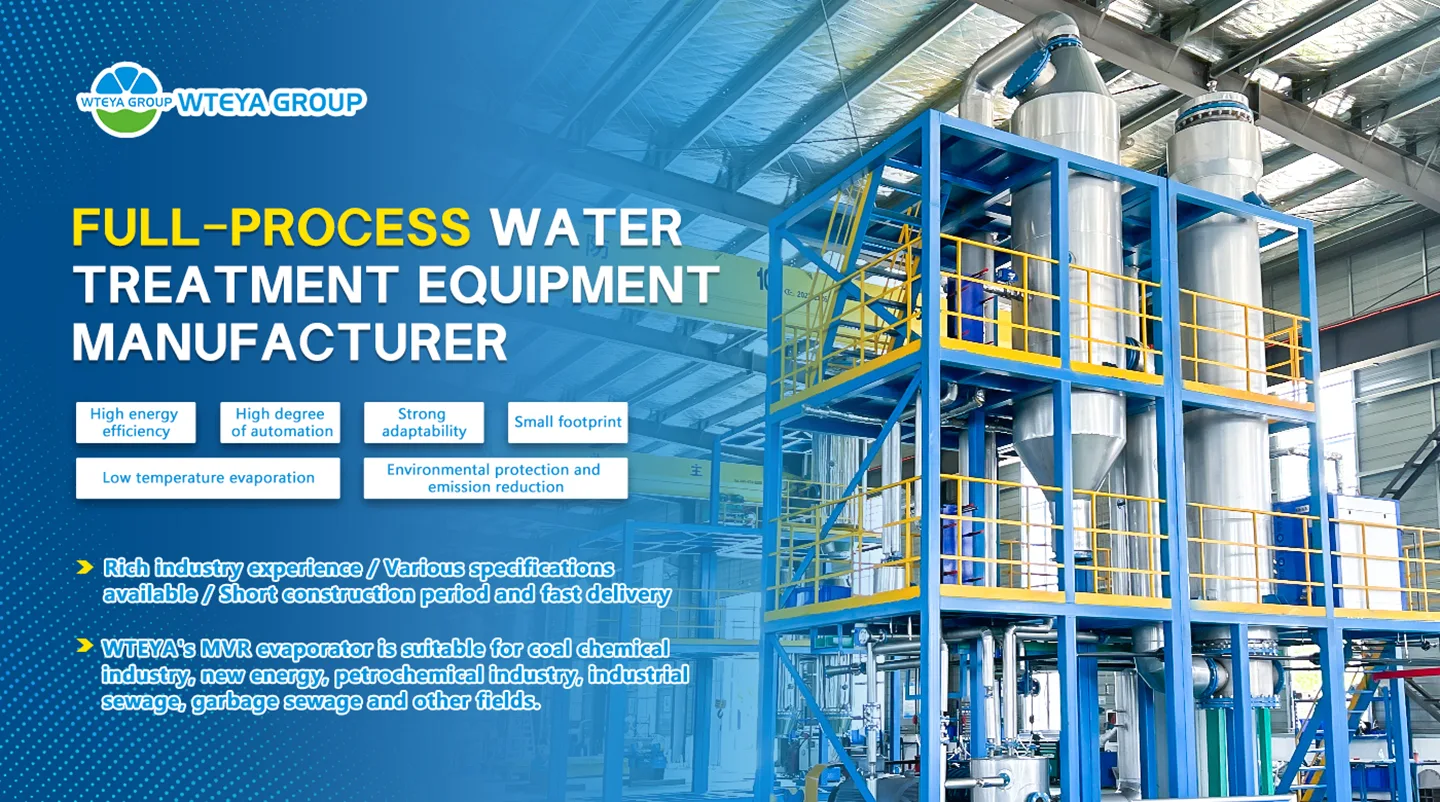
MVR evaporation uses mechanical vapor recompression to evaporate leachate: distilled water is reused and pollutants remain in the concentrate. Evaporation does not depend on biodegradability, so it performs well on aged leachate and membrane concentrate, and is the critical equipment for achieving full quantification treatment with no concentrate discharge.
Typical Treatment Trains by Leachate Type
Young leachate (high B/C): pretreatment + UASB/IC anaerobic + A2/O-MBR + NF/RO. Aged leachate (low B/C): pretreatment + two-stage DTRO membrane concentration + MVR evaporation. Membrane concentrate: MVR evaporation + crystallization/solidification, replacing the increasingly rejected practice of concentrate recirculation back to the landfill.
How MVR Handles Leachate Concentrate
DTRO/RO recovery is typically 60% to 75%, leaving 25% to 40% concentrate with TDS of 20,000 to 50,000 mg/L, high COD, high hardness, and many scale-forming ions. MVR evaporation concentrates this stream by 80% to 90% at a power consumption of roughly 30 to 80 kWh per ton of water evaporated. Condensate from the evaporator can be controlled below 100 mg/L COD for reuse or discharge, and the remaining slurry goes to crystallization, drying, or solidification — achieving water recovery above 95% across the whole plant with no concentrate backlog.
Reliable MVR operation on leachate concentrate requires softening pretreatment (hardness below 100 mg/L) to prevent scaling, corrosion-resistant materials such as 2205 duplex stainless steel or titanium heat exchanger tubes with fluoropolymer-lined vessels for high-chloride streams, foam control with demisters and antifoam dosing, and closed-loop mother liquor recirculation.
Why Choose WTEYA for Leachate Projects
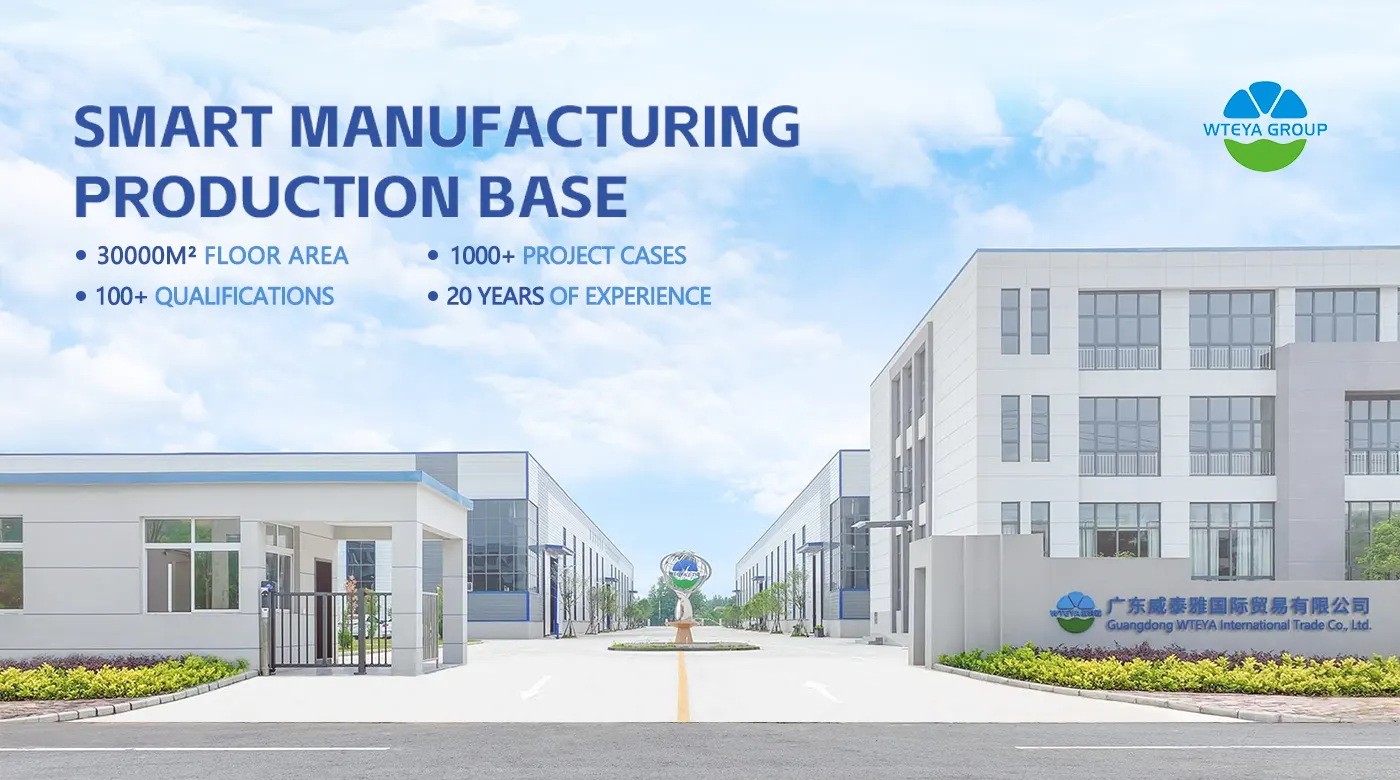
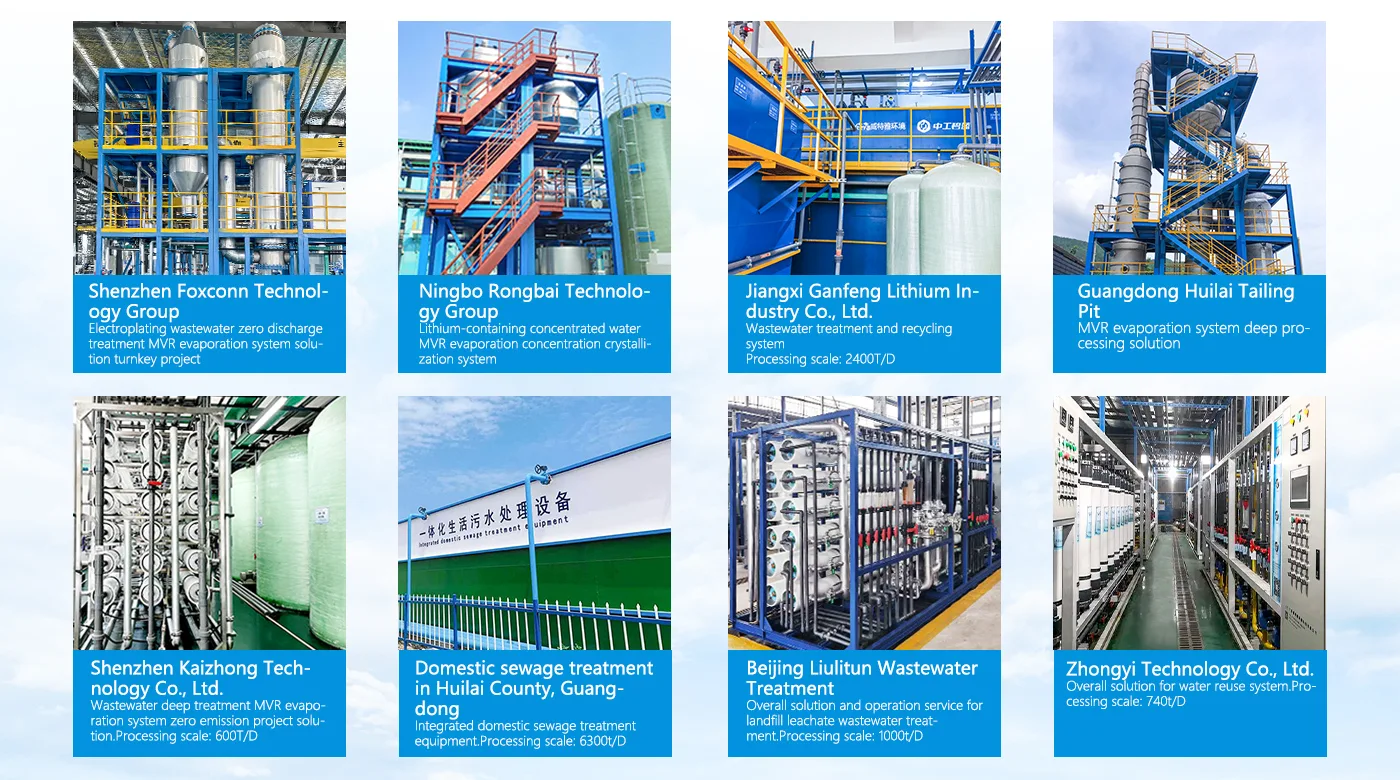
WTEYA has nearly 20 years of experience in leachate treatment and delivers the full chain from water quality testing and process design to equipment manufacturing and operation and maintenance. Completed references include a 50 tons/day leachate project using MVR evaporation. WTEYA supports pilot testing before full-scale design, and can provide preliminary solutions within 48 hours based on your water quality data.
Frequently Asked Questions
Q: How to choose the right solution?
A: Consider your industry, capacity requirements, and environmental regulations. Contact WTEYA for expert guidance.
Q: What is the typical project timeline?
A: Project timelines vary based on capacity and complexity. WTEYA provides detailed project schedules during consultation.
Get a Customized Quote in 24 Hours
Looking for a customized solution for landfill leachate? Our team of experts is ready to help you design the most cost-effective and energy-efficient system for your specific needs.
Contact us today to discuss your project requirements and get a personalized quote.
📱 WhatsApp: +86-1800 2840 855
✉ Email: info@vteya.com
🌐 Website: www.vteya.com
Front page of Cross
Next go-to page
Related information
MVR Evaporator Condensate Reuse: Quality and Options
MVR Evaporator Condensate Reuse: Quality and Options The condensate produced by an MVR evaporator is not a waste stream to be disposed of — it is distilled water of consistent quality.
MVR Evaporator Troubleshooting: Common Problems and Fixes
MVR Evaporator Troubleshooting: Common Problems and Fixes MVR evaporators are mechanically simple compared with steam-driven evaporator trains, but they are sensitive to small changes in vacuum, scaling and compressor stability.
Crystallization for Battery Material Wastewater Recovery
Crystallization for Battery Material Wastewater Recovery Battery manufacturing is a wet chemistry business. Cathode active material plants producing lithium iron phosphate or nickel-cobalt-manganese chemistries, and hydrometallurgical recycling lines recovering metals from spent cells, all consume...
WTEYA 4021 Desalination Systems Reach Four Global Markets
WTEYA 4021 seawater desalination systems reach four global markets in one batch, with shipments to the United States, Greece, Colombia and Peru covering the Americas and Europe.
How Automated Is an MVR Evaporator? PLC Control
How Automated Is an MVR Evaporator? PLC Control An MVR evaporator is the most automated category of evaporation equipment in service today.
Tubular Heat Exchanger vs Plate: Which for Your Evaporator?
Tubular Heat Exchanger vs Plate: Which for Your Evaporator? In almost every MVR evaporator and forced circulation evaporator, the heat exchanger is where the plant economics are decided.
Guangdong WTEYA Environmental Technology Co., Ltd
Contact us
WhatsApp: +86 1800 2840 855
Tel: +86-0769-28636053
+86-0769-28636126
Email: info@wteya.com
Add: Floor 14, F4 building, TianAn digital town,
Nancheng District, Dongguan,Guangdong, China