


High-Salinity Wastewater Treatment Technologies Compared
Release Time:
2026-09-07 09:07

High-salinity wastewater — wastewater with total dissolved solids (TDS) at or above 2% (20,000 mg/L) — is one of the hardest streams to treat in modern industry. Because such salt levels suppress microbial activity, conventional biological processes cannot handle it directly. The proven route is a combined train of softening pretreatment, membrane concentration, and evaporation crystallization, which turns a costly waste stream into clean water and marketable salt. This article compares the main technologies used at each stage and explains how to choose the right combination for your plant.
What Counts as High-Salinity Wastewater?
Industry commonly uses a TDS of ≥2% (20,000 mg/L) as the dividing line for high-salinity wastewater. At or above this level, microbial cells suffer osmotic stress and enzyme activity drops, so direct biological treatment can no longer produce a stable effluent. Wastewater below 1% (10,000 mg/L) TDS can usually still be treated biologically or discharged to a municipal system after polishing.
The practical treatment guidance by TDS range is:
- Below 1,000 mg/L — low-salinity; conventional biological treatment plus advanced polishing.
- 1,000–10,000 mg/L — medium-salinity; biological treatment combined with membrane processes, controlling biological inhibition according to salt type.
- 10,000–20,000 mg/L — near-high-salinity; membrane concentration is needed to cut volume, and biological feasibility must be assessed carefully.
- ≥20,000 mg/L (≥2%) — high-salinity; pretreatment + membrane concentration + MVR evaporation crystallization to reach zero liquid discharge.
Two common misjudgments deserve attention. First, do not judge by conductivity alone: at the same 20,000 mg/L TDS, wastewater dominated by sodium chloride behaves very differently from sulfate- or calcium-magnesium-dominated streams in scaling and corrosion. Second, do not assume high salinity means evaporation only — concentrating first and evaporating only the final brine saves over 80% of evaporation energy.

The Proven Treatment Train
High-salinity wastewater treatment follows four steps. Step one is pretreatment for hardness and silica removal: lime, soda ash and flocculants soften the water and remove calcium, magnesium, silica, suspended solids and part of the organics, protecting downstream membranes and evaporators from scaling; ultrafiltration can be added when needed. Step two is membrane concentration. Nanofiltration selectively separates divalent ions, while reverse osmosis and electrodialysis raise the stream from 2–3% TDS to 8–15%, with water recovery of 60–90%, sharply shrinking the downstream evaporation load; the permeate is reused. Step three is evaporation crystallization. The concentrate enters an MVR or multi-effect evaporator and is concentrated to supersaturation, then a crystallizer produces salt crystals. Step four handles the mother liquor by recycling it for further concentration or sending it to a mixed-salt drying unit.
Across the whole train, total water recovery reaches 95–98%, and the mixed-salt fraction is kept at 5–15% — a genuine zero liquid discharge outcome in which the only solid output is saleable industrial salt or a small amount of mixed salt.
Comparing Membrane Concentration Technologies
Membrane concentration is the workhorse that cuts evaporation volume before the brine reaches the evaporator. Nanofiltration (NF) selectively separates divalent ions, which is the basis of salt splitting; reverse osmosis (RO) and electrodialysis (ED) lift the feed from 2–3% TDS to 8–15% at 60–90% recovery. RO concentrate — the brine left after RO production — typically carries 40,000–100,000 mg/L TDS, or 3–10 times the feed, together with retained organics, hardness ions and antiscalant residue.
For that RO concentrate, high-pressure reverse osmosis (HPRO) uses high-pressure-rated membrane elements at 6–12 MPa to push brine from 40,000–50,000 mg/L TDS up to 80,000–120,000 mg/L, cutting the downstream evaporation load by more than 50%. Electrodialysis and bipolar-membrane electrodialysis suit medium-concentration brine for further concentration or on-site acid/alkali production, offering flexible operation at a higher investment. Whichever membrane step is chosen, it must be paired with evaporation for the final brine — membranes alone cannot reach zero liquid discharge.
MVR Evaporation and Crystallization for the Final Brine
Evaporation crystallization is the step that closes the loop. The concentrated brine enters an MVR evaporator, which uses mechanical vapor recompression to recycle the latent heat of the vapor. Specific power consumption is about 40–70 kWh per ton of water evaporated, which is over 70% more efficient than traditional single-effect evaporation. Where steam is cheap and electricity expensive, a multi-effect evaporator can be compared as an alternative; MVR generally wins on operating cost in most plants.
With salt-splitting design, the crystallizer can produce high-purity sodium chloride and sodium sulfate products of over 97% purity that can be sold as by-products, while the condensate returns to the process. For high-chloride feeds, corrosion-resistant materials such as 2205 duplex stainless steel and titanium are used for wetted parts. Because membrane concentration has already reduced the evaporation water volume by more than 80%, the evaporator only handles the final small brine flow — this staging is what keeps both energy and capital costs under control.
Choosing the Right Route
Route selection starts with brine TDS and ionic composition. When RO concentrate TDS is below 50,000 mg/L, high-pressure RO reconcentration followed by evaporation is usually the economic choice; above 50,000 mg/L, direct MVR evaporation crystallization is often cheaper. Next, check organic content — when COD is high, add an advanced oxidation pretreatment such as catalytic ozonation, Fenton or electrochemical oxidation to prevent foaming in the evaporator and discoloration of the salt crystals. Finally, align the target with local discharge standards and solid-waste policy: the goal may be compliant discharge, partial reuse, or full zero liquid discharge, and the train is sized accordingly.
Why Choose WTEYA for High-Salinity Projects
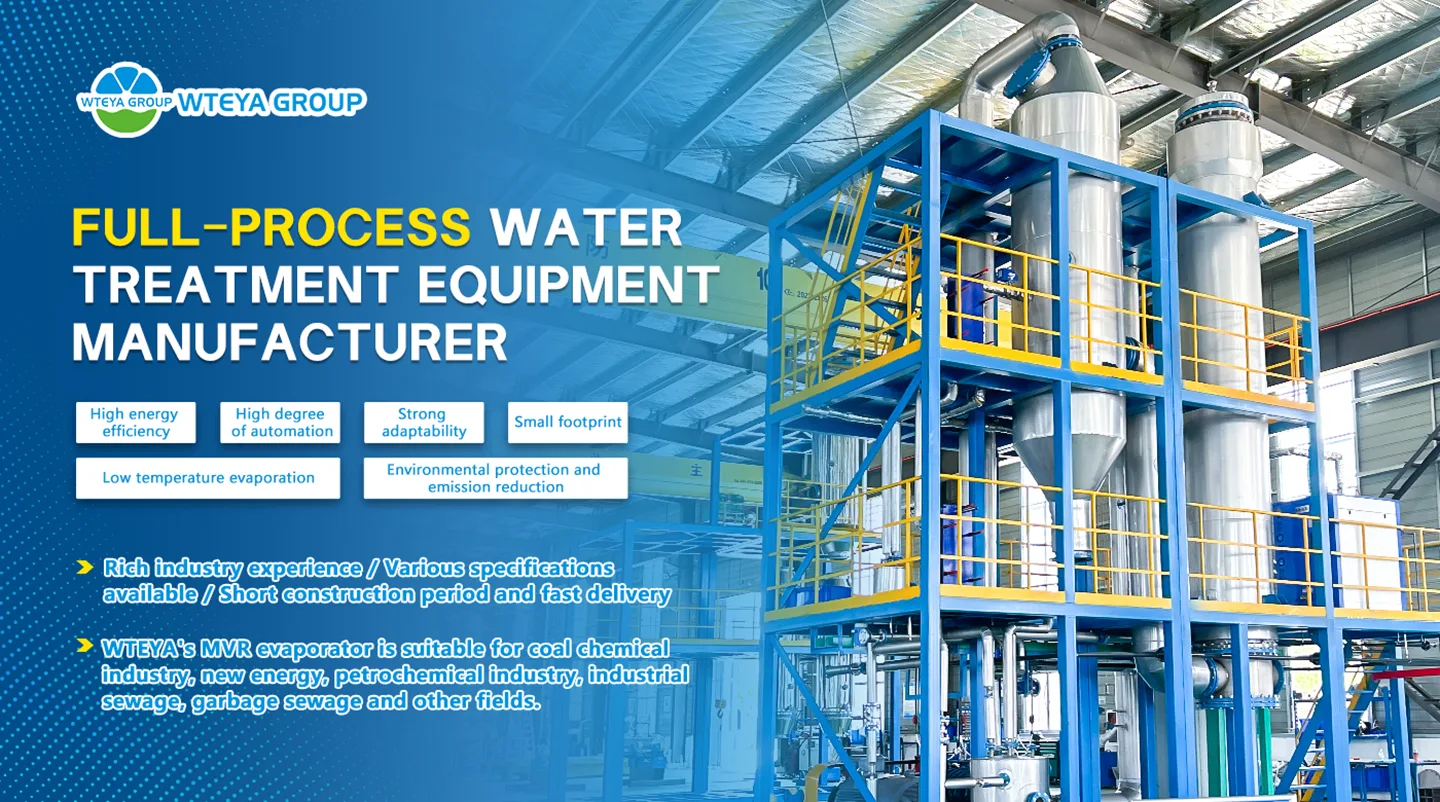
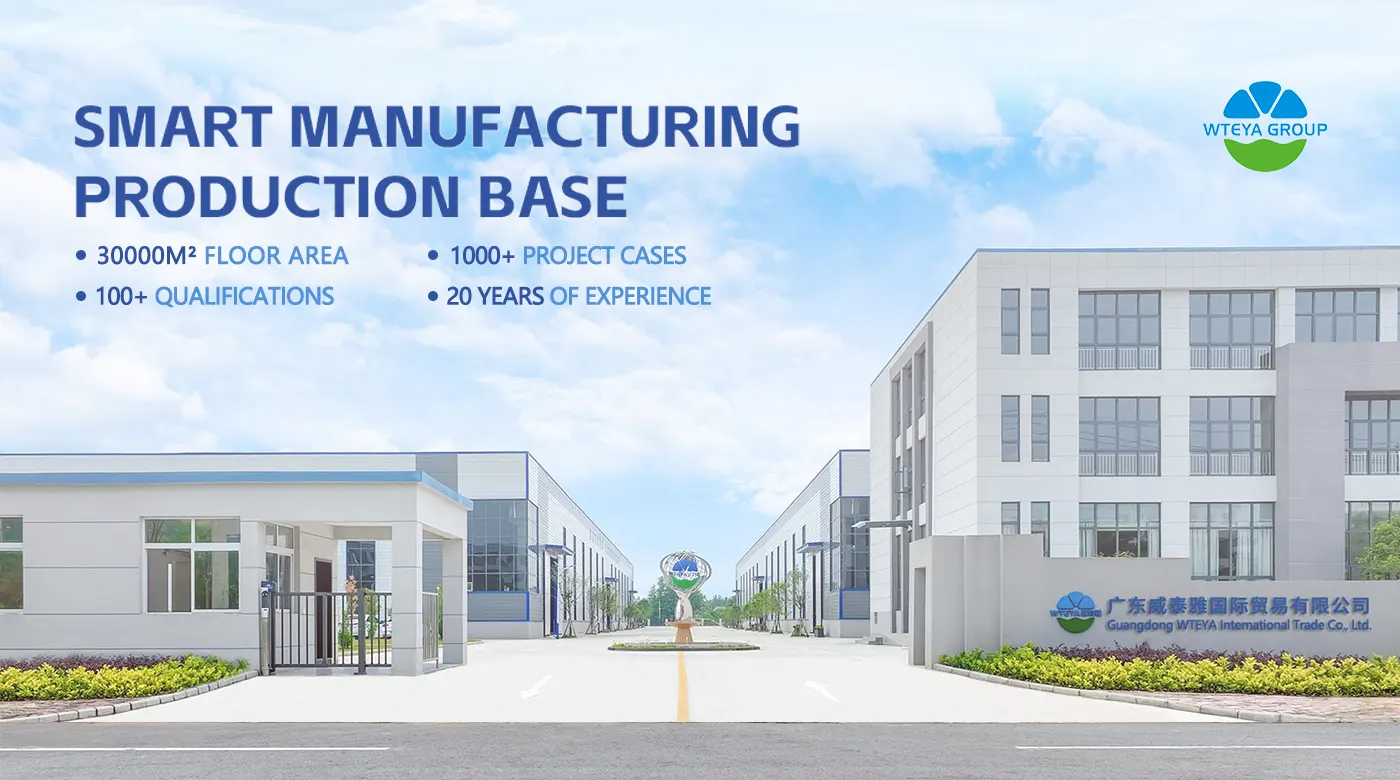
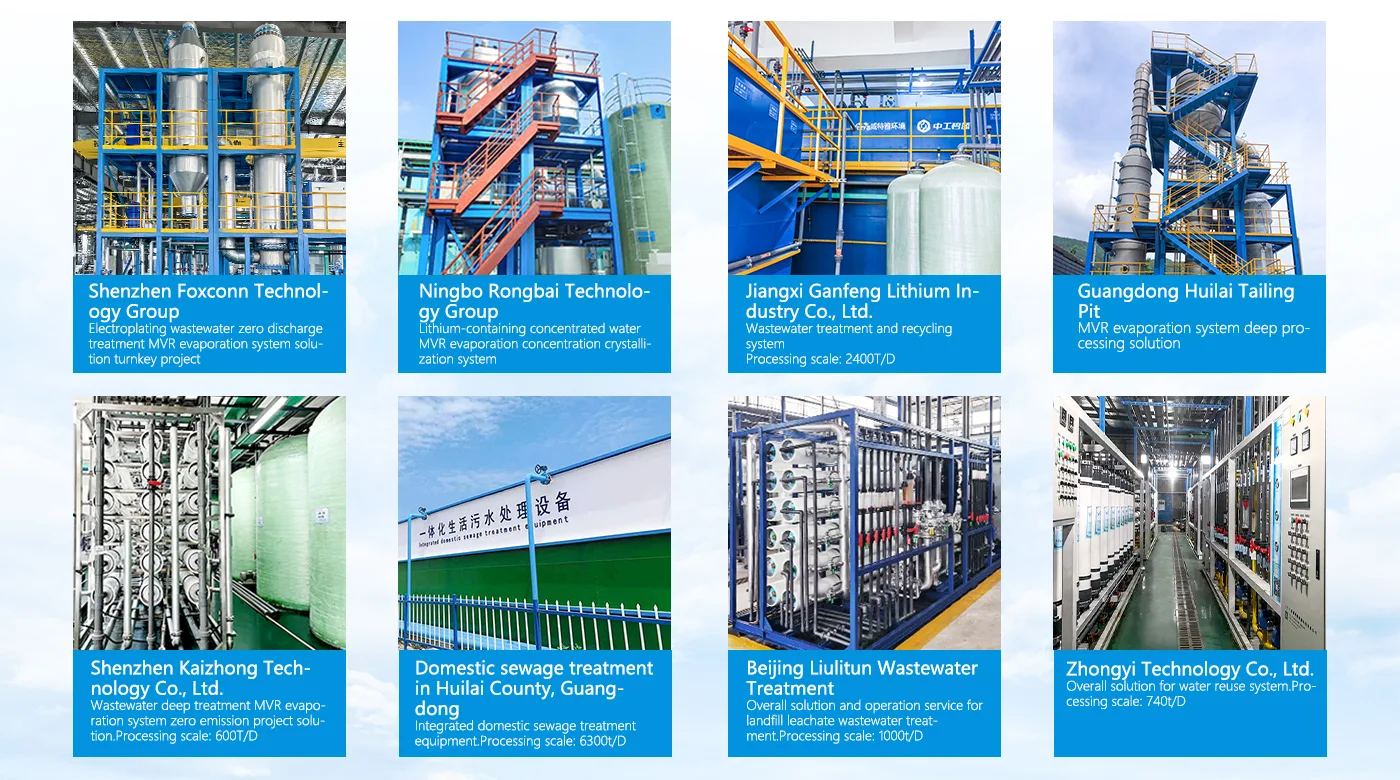
WTEYA has worked in water treatment for 20 years and delivered more than 100 high-salinity wastewater and zero-discharge projects. We provide the complete technology set — MVR evaporation crystallization, membrane concentration, and advanced oxidation — plus water-quality analysis, pilot testing, process design, equipment manufacturing and operation and maintenance. Skid-mounted, modular designs keep the footprint small and shorten the construction cycle, so plants can be commissioned quickly in discharge-restricted zones.
Frequently Asked Questions
Q: How does industrial wastewater treatment work?
A: Industrial wastewater treatment typically involves pre-treatment, membrane concentration, evaporation, and crystallization to remove contaminants and recover water.
Q: What are the benefits of wastewater recycling?
A: Benefits include reduced water costs, environmental compliance, reduced discharge fees, and improved corporate sustainability.
Ready to Start Your Project?
Join industry leaders like Foxconn, BYD, and Huawei who trust WTEYA for their critical wastewater treatment needs.
Get the same expertise working for your wastewater treatment facility. Contact us now.
📱 WhatsApp: +86-1800 2840 855
✉ Email: info@vteya.com
🌐 Website: www.vteya.com
Front page of Cross
Next go-to page
Related information
MVR Evaporator Condensate Reuse: Quality and Options
MVR Evaporator Condensate Reuse: Quality and Options The condensate produced by an MVR evaporator is not a waste stream to be disposed of — it is distilled water of consistent quality.
MVR Evaporator Troubleshooting: Common Problems and Fixes
MVR Evaporator Troubleshooting: Common Problems and Fixes MVR evaporators are mechanically simple compared with steam-driven evaporator trains, but they are sensitive to small changes in vacuum, scaling and compressor stability.
Crystallization for Battery Material Wastewater Recovery
Crystallization for Battery Material Wastewater Recovery Battery manufacturing is a wet chemistry business. Cathode active material plants producing lithium iron phosphate or nickel-cobalt-manganese chemistries, and hydrometallurgical recycling lines recovering metals from spent cells, all consume...
WTEYA 4021 Desalination Systems Reach Four Global Markets
WTEYA 4021 seawater desalination systems reach four global markets in one batch, with shipments to the United States, Greece, Colombia and Peru covering the Americas and Europe.
How Automated Is an MVR Evaporator? PLC Control
How Automated Is an MVR Evaporator? PLC Control An MVR evaporator is the most automated category of evaporation equipment in service today.
Tubular Heat Exchanger vs Plate: Which for Your Evaporator?
Tubular Heat Exchanger vs Plate: Which for Your Evaporator? In almost every MVR evaporator and forced circulation evaporator, the heat exchanger is where the plant economics are decided.
Guangdong WTEYA Environmental Technology Co., Ltd
Contact us
WhatsApp: +86 1800 2840 855
Tel: +86-0769-28636053
+86-0769-28636126
Email: info@wteya.com
Add: Floor 14, F4 building, TianAn digital town,
Nancheng District, Dongguan,Guangdong, China