


WTEYA Strengthens South America Channel with Chilean Desalination Partner
Release Time:
2026-09-16 09:35

WTEYA Strengthens South America Channel with Chilean Desalination Partner
WTEYA is strengthening its presence in South America. Following a working visit from a Chilean distributor of water treatment equipment, the two companies are moving toward a channel partnership that will bring WTEYA's seawater desalination solutions to industrial and municipal customers across the region.
🌎 South America: Where Desalination Is Moving from Option to Necessity
Chile's northern coast is one of the driest places on Earth, and mining, energy and municipal water systems along the Pacific rely increasingly on the sea. Across South America the same pattern repeats: rising demand for water, constrained freshwater sources, and regulation that pushes projects toward responsible brine management.
For equipment distributors in the region, that shift changes what customers ask for. Demand is moving from standalone pumps and filters toward complete, engineered desalination systems backed by real test data — and that is precisely the gap WTEYA fills.

🤝 A Local Channel Backed by a Global Manufacturer
The Chilean partner already supplies water treatment equipment to customers throughout South America, and understands local specifications, import requirements and service expectations. WTEYA brings the manufacturing side: design, production, factory testing and export support.
For end users, the combination is straightforward: a local supplier who answers technical questions in their own language, backed by a factory that actually builds the equipment rather than reselling it.
💧 What WTEYA Brings to Desalination Projects
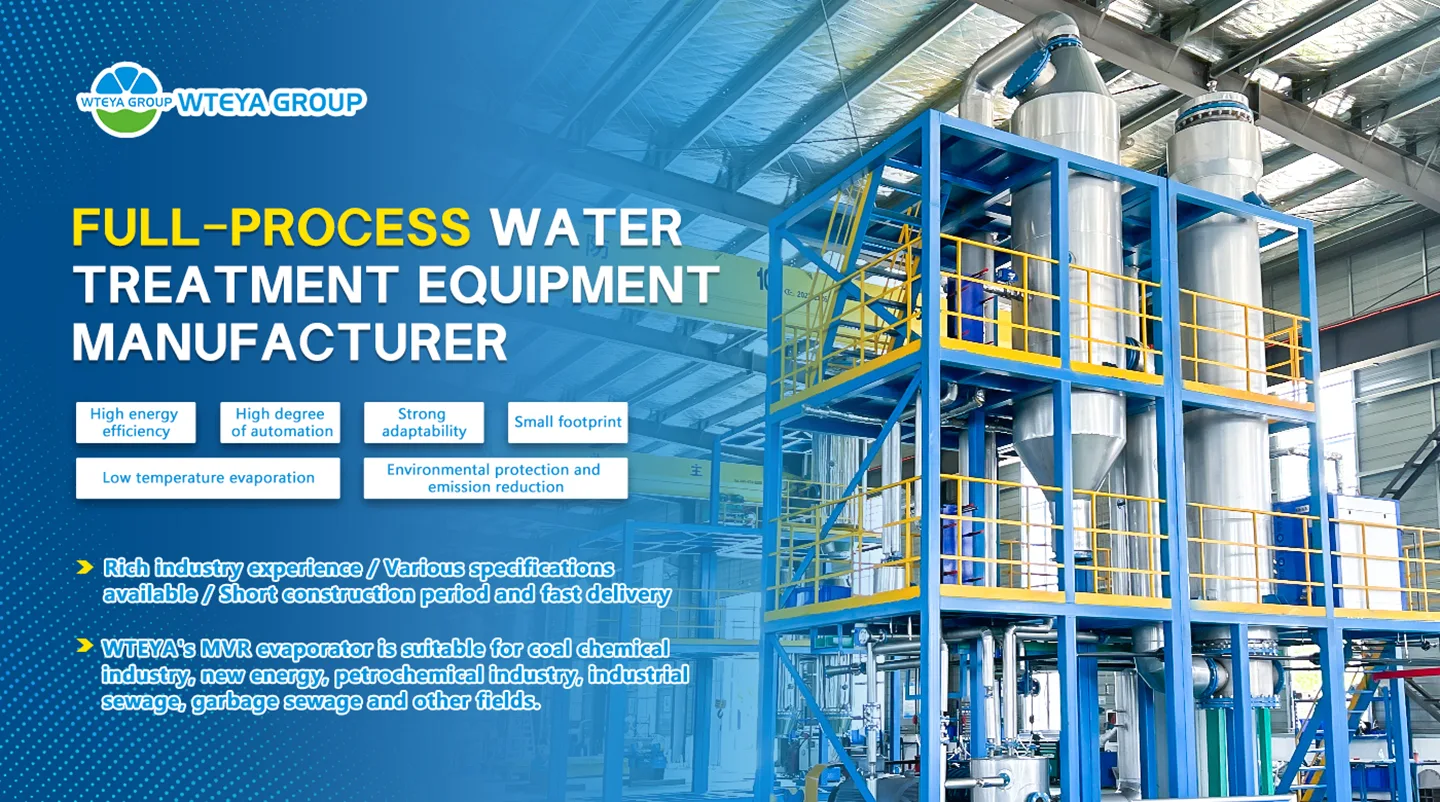
WTEYA's desalination scope covers the full water path, not just the membrane skid. Every project starts with a feedwater review, then moves through pretreatment design — including ultrafiltration where seawater quality demands it — reverse osmosis desalination, post-treatment and brine handling. Pretreatment is treated as the critical design decision, because it determines how long the membranes downstream will last.
| Experience | Nearly 20 years in water treatment equipment |
| Delivered Projects | More than 2,000 worldwide |
| Desalination Scope | Intake and pretreatment, membrane desalination, post-treatment, brine concentration |
| Pretreatment Options | Multimedia filtration, ultrafiltration, chemical dosing |
| Cooperation Models | Complete systems, OEM/ODM manufacturing, distributor partnership |
🧪 Brine and Environmental Responsibility
Desalination creates a concentrate stream, and how that stream is managed often decides whether a coastal project is approved. WTEYA designs brine concentration and zero liquid discharge concepts that cut concentrate volume and recover salts where a project requires it, helping operators meet environmental permits in sensitive coastal areas.

📦 From Factory to Port: How the Cooperation Works
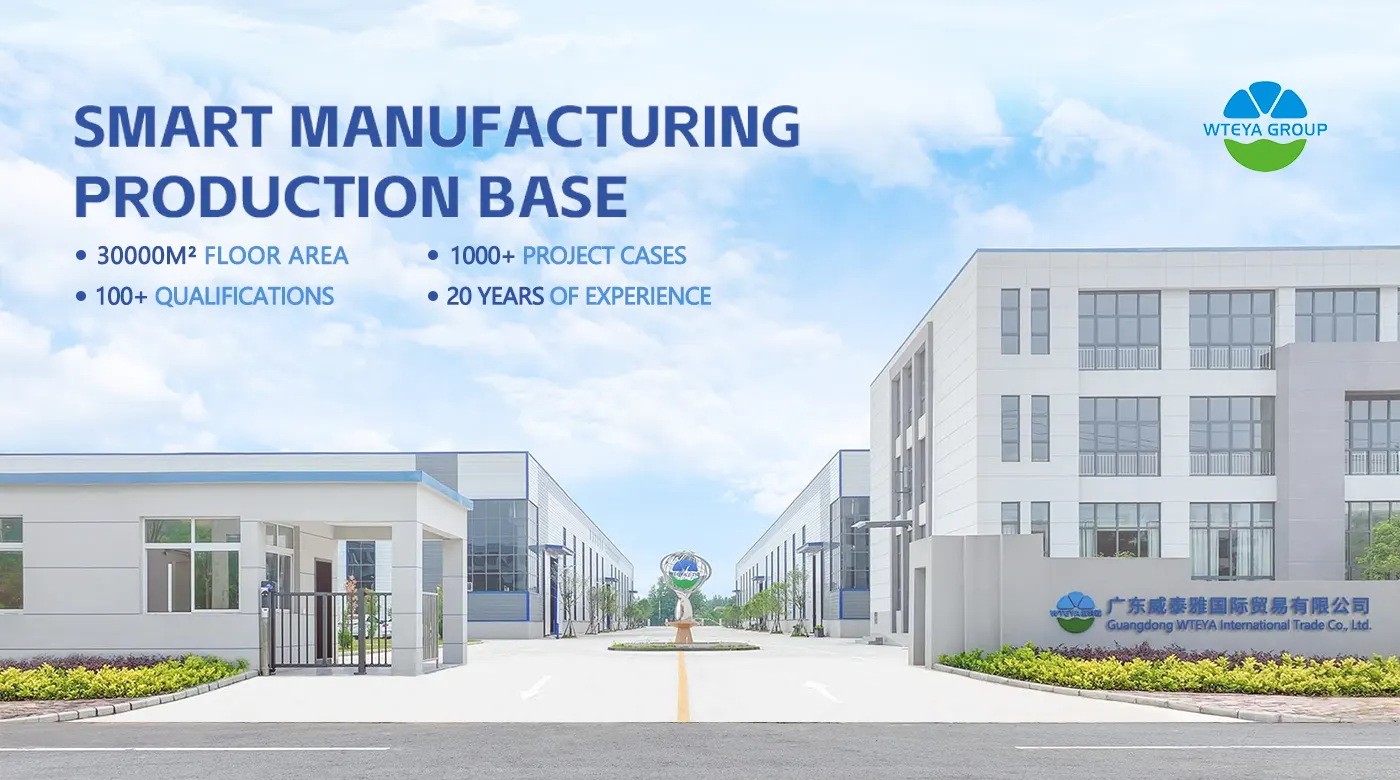
Equipment is built and tested at WTEYA's manufacturing base, then shipped to the partner's market as skids or containerized units ready for site installation. WTEYA supplies drawings, factory test records and operating documentation, and supports the partner's engineers during start-up and the first weeks of operation.
Factory testing before shipment is standard on every unit, so issues surface in the workshop rather than at the customer's plant — a detail that matters most when the equipment is travelling to the other side of the world.
Why Choose WTEYA
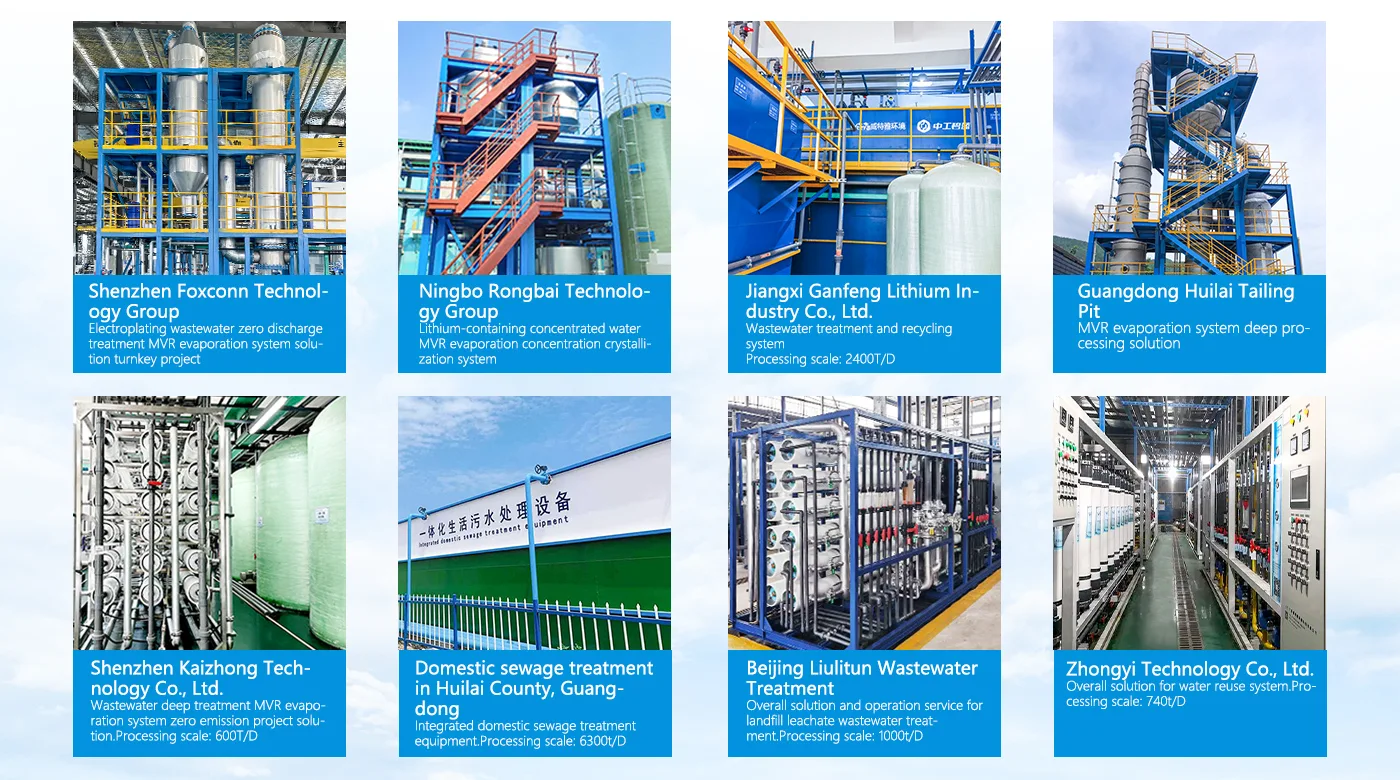
WTEYA has spent nearly 20 years building water treatment equipment, with more than 2,000 projects delivered across chemical, electroplating, battery, metallurgy and environmental industries. For partners in South America, that means a manufacturer who can scale from a single skid to a complete desalination plant — and who stays involved long after the equipment ships.
Frequently Asked Questions
Q: Which desalination solutions does WTEYA offer for South American markets?
A: WTEYA supplies seawater and brackish water desalination systems, from compact skid-mounted units to complete plants covering intake, pretreatment, membrane desalination, post-treatment and brine handling.
Q: How does WTEYA support distributors in South America?
A: WTEYA provides product and application training, technical documentation, factory test reports, spare-parts support and joint project engineering, so the local partner can sell and service systems with confidence.
Q: Why is pretreatment so important in seawater desalination?
A: Seawater carries suspended solids, organics and biological activity that foul membranes. Correct pretreatment — filtration, ultrafiltration or chemical dosing — protects the membranes, stabilises recovery rates and extends the interval between cleanings.
Get Your Free Consultation Today
Don't let wastewater challenges hold back your operations. WTEYA has helped 100+ manufacturers achieve compliance and reduce costs by up to 50%.
Request your free technical assessment and discover how we can optimize your your industry process.
📱 WhatsApp: +86-1800 2840 855
✉ Email: info@vteya.com
🌐 Website: www.vteya.com
Front page of Cross
Next go-to page
Related information
LFP Cathode Wastewater: MVR Zero-Discharge Design
LFP cathode production wastewater carries 500-5,000 mg/L total phosphorus, 1,000-10,000 mg/L ammonia nitrogen and 10,000-50,000 mg/L sulfate.
Can an MVR Evaporator Fit in an Existing Building?
Can an MVR Evaporator Fit in an Existing Building? Retrofitting an MVR evaporator into a building that already exists is one of the most common requests we receive, and the answer is not a simple yes or no.
MVR Evaporator for Salt Lake Lithium Extraction
MVR Evaporator for Salt Lake Lithium Extraction Salt lake brine is one of the lowest-cost lithium sources in the world, but it is also one of the most awkward fluids to concentrate.
Cutting Fluid Wastewater: MVR Evaporation and Zero Discharge
⚙️ Why Spent Emulsion Resists Conventional Treatment Every machining line that uses water-miscible coolant eventually produces a waste stream that cannot be sewered, cannot be burned as-is, and cannot be treated biologically without a fight.
MVR Evaporator Condensate Reuse: Quality and Options
MVR Evaporator Condensate Reuse: Quality and Options The condensate produced by an MVR evaporator is not a waste stream to be disposed of — it is distilled water of consistent quality.
MVR Evaporator Troubleshooting: Common Problems and Fixes
MVR Evaporator Troubleshooting: Common Problems and Fixes MVR evaporators are mechanically simple compared with steam-driven evaporator trains, but they are sensitive to small changes in vacuum, scaling and compressor stability.
Guangdong WTEYA Environmental Technology Co., Ltd
Contact us
WhatsApp: +86 1800 2840 855
Tel: +86-0769-28636053
+86-0769-28636126
Email: info@wteya.com
Add: Floor 14, F4 building, TianAn digital town,
Nancheng District, Dongguan,Guangdong, China