Middle East Seawater Desalination Agency Cooperation


🌍 Enhanced Cooperation & Middle East Expansion


📣 WTEYA officially awarded its Middle East partners 🏅 Official Distributor Certificates for Seawater Desalination Equipment 🤝


📜 This is more than just a certificate;

it represents 👇
✔ Recognition of our technology and products
✔ Trust in our market capabilities and a shared commitment to long-term cooperation

From🧩Solution Capabilities➡️Implementation🏗️
 

WTEYA has earned the trust of the Middle Eastern market with its strength 💪
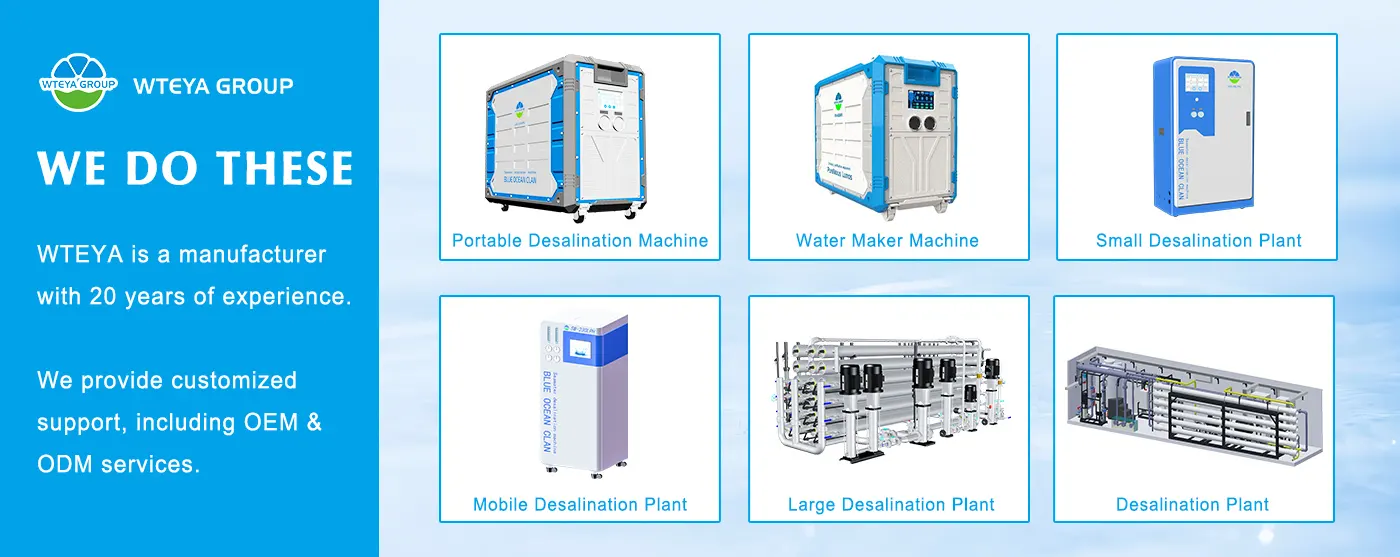


💧 In water-scarce regions,
a stable and reliable seawater desalination solution is not just an option, but a necessity 🔑

From🔧Project Cooperation➡️Regional Distributors🗺️
WTEYA is bringing mature seawater desalination solutions to truly water-scarce markets 🚀


📦 Global Distributor Recruitment is ongoing
Welcome to join WTEYA and bring "stable water production" to the world together 💙

📩 DM us to learn about our agency partnership model

📱 WhatsApp: +86-1800 2840 855
✉ Email: info@wteya.com
🌐 Website: www.vteya.com


Related information


Persistent Organics in Wastewater: How MVR Evaporators Solve the Hard-to-Treat Problem

Persistent Organics in Wastewater: How MVR Evaporators Solve the Hard-to-Treat Problem Many industrial plants face a frustrating reality: their wastewater contains organic compounds that refuse to break down. Biological treatment systems run constantly, chemicals get expensive, and regulators keep tightening discharge limits. If this sounds familiar, you're dealing with persistent organic pollutants—and traditional methods alone won't cut it. Why Some Organics Resist Treatment Not all wastewater is created equal. Persistent organic pollutants (POPs) include compounds like phenols, chlorinated solvents, dyes, pesticides, and high-molecular-weight hydrocarbons. These substances share one frustrating trait: microorganisms can't digest them efficiently. Common industries facing this challenge: Petrochemical and refining operations Pharmaceutical manufacturing Textile and dye production Pesticide and chemical synthesis Wood preservation facilities The result? Your biological treatment tank becomes an expensive home for bacteria that simply refuse to eat the problem away. Chemical oxidation helps but drives up operating costs dramatically. The Thermal Concentration Approach: How MVR Evaporation Handles Difficult Organics MVR (Mechanical Vapor Recompression) evaporators take a fundamentally different approach. Instead of trying to destroy persistent organics biologically or chemically, thermal evaporation concentrates them. How it works: Wastewater enters the evaporator system Heat converts water into vapor Vapor gets compressed mechanically (that's the "recompression" part) Compressed vapor releases latent heat efficiently Concentrated residue collects for further treatment or disposal The key advantage: MVR evaporation doesn't care what chemicals are in your wastewater. Heat and phase change treat everything equally. Concentrate the organics, recover the water, and handle the smaller volume of residue through crystallization or other specialized methods. Integrating MVR with Zero Liquid Discharge Systems For facilities facing strict discharge regulations, pairing MVR evaporation with a complete ZLD system creates a powerful combination. Typical ZLD configuration with MVR: Pretreatment : Remove particulates and adjust pH MVR evaporation : Concentrate wastewater and recover distillate Crystallizer (optional): Recover salts from concentrated brine Distillate polishing : MBR membrane or similar for reusable water quality The distillate from MVR evaporation typically meets discharge standards directly—or needs minimal polishing. Your plant achieves true zero liquid discharge while keeping operational complexity manageable. Energy Efficiency: The MVR Advantage Over Traditional Thermal Treatment One concern many plants raise: "Won't constant evaporation use enormous amounts of energy?" Modern MVR systems answer this with impressive efficiency. Unlike traditional evaporators that generate fresh steam continuously, MVR recaptures and reuses heat energy mechanically. The compressor provides the energy boost needed to raise vapor temperature—just enough to maintain the evaporation cycle. Energy comparison: Traditional multi-effect evaporator: 0.3-0.5 tons of steam per ton of water evaporated MVR evaporator: 15-30 kWh of electricity per ton of water evaporated (no steam required) For plants already paying high steam costs, switching to MVR often pays for itself within 2-3 years through energy savings alone. When MVR Evaporation Makes Sense for Your Facility MVR evaporators excel in these scenarios: High concentrations : When wastewater contains 1-20% dissolved solids including persistent organics, evaporation becomes more cost-effective than membrane-based treatment. Variable composition : If your wastewater composition fluctuates significantly, MVR handles changes gracefully—unlike biological systems that require months to adapt. Water recovery goals : Facilities targeting water reuse rather than discharge find MVR distillate quality meets most industrial process water requirements. Space constraints : MVR systems achieve high concentration ratios in relatively compact footprints compared to pond-based treatment alternatives. Key Takeaways Persistent organic pollutants often defeat biological treatment—but thermal evaporation doesn't care what it's concentrating MVR technology recovers water efficiently while concentrating organics for specialized handling Pairing MVR with ZLD systems helps facilities achieve compliance and water recovery goals Energy efficiency makes modern MVR systems cost-effective compared to traditional thermal treatment Concentration ratio, wastewater characteristics, and water recovery goals determine whether MVR fits your situation For plants struggling with hard-to-treat industrial wastewater, MVR evaporation offers a proven path forward—one that doesn't rely on microorganisms behaving cooperatively or chemicals that drain your operating budget.


Electroplating Wastewater ZLD: MVR Evaporator for Heavy Metal Removal

# Electroplating Wastewater ZLD: MVR Evaporator for Heavy Metal Removal Electroplating plants face strict discharge limits. Heavy metals like nickel, chromium, and copper cannot be released into waterways — and regulators are tightening rules every year. If your current treatment system still produces concentrated wastewater with nowhere to go, zero liquid discharge (ZLD) is no longer optional. ## Why Electroplating Wastewater Is Difficult to Treat Electroplating wastewater contains multiple heavy metals at high concentrations, along with acids, alkalis, and cyanide. Traditional chemical precipitation removes some metals, but the resulting sludge is classified as hazardous waste — expensive to handle and legally risky to store. More importantly, the treated effluent often still exceeds discharge standards for copper, nickel, and chromium. That means fines, production stops, or costly upgrades. ## How MVR Evaporators Enable Zero Liquid Discharge An MVR evaporator uses mechanical vapor recompression to recycle thermal energy. Instead of consuming large amounts of steam, it compresses low-pressure vapor to raise its temperature and reuse it for evaporation. This cuts energy consumption by 30–60% compared to multi-effect evaporation. In electroplating ZLD systems, MVR evaporators work downstream of membrane filtration. They concentrate the reject stream until all water is recovered and heavy metals remain as solid residue. No liquid waste leaves the facility. The forced circulation design handles high-density, scaling-prone solutions — common in plating rinse water — without clogging or fouling shutdowns. ## Key Benefits for Electroplating Plants - **Zero discharge compliance**: Meets the strictest local and national heavy metal effluent standards - **Water reuse up to 95%**: Recovered water returns to the rinsing process, cutting freshwater costs - **Lower sludge volume**: Concentrated salt cake is easier and cheaper to dispose of than diluted sludge - **Energy savings**: MVR technology reduces steam consumption dramatically versus traditional evaporation - **Continuous operation**: Automated controls and forced circulation design minimize downtime ## Why Plants Choose WTEYA MVR Systems WTEYA has designed and delivered zero liquid discharge systems for electroplating, PCB, and metal surface treatment facilities for nearly 20 years. Our MVR evaporators are built with corrosion-resistant alloys to handle acidic and high-chloride plating wastewater. Every system is engineered to match your actual wastewater volume, metal species, and local discharge standards. Pre-treatment, forced circulation evaporator, and crystallizer can be integrated as a complete ZLD line — or supplied individually to upgrade existing equipment. **Key takeaways:** - MVR evaporators cut energy use by 30–60% in electroplating ZLD systems - Forced circulation design handles heavy metal scaling without production stops - Achieving zero discharge protects you from fines and future regulatory changes - Water recovery up to 95% lowers freshwater costs and hazardous waste volumes


MVR Evaporator: How to Save 30%-60% on Energy Costs

# MVR Evaporator: How to Save 30%-60% on Energy Costs Steam costs are eating your operational budget. Traditional multi-effect evaporators consume massive amounts of steam — and with energy prices rising, that's a direct hit to your bottom line. MVR (Mechanical Vapor Recompression) technology changes the equation completely. ## The Energy Problem with Traditional Evaporation Multi-effect evaporators rely on fresh steam for every evaporation cycle. Even with 3-effect or 5-effect designs, you're still burning fuel to generate steam repeatedly. For a typical industrial wastewater plant processing 10 tons/hour, steam costs alone can exceed $200,000 annually. The bigger issue: energy costs keep climbing. Every year, your evaporation operating expenses rise — while your competitors using MVR technology lock in stable, low energy bills. ## How MVR Technology Cuts Energy Use MVR evaporators work on a simple principle: reuse the vapor you've already created. Instead of feeding fresh steam into each evaporation stage, the system captures vapor from the evaporation process, compresses it to increase its temperature and pressure, then feeds it back as the heating source. The compression is powered by electricity — and that's where the savings come from. Electricity required to run the compressor is typically 1/3 to 1/2 the cost of generating equivalent steam thermally. **Key energy-saving mechanisms:** - **Vapor reuse** — the same energy circulates through the system - **No continuous steam input** — only electricity for compression - **Heat recovery** — preheating feed liquid with condensate - **Optimized insulation** — minimal heat loss to environment ## Quantifying the Savings: 30%-60% Reduction Real-world data from operating plants shows consistent results. MVR evaporators reduce energy consumption by 30%-60% compared to traditional multi-effect systems, depending on: - **Feed characteristics** — temperature, concentration, boiling point elevation - **System design** — single-effect vs. multi-effect MVR - **Operating parameters** — temperature difference across the evaporator - **Scale and load factors** — larger systems achieve better energy efficiency For a medium-sized ZLD system processing 5-10 tons/hour of high-salinity wastewater, the numbers are compelling: | System Type | Annual Energy Cost | Savings with MVR | |-------------|-------------------|-------------------| | 3-Effect Evaporator | ~$180,000 | — | | MVR Evaporator | ~$90,000 | $90,000/year | Payback period for the MVR system upgrade: typically 1.5-2.5 years. ## When MVR Delivers Maximum Savings MVR technology isn't just about energy prices — it's about your entire operating model. **Best applications for maximum savings:** - **Continuous operation** — MVR systems excel at steady-state operation - **Large-scale evaporation** — larger throughput = better energy efficiency - **High boiling point elevation feeds** — MVR handles temperature differences efficiently - **ZLD systems** — where evaporation runs 24/7, energy savings compound daily **Less suitable scenarios:** - Intermittent operation with frequent startups/shutdowns - Very small capacity (<1 ton/hour) where compressor efficiency drops - Feeds with extreme fouling requiring frequent cleaning downtime ## Why WTEYA WTEYA designs and manufactures both MVR and multi-effect evaporator systems, helping you choose based on real energy cost analysis — not sales pitches. Nearly 20 years of experience, 100+ ZLD projects completed, trusted by CATL, BYD, Foxconn, and other leading industrial enterprises.


Evaporation Crystallization: Recover Salt from Wastewater

Evaporation Crystallization: Recover Salt from Wastewater Every day, industrial plants discharge thousands of tons of wastewater loaded with dissolved salts. What if those salts could become a revenue source instead of a disposal headache? The Hidden Cost of Salty Wastewater High-salinity wastewater is one of the toughest challenges in industrial water treatment. Chemical plants, mining operations, and pharmaceutical manufacturers all face the same problem: dissolved salts that exceed discharge limits and threaten the environment. Traditional disposal methods—deep well injection, dilution, or trucking to landfill—come with rising costs and tightening regulations. In many regions, zero liquid discharge is no longer optional. What Is Evaporation Crystallization? Evaporation crystallization is a thermal process that concentrates wastewater until dissolved salts form solid crystals. The clean water vapor condenses for reuse, while the recovered salt can be sold or safely disposed of. Unlike membrane systems that produce a concentrated brine requiring further handling, crystallization eliminates the liquid waste stream entirely. How the Process Works 1. Pre-treatment removes suspended solids and organics that interfere with crystal formation. 2. Concentration through multi-effect or MVR evaporation raises the salt solution to saturation point. 3. Crystallization forces dissolved salts out of solution as solid crystals under controlled temperature and agitation. 4. Solid-liquid separation harvests the dry crystals while returning remaining mother liquor to the evaporator for another pass. Key Benefits for Industrial Users - Near-complete water recovery — over 95% of wastewater becomes reusable condensate - Reduced disposal costs — solid salt is cheaper to handle than liquid brine - Revenue potential — recovered sodium chloride, sodium sulfate, and other salts have market value - Regulatory compliance — crystallization meets the strictest ZLD requirements Choosing the Right Equipment Not all crystallizers handle every type of salt. Forced circulation crystallizers work best with scaling-prone wastewater, while flash crystallizers suit clean salt solutions. The choice depends on your wastewater chemistry, flow rate, and target crystal quality. MVR evaporators with integrated crystallization stages offer the lowest energy consumption, cutting operating costs by 30–50% compared to multi-effect systems. Why WTEYA WTEYA has delivered over 100 evaporation crystallization projects across chemical, pharmaceutical, and mining industries in the past two decades. Every system is engineered for your specific wastewater composition, ensuring reliable crystal output and maximum water recovery.


MVR Evaporator Maintenance Guide: Daily Checklist to Cut Costs

# MVR Evaporator Maintenance Guide: Daily Checklist to Cut Costs Unplanned MVR evaporator downtime costs factories thousands per hour. A single emergency repair can exceed ¥50,000. The difference between smooth operation and costly breakdowns often comes down to daily maintenance. This guide gives you a practical maintenance checklist used by WTEYA engineers across 100+ industrial installations. Follow it and extend your MVR evaporator lifespan by 3–5 years while cutting energy and repair costs. ## Why MVR Evaporator Maintenance Matters MVR evaporators run continuously in industrial wastewater treatment, petrochemical, and pharmaceutical plants. The compressor, the heart of the system, operates around the clock. Without regular checks, minor issues escalate into major failures. **Industry data shows:** - Poor maintenance is the #1 cause of MVR compressor failure - Emergency repairs cost 3–5x more than preventive maintenance - Proper daily care reduces energy consumption by 5–15% Neglecting maintenance does not save money. It transfers the cost from a small daily investment to a large unplanned expense. ## Daily Maintenance Checklist for MVR Operators Perform these checks every 4–8 hours during operation: **Compressor System** - Check oil level and color in the sight glass. Dark or foamy oil means contamination - Monitor suction and discharge pressure against baseline values - Listen for unusual vibration or knocking sounds **Heat Exchanger Train** - Inspect vapor pipelines for insulation damage or leaks - Check condensate drainage is functioning properly - Verify no scale buildup on heat transfer surfaces **Pumps and Motors** - Listen for abnormal bearing noise in the feed pump and condensate pump - Check motor surface temperature — should not exceed design limits - Verify shaft seals are dry with no liquid weeping **Control System** - Log temperature, pressure, and flow readings at the control panel - Confirm automatic blowdown valves activate on schedule - Review alarm history for any unresolved events Use a simple logbook or digital form. Consistent records reveal patterns before they become failures. ## Periodic Maintenance Schedule Beyond daily checks, plan maintenance at regular intervals: **Weekly**: Clean air filters on control cabinets, inspect all pipe joints for moisture, check chemical dosing systems. **Monthly**: Analyze compressor oil quality via sample test, inspect and calibrate sensors, examine gaskets and replace any showing wear. **Quarterly**: Full inspection of compressor internals by qualified technician, check motor winding resistance, calibrate safety relief valves. **Annually**: Comprehensive system overhaul including heat exchanger tube cleaning, compressor performance testing, and control system firmware updates. Keep all maintenance records on file. These logs prove equipment care during warranty claims and resale evaluations. ## Cost-Saving Benefits of Proactive Maintenance A well-maintained MVR evaporator delivers measurable savings: - **Reduced energy use**: Clean heat transfer surfaces and properly lubricated bearings cut power consumption by 5–15% - **Longer equipment life**: Preventive care adds 3–5 years to MVR evaporator lifespan versus reactive maintenance - **Fewer production stoppages**: Each avoided shutdown saves direct repair costs plus lost output value - **Lower maintenance budget**: Regular part replacement at scheduled intervals costs a fraction of emergency repair rates WTEYA designs each MVR evaporator with maintenance accessibility in mind. Large inspection ports, modular component layouts, and remote monitoring options simplify daily care for plant operators. ## Choose a Partner Built Around Reliability WTEYA brings nearly 20 years of MVR evaporator design and manufacturing experience. We supply [multi-effect evaporator](https://www.vteya.com/product/multi-effect-evaporator) systems to Fortune 500 companies and industrial plants worldwide. Our OEM and ODM services cover standard and custom configurations to match your specific wastewater conditions. Explore our complete range of [mvr evaporator](https://www.vteya.com/product/mvr-evaporator) solutions, [forced circulation](https://www.vteya.com/product/forced-circulation) crystallizers, and [zld](https://www.vteya.com/product/zld-systems) systems designed for long-term, low-maintenance operation.


Global Water Crisis Alert 2026!

WTEYA Seawater Desalination Technology — High Efficiency, Energy Saving & Eco-friendly

All
  • All
  • Product Management
  • News
  • Introduction
  • Enterprise outlets
  • FAQ
  • Enterprise Video
  • Enterprise Atlas