



How to Choose the Right MVR Evaporator for High-Salt Wastewater
Release Time:
2026-05-13 18:03

How to Choose the Right MVR Evaporator for High-Salt Wastewater
High-salt wastewater is one of the toughest challenges in industrial water treatment. Without the right MVR evaporator, you face scaling, corrosion, and skyrocketing energy bills. Choosing the wrong system can shut down your production line for weeks.
Why High-Salt Wastewater Needs Special Design
Standard evaporators struggle when TDS exceeds 50,000 mg/L. Salt crystallizes on heat exchange surfaces, reducing efficiency by up to 40%. High chloride concentrations accelerate corrosion, especially in stainless steel components.
For industries like chemical manufacturing, lithium extraction, and coal gasification, wastewater salinity often reaches 100,000–250,000 mg/L. A general-purpose evaporator simply cannot handle these conditions reliably.

Key Factors in MVR Evaporator Selection
Material of Construction: Titanium or duplex stainless steel (2205/2507) resists chloride-induced corrosion. For extremely aggressive wastewater, Hastelloy or fluoropolymer-lined components may be necessary.
Anti-Scaling Design: Forced circulation MVR evaporators maintain high flow velocity (1.5–2.5 m/s) inside tubes, minimizing crystal deposition. Falling film designs work better for lower-salinity streams.
Compressor Capacity: Match the compressor to your evaporation rate. An undersized unit cannot maintain the required temperature difference, leading to poor concentration performance.
Crystal Discharge System: Continuous discharge prevents salt accumulation. Look for designs with forced circulation crystallizers or scraped surface heat exchangers.
Energy Efficiency Matters
MVR technology recovers latent heat from vapor, reducing energy consumption by 70–90% compared to multi-effect evaporation. For a 10-ton/hour system processing high-salt wastewater, this translates to roughly $150,000–$300,000 in annual energy savings.
Variable frequency drives (VFDs) on the compressor allow you to adjust capacity based on actual wastewater flow, avoiding wasted energy during low-load periods.
WTEYA: Engineered for High-Salinity Applications
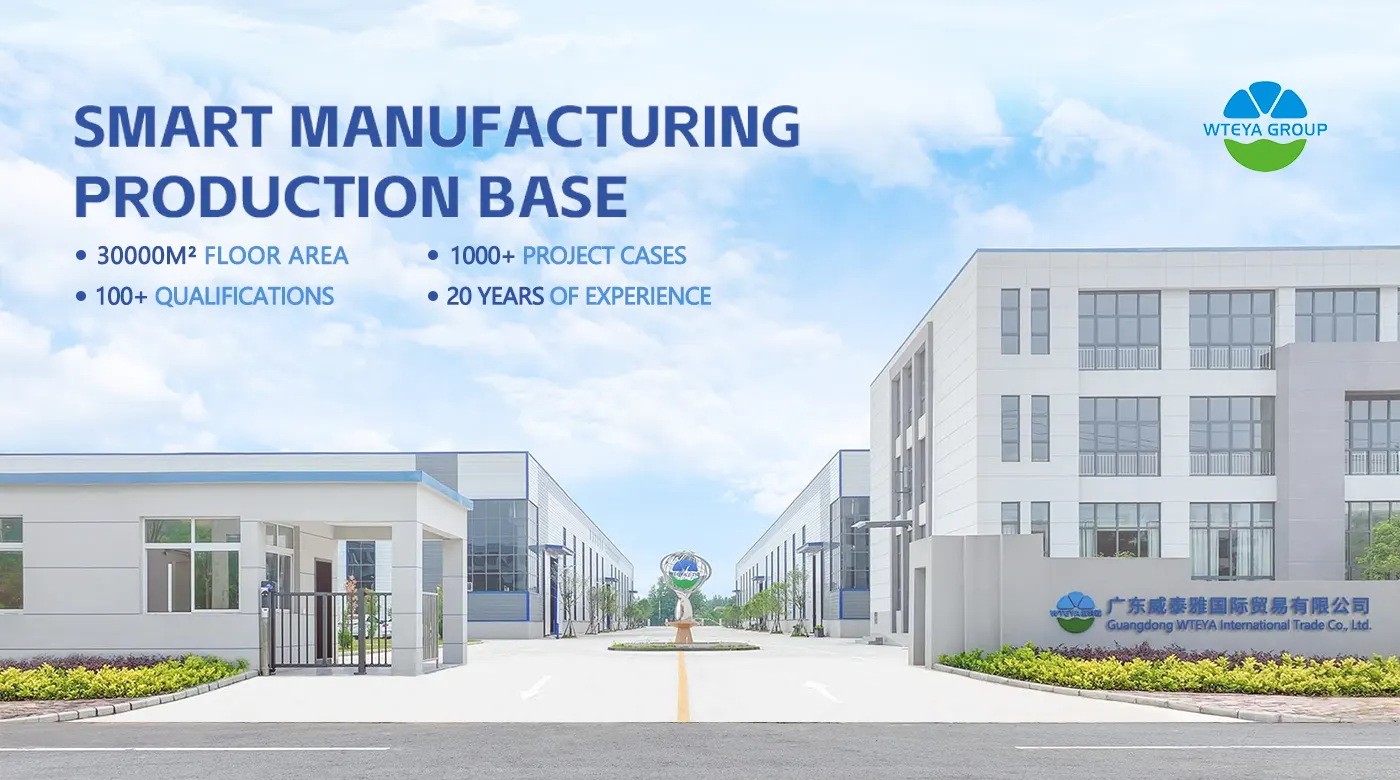
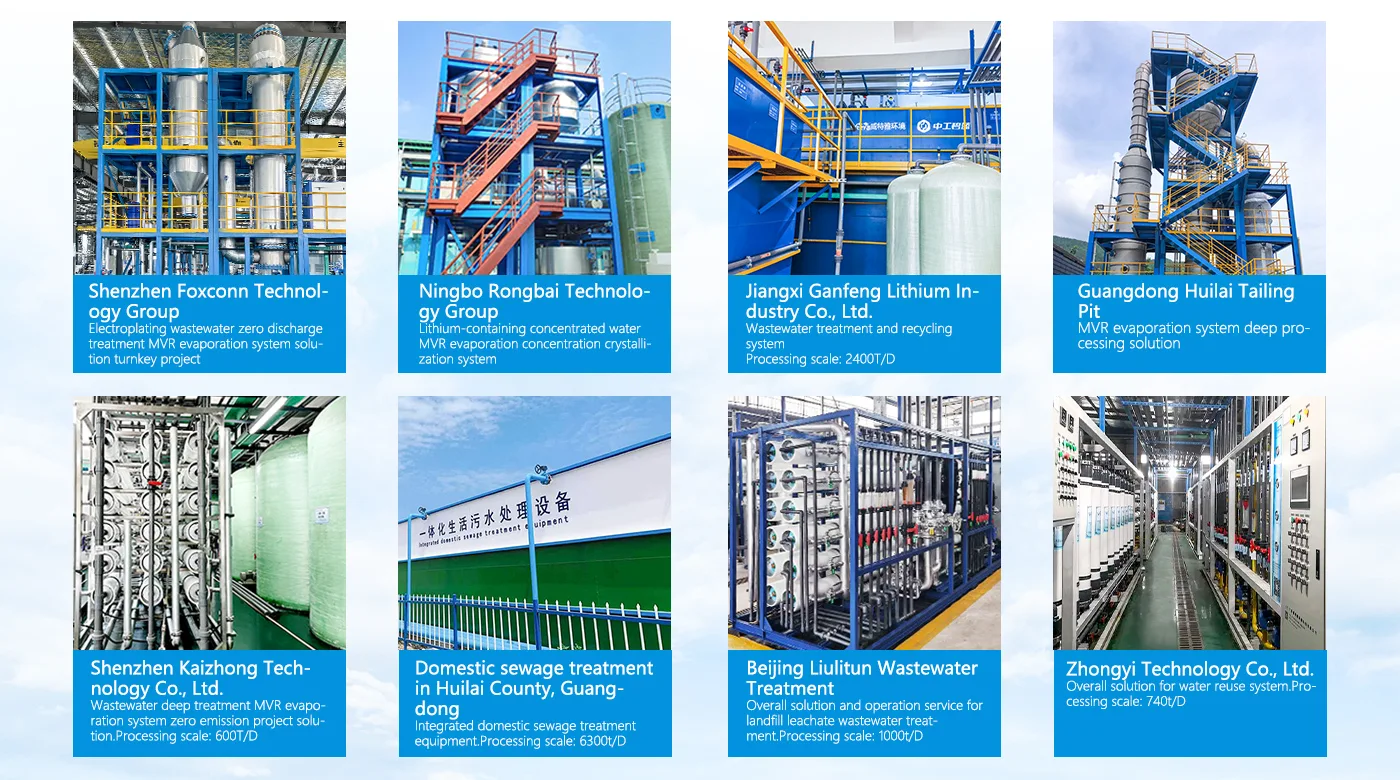
WTEYA has delivered over 100 MVR evaporator systems for high-salt wastewater treatment across chemical, lithium battery, and pharmaceutical industries. Each system is customized based on detailed water quality analysis, ensuring optimal material selection and process design.
With nearly 20 years of manufacturing experience, WTEYA provides end-to-end service — from lab-scale testing and process engineering to installation, commissioning, and long-term technical support.
Frequently Asked Questions
Q: What is an MVR evaporator?
A: MVR (Mechanical Vapor Recompression) evaporator is an energy-efficient evaporation technology that reduces energy consumption by 30-50% compared to traditional evaporation.
Q: How much energy can MVR save?
A: MVR evaporators typically reduce energy consumption by 30-50% compared to traditional multi-effect evaporators, using electricity instead of steam.
Q: What is the difference between MVR and multi-effect evaporator?
A: MVR uses mechanical vapor recompression for energy efficiency, while multi-effect evaporators use multiple evaporation stages. MVR has lower operating costs.
Get a Customized Quote in 24 Hours
Don't let wastewater challenges hold back your operations. WTEYA has helped 100+ manufacturers achieve compliance and reduce costs by up to 50%.
Request your free technical assessment and discover how we can optimize your MVR evaporation process.
📱 WhatsApp: +86-1800 2840 855
✉ Email: info@vteya.com
🌐 Website: www.vteya.com
Front page of Cross
Next go-to page
Related information
How Much Floor Space Does an MVR Evaporator Need?
Answer: The floor space an MVR evaporator needs depends on evaporation capacity and equipment type. A rough planning figure is 10–20 m² of floor area per 1 t/h of evaporation capacity .
MVR vs Single Effect Evaporator: Energy Consumption Compared
MVR vs Single Effect Evaporator: Energy Consumption Compared Evaporation is an energy business. Whichever evaporator you install, the plant will spend most of its operating budget turning water into vapor and then getting rid of that vapor.
Energy Recovery in Evaporation: 5 Ways to Save Steam
Energy Recovery in Evaporation: 5 Ways to Save Steam In an industrial evaporation plant, thermal energy is usually the largest single operating cost — commonly 60–80% of the total , ahead of electricity, labour and chemicals.
WTEYA Ships 10 SWRO4021 Portable Desalination Units to Puerto Rico
WTEYA GROUP has shipped 10 SWRO4021 portable desalination units to Puerto Rico, built for fast island and emergency water supply with low energy demand.
MVR Evaporator Installation: How Long It Really Takes
MVR Evaporator Installation: How Long It Really Takes Most buyers plan the shipment date carefully and then discover that the on-site installation is what sets the real start of production.
Hazardous Wastewater Evaporation: MVR Design and Compliance
Hazardous Wastewater Evaporation: MVR Design and Compliance Hazardous wastewater is the most demanding feed a thermal system will ever see. It arrives with unknown composition, extreme pH, solvents that flash at low temperature, and heavy metals that must not leave the site in a liquid stream.
Guangdong WTEYA Environmental Technology Co., Ltd
Contact us
WhatsApp: +86 1800 2840 855
Tel: +86-0769-28636053
+86-0769-28636126
Email: info@wteya.com
Add: Floor 14, F4 building, TianAn digital town,
Nancheng District, Dongguan,Guangdong, China