How MVR Evaporators Enable Zero Liquid Discharge in Plants
Release Time:
2026-05-15 10:08

How MVR Evaporators Enable Zero Liquid Discharge in Plants
Industrial plants generating high-salinity wastewater face mounting pressure to eliminate liquid discharge while keeping operating costs manageable. Traditional treatment methods often fail to meet these dual goals, leaving operators caught between regulatory compliance and budget constraints.
The Zero Liquid Discharge Challenge
Zero Liquid Discharge (ZLD) systems recover nearly all wastewater for reuse, leaving only solid residues. The challenge lies in the final evaporation stage—where conventional technology consumes enormous amounts of energy. Standard multi-effect evaporators require 0.4–0.6 tons of steam per ton of water evaporated, translating to substantial fuel costs for continuous operation.
Beyond energy consumption, traditional systems demand extensive auxiliary equipment: boiler feedwater systems, condensate return piping, and cooling towers. This complexity adds maintenance burdens that plant teams rarely anticipate during procurement.
How MVR Technology Solves the Energy Problem
Mechanical Vapor Recompression (MVR) takes a fundamentally different approach. Rather than relying on fresh steam across multiple effects, MVR systems compress their own vapor, raising its temperature by 10–20°C to serve as the heating medium.
This modest temperature increase proves remarkably efficient. The latent heat of vaporization remains constant, so the energy required to compress steam from 100°C to 115°C falls far short of generating equivalent fresh steam—even accounting for compressor driver power.
Modern MVR evaporators achieve 30–60% energy savings compared to multi-effect alternatives. A plant processing 100 tons of brine daily may consume only 25–35 kWh of electricity per ton of water evaporated—a fraction of the cost of producing equivalent steam.
The MVR's Role in Complete ZLD Systems
In ZLD applications, MVR evaporation rarely operates alone. Most systems integrate three stages:
1. Pretreatment: Removing suspended solids and conditioning pH, often including membrane processes like reverse osmosis to preconcentrate dilute waste streams before evaporation.
2. Evaporation: Processing the concentrated brine. MVR evaporators excel here because they operate efficiently across a wide concentration range—from dilute feed to slurry. Mechanical recompression maintains driving force even as boiling point elevation increases with concentration.
3. Crystallization: Handling the final residue from evaporator bottoms. Forced-circulation crystallizers paired with MVR evaporators produce high-purity salts when marketable byproducts are desired.
This three-stage approach typically recovers 85–95% of incoming feedwater as reusable distilled water, with the remainder solidified for landfill or sale.
Key Advantages for Industrial Plants
Plants implementing MVR-based ZLD systems consistently report the following benefits:
Reduced Operating Costs: Eliminating offsite disposal fees while recovering water valued at $1–5 per cubic meter. For a facility processing 500 cubic meters daily, water recovery alone generates $180,000–$900,000 annually.
Regulatory Certainty: Completely eliminating liquid discharge means no wastewater requiring monitoring, no discharge permits to maintain, and zero violation penalty risk.
Improved System Reliability: MVR evaporators feature few moving parts—primarily compressors and feed pumps. Unlike equipment requiring constant attention for mechanical separation, well-designed MVR systems operate continuously with minimal operator intervention.
Why Choose WTEYA for ZLD Systems
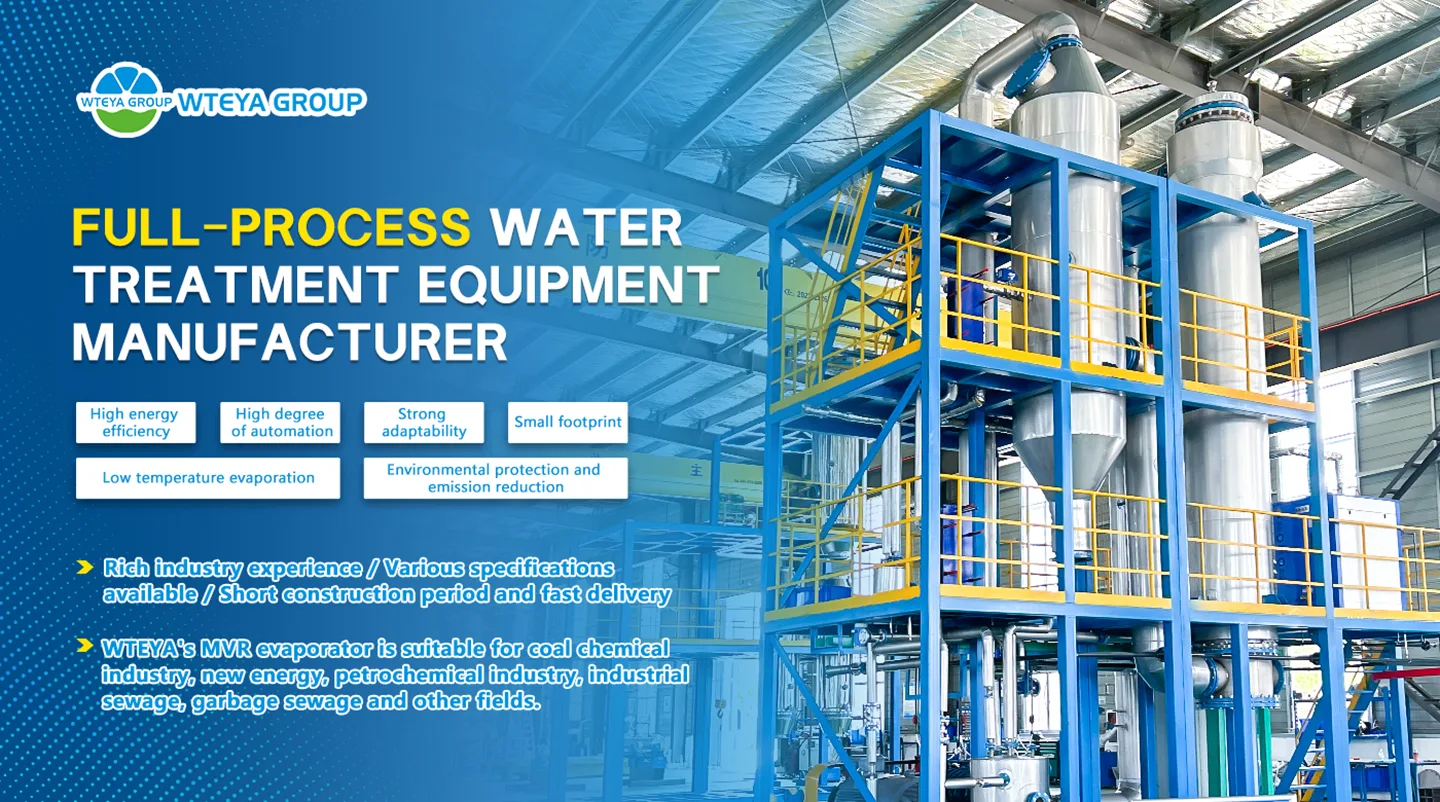
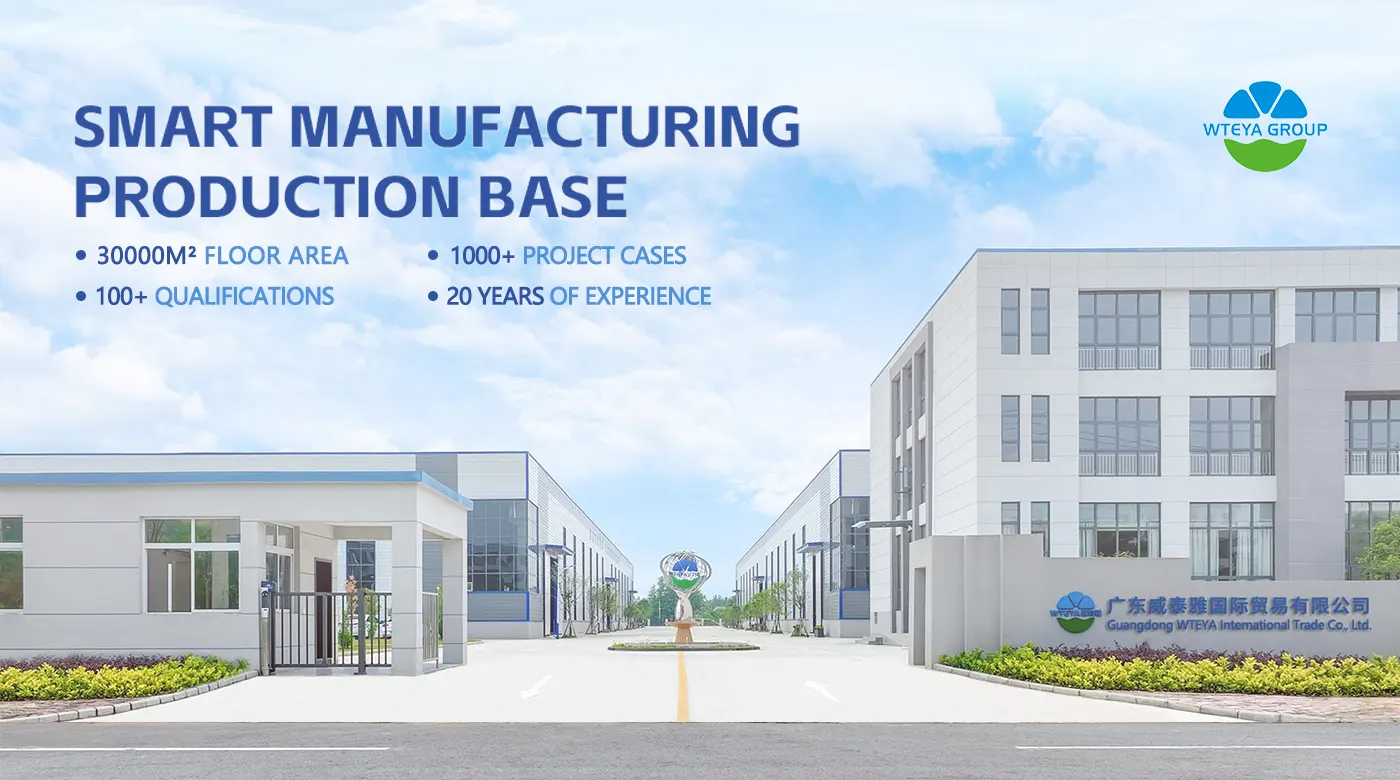
WTEYA brings nearly 20 years of experience designing and manufacturing industrial evaporation equipment, having delivered MVR-based ZLD solutions to plants across petrochemical, pharmaceutical, metallurgical, and energy industries.
Our engineering team evaluates influent characteristics, available utilities, space constraints, and operational goals before proposing system configurations. Every ZLD project receives customized process design rather than catalog equipment adapted after the fact.
With in-house manufacturing capabilities and a global service network, WTEYA provides end-to-end support—from initial testing and process engineering to installation, commissioning, and long-term operational maintenance.
Frequently Asked Questions
Q: What is an MVR evaporator?
A: MVR (Mechanical Vapor Recompression) evaporator is an energy-efficient evaporation technology that reduces energy consumption by 30-50% compared to traditional evaporation.
Q: How much energy can MVR save?
A: MVR evaporators typically reduce energy consumption by 30-50% compared to traditional multi-effect evaporators, using electricity instead of steam.
Q: What is the difference between MVR and multi-effect evaporator?
A: MVR uses mechanical vapor recompression for energy efficiency, while multi-effect evaporators use multiple evaporation stages. MVR has lower operating costs.
Let's Build Your Solution Together
Don't let wastewater challenges hold back your operations. WTEYA has helped 100+ manufacturers achieve compliance and reduce costs by up to 50%.
Request your free technical assessment and discover how we can optimize your MVR evaporation process.
📱 WhatsApp: +86-1800 2840 855
✉ Email: info@vteya.com
🌐 Website: www.vteya.com
Front page of Cross
Related information
Landfill Leachate Treatment: How to Achieve Zero Liquid Discharge
Landfill Leachate Treatment: How to Achieve Zero Liquid Discharge Municipal solid waste landfills generate highly contaminated leachate—a black liquid packed with ammonia nitrogen, heavy metals, and dissolved solids exceeding 10,000 mg/L. Traditional deep well injection and direct evaporation methods are no longer viable under tightening environmental regulations. Landfills face mounting pressure to eliminate leachate discharge entirely. The core challenge: conventional biological treatment cannot remove salts, while membrane systems concentrate contaminants into brine that still requires disposal. Why Leachate Demands Specialized Treatment Unlike standard industrial wastewater, landfill leachate contains recalcitrant organic compounds, chlorinated substances, and extreme salinity fluctuations. A system designed for chemical plant effluent will fail within months when processing landfill leachate. Key technical hurdles include: Ammonia nitrogen levels exceeding 2,000 mg/L that inhibit biological processes Variable BOD/COD ratios from 0.05 to 0.5 depending on landfill age Scaling compounds (calcium carbonate, silica) that foul heat transfer surfaces High chloride concentrations accelerating corrosion in standard steel The MVR + Crystallization Solution Modern zero liquid discharge systems combine mechanical vapor recompression with forced circulation crystallization to transform leachate into solid salt and reusable water. The treatment sequence: Pretreatment removes suspended solids and adjusts pH Concentration stage uses MVR evaporation to achieve 90-95% volume reduction Crystallization produces dry salt crystals for landfill cover or industrial reuse Condensate returns as process water, reducing fresh water consumption MVR systems recover 1,200+ kJ/kg of latent heat through vapor compression, achieving 0.35-0.40 kWh/m³ energy consumption—70% lower than multi-effect evaporators. Key Design Considerations Leachate composition shifts significantly over a landfill's lifespan. Young landfills (under 5 years) produce acidic, high-BCOD effluent requiring biological pretreatment. Mature landfills (over 10 years) generate stabilized, low-BCOD, high-ammonia liquor suited for direct evaporation. Critical system specifications: Parameter Typical Range Design Buffer Influent TDS 5,000-25,000 mg/L ±30% Ammonia Nitrogen 500-3,000 mg/L ±50% Flow Variation 1:3 ratio 1:5 capacity Operating Hours 8,000 hr/year 7,500 hr minimum Materials of construction must withstand chloride concentrations up to 15,000 mg/L. Duplex stainless steel (316L) handles moderate chloride levels; super duplex or titanium alloys are required for mature landfill applications. Why WTEYA for Leachate ZLD With nearly 20 years specializing in high-salinity wastewater evaporation, WTEYA has commissioned over 50 landfill leachate ZLD systems across China. Our modular MVR units accommodate flows from 50 to 500 m³/day, with pre-engineered standardization reducing delivery time to 4-6 weeks. The company's in-house materials engineering team selects corrosion-resistant alloys based on your specific leachate analysis—no generic solutions, no under-specified equipment. WTEYA's forced circulation crystallizers produce free-flowing salt with moisture content below 5%, meeting landfill cover specifications.
How MVR Evaporators Enable Zero Liquid Discharge in Plants
<h1>How MVR Evaporators Enable Zero Liquid Discharge in Plants</h1> <p>Industrial plants generating high-salinity wastewater face mounting pressure to eliminate liquid discharge while keeping operating costs manageable. Traditional treatment methods often fail to meet these dual goals, leaving operators caught between regulatory compliance and budget constraints.</p> <h2>The Zero Liquid Discharge Challenge</h2> <p>Zero Liquid Discharge (ZLD) systems recover nearly all wastewater for reuse, leaving only solid residues. The challenge lies in the final evaporation stage—where conventional technology consumes enormous amounts of energy. Standard multi-effect evaporators require 0.4–0.6 tons of steam per ton of water evaporated, translating to substantial fuel costs for continuous operation.</p> <p>Beyond energy consumption, traditional systems demand extensive auxiliary equipment: boiler feedwater systems, condensate return piping, and cooling towers. This complexity adds maintenance burdens that plant teams rarely anticipate during procurement.</p> <h2>How MVR Technology Solves the Energy Problem</h2> <p>Mechanical Vapor Recompression (MVR) takes a fundamentally different approach. Rather than relying on fresh steam across multiple effects, MVR systems compress their own vapor, raising its temperature by 10–20°C to serve as the heating medium.</p> <p>This modest temperature increase proves remarkably efficient. The latent heat of vaporization remains constant, so the energy required to compress steam from 100°C to 115°C falls far short of generating equivalent fresh steam—even accounting for compressor driver power.</p> <p>Modern MVR evaporators achieve <strong>30–60% energy savings</strong> compared to multi-effect alternatives. A plant processing 100 tons of brine daily may consume only 25–35 kWh of electricity per ton of water evaporated—a fraction of the cost of producing equivalent steam.</p> <h2>The MVR's Role in Complete ZLD Systems</h2> <p>In ZLD applications, MVR evaporation rarely operates alone. Most systems integrate three stages:</p> <p><strong>1. Pretreatment:</strong> Removing suspended solids and conditioning pH, often including membrane processes like reverse osmosis to preconcentrate dilute waste streams before evaporation.</p> <p><strong>2. Evaporation:</strong> Processing the concentrated brine. MVR evaporators excel here because they operate efficiently across a wide concentration range—from dilute feed to slurry. Mechanical recompression maintains driving force even as boiling point elevation increases with concentration.</p> <p><strong>3. Crystallization:</strong> Handling the final residue from evaporator bottoms. Forced-circulation crystallizers paired with MVR evaporators produce high-purity salts when marketable byproducts are desired.</p> <p>This three-stage approach typically recovers <strong>85–95% of incoming feedwater</strong> as reusable distilled water, with the remainder solidified for landfill or sale.</p> <h2>Key Advantages for Industrial Plants</h2> <p>Plants implementing MVR-based ZLD systems consistently report the following benefits:</p> <p><strong>Reduced Operating Costs:</strong> Eliminating offsite disposal fees while recovering water valued at $1–5 per cubic meter. For a facility processing 500 cubic meters daily, water recovery alone generates $180,000–$900,000 annually.</p> <p><strong>Regulatory Certainty:</strong> Completely eliminating liquid discharge means no wastewater requiring monitoring, no discharge permits to maintain, and zero violation penalty risk.</p> <p><strong>Improved System Reliability:</strong> MVR evaporators feature few moving parts—primarily compressors and feed pumps. Unlike equipment requiring constant attention for mechanical separation, well-designed MVR systems operate continuously with minimal operator intervention.</p> <h2>Why Choose WTEYA for ZLD Systems</h2> <p>WTEYA brings nearly 20 years of experience designing and manufacturing industrial evaporation equipment, having delivered MVR-based ZLD solutions to plants across petrochemical, pharmaceutical, metallurgical, and energy industries.</p> <p>Our engineering team evaluates influent characteristics, available utilities, space constraints, and operational goals before proposing system configurations. Every ZLD project receives customized process design rather than catalog equipment adapted after the fact.</p> <p>With in-house manufacturing capabilities and a global service network, WTEYA provides end-to-end support—from initial testing and process engineering to installation, commissioning, and long-term operational maintenance.</p>
Malaysia Client Visits WTEYA: Water Reuse Solutions for Southeast Asia
WTEYA welcomed a distinguished delegation from Malaysia — a professional industrial wastewater treatment company — to our manufacturing facility in Dongguan, China. The visit marks the beginning of a promising partnership in water reuse technology across Southeast Asia.
How to Choose the Right MVR Evaporator for High-Salt Wastewater
How to Choose the Right MVR Evaporator for High-Salt Wastewater High-salt wastewater is one of the toughest challenges in industrial water treatment. Without the right MVR evaporator, you face scaling, corrosion, and skyrocketing energy bills. Choosing the wrong system can shut down your production line for weeks. Why High-Salt Wastewater Needs Special Design Standard evaporators struggle when TDS exceeds 50,000 mg/L. Salt crystallizes on heat exchange surfaces, reducing efficiency by up to 40%. High chloride concentrations accelerate corrosion, especially in stainless steel components. For industries like chemical manufacturing, lithium extraction, and coal gasification, wastewater salinity often reaches 100,000–250,000 mg/L. A general-purpose evaporator simply cannot handle these conditions reliably. Key Factors in MVR Evaporator Selection Material of Construction: Titanium or duplex stainless steel (2205/2507) resists chloride-induced corrosion. For extremely aggressive wastewater, Hastelloy or fluoropolymer-lined components may be necessary. Anti-Scaling Design: Forced circulation MVR evaporators maintain high flow velocity (1.5–2.5 m/s) inside tubes, minimizing crystal deposition. Falling film designs work better for lower-salinity streams. Compressor Capacity: Match the compressor to your evaporation rate. An undersized unit cannot maintain the required temperature difference, leading to poor concentration performance. Crystal Discharge System: Continuous discharge prevents salt accumulation. Look for designs with forced circulation crystallizers or scraped surface heat exchangers. Energy Efficiency Matters MVR technology recovers latent heat from vapor, reducing energy consumption by 70–90% compared to multi-effect evaporation. For a 10-ton/hour system processing high-salt wastewater, this translates to roughly $150,000–$300,000 in annual energy savings. Variable frequency drives (VFDs) on the compressor allow you to adjust capacity based on actual wastewater flow, avoiding wasted energy during low-load periods. WTEYA: Engineered for High-Salinity Applications WTEYA has delivered over 100 MVR evaporator systems for high-salt wastewater treatment across chemical, lithium battery, and pharmaceutical industries. Each system is customized based on detailed water quality analysis, ensuring optimal material selection and process design. With nearly 20 years of manufacturing experience, WTEYA provides end-to-end service — from lab-scale testing and process engineering to installation, commissioning, and long-term technical support.
ZLD System Design: Key Components and Benefits Explained
ZLD System Design: Key Components and Benefits Explained Industrial plants face mounting pressure to eliminate liquid waste discharge while keeping operating costs manageable. Zero Liquid Discharge (ZLD) systems offer a solution that recovers water for reuse and converts waste into solid form. Understanding the core components of a ZLD system helps plant managers make informed decisions about their wastewater treatment investments. What Is a Zero Liquid Discharge System? A ZLD system treats industrial wastewater to recover nearly all the water for reuse, leaving only solid residues for disposal. Traditional wastewater treatment often produces liquid effluent that requires expensive disposal or treatment. ZLD eliminates this discharge entirely by combining multiple treatment technologies in a closed-loop system. Plants adopting ZLD achieve compliance with strict environmental regulations while reducing their freshwater consumption. The recovered water can be reused in production processes, cooling towers, or boiler feedwater applications. Core Components of ZLD Systems 1. Pretreatment Unit The pretreatment stage removes oils, suspended solids, and bulk contaminants from incoming wastewater. Common processes include oil-water separators to remove floating oils and greases, chemical precipitation to target dissolved metals and hardness, clarification tanks to settle out suspended particles, and pH adjustment systems to prepare water for downstream processes. Proper pretreatment protects downstream equipment from scaling and fouling, extending system lifespan and reducing maintenance costs. 2. Membrane Systems Reverse osmosis (RO) and nanofiltration (NF) membranes concentrate dissolved salts and organic compounds. The membrane stage typically includes brackish water RO units to handle moderate salinity streams, high-pressure RO systems to treat concentrated brines, and softening pretreatment to prevent membrane scaling. Membranes can recover 60-85% of water as clean permeate for reuse. The concentrate stream moves to the final evaporation stage. 3. Evaporation and Crystallization The evaporation stage handles the concentrated brine from membrane treatment. Modern ZLD systems typically use Mechanical Vapor Recompression (MVR) evaporators to recycle latent heat and reduce energy consumption by 30-60% compared to traditional evaporators, multi-effect evaporators that cascade steam across multiple stages for efficiency, and crystallization units to produce dry solid salts from the final concentrate. This stage produces distilled water for recovery and solid residues suitable for landfill disposal or further processing. Key Benefits of ZLD Systems ZLD technology delivers measurable advantages for industrial facilities: regulatory compliance eliminates liquid discharge concerns entirely; water recovery recovers 90-98% of wastewater for reuse; cost savings reduces freshwater consumption and liquid disposal expenses; resource recovery produces reusable salts and clean water. Plants recovering water through ZLD typically see freshwater consumption drop by 15-30%. The solid residues, often saleable salts like sodium sulfate, can offset treatment costs. Why MVR Technology Matters Modern ZLD systems increasingly rely on MVR evaporator technology for the evaporation stage. Unlike traditional multi-effect evaporators, MVR systems use mechanical compressors to reuse vapor, dramatically cutting energy costs. A typical MVR system for ZLD applications consumes 20-35 kWh per ton of water evaporated, achieves 95%+ water recovery rates, handles high-salinity streams common in industrial applications, and requires less steam infrastructure than multi-effect units. Choosing the Right ZLD Partner Selecting an experienced ZLD system manufacturer impacts project success. Look for suppliers with proven track records in your specific industry, in-house engineering and fabrication capabilities, comprehensive after-sales support and spare parts availability, and references from similar installations. WTEYA delivers ZLD systems backed by nearly 20 years of experience serving industrial plants across Asia. Our engineering team provides custom system design, installation supervision, and ongoing operational support.
MVR Evaporator vs Multi-Effect Evaporator: Which Saves More Energy?
MVR Evaporator vs Multi-Effect Evaporator: Which Saves More Energy? When choosing an evaporator for high-salinity wastewater treatment, energy costs are usually the deciding factor. Facilities running traditional multi-effect evaporators often face spiraling steam bills. Meanwhile, MVR (Mechanical Vapor Recompression) systems promise 30-60% energy savings. But is the switch always worth it? This comparison breaks down the real differences. How the Two Technologies Differ A multi-effect evaporator uses fresh steam in the first effect, and the vapor generated from that stage becomes the heating medium for the next effect. The cascade continues across multiple stages. While this reduces fresh steam consumption compared to a single-effect unit, it still requires a continuous supply of external steam. An MVR evaporator takes a fundamentally different approach. It captures the vapor produced during evaporation, compresses it mechanically using a centrifugal or roots blower, and reuses that vapor as the heat source. The only external energy input is electricity to power the compressor drive motor. The key distinction: multi-effect units trade steam for steam (cascade principle), while MVR converts electrical energy into thermal energy with far greater efficiency. Energy Consumption Comparison The numbers tell a clear story. A typical multi-effect evaporator (three-effect configuration) requires approximately 0.39 kg of fresh steam per kg of water evaporated. An MVR system operating under comparable conditions requires roughly 25-35 kWh of electricity per ton of water evaporated. Converting these to operating costs at typical industrial energy rates: Multi-effect: Steam cost dominates. At $30/ton of steam, the energy cost per cubic meter of water evaporated ranges from $8-12. MVR: Electricity cost dominates. At $0.10/kWh, the energy cost per cubic meter ranges from $2.50-3.50. The 30-60% energy savings cited for MVR systems translate directly into lower operating costs, particularly for facilities running continuously. When Multi-Effect Evaporators Still Make Sense MVR is not universally superior. Consider these scenarios where multi-effect evaporation remains competitive: Low steam costs. If your facility has access to waste heat or byproduct steam at near-zero cost, the energy advantage of MVR shrinks significantly. The capital cost premium for MVR may not pay back. Small capacity needs. MVR systems require larger heat exchangers, a compressor, and associated controls. For very small throughput (under 500 kg/hr water evaporation), the complexity and capital cost can outweigh operational savings. Intermittent operation. MVR compressors prefer steady-state operation. Facilities that run only a few hours per day or have highly variable loads may not achieve the theoretical efficiency gains. Operational Complexity and Maintenance Multi-effect evaporators are mechanically simpler. They consist of shell-and-tube heat exchangers arranged in series, with minimal moving parts. Maintenance is straightforward—mainly cleaning tube bundles and replacing gaskets. MVR systems add a compressor, variable frequency drive, seal cooling system, and more sophisticated controls. This complexity means: Higher maintenance skill requirements More potential failure points Greater dependence on automation systems That said, modern MVR packages from established manufacturers like WTEYA come fully instrumented with remote monitoring capabilities, reducing on-site expertise requirements. The WTEYA Approach Both technologies have their place. WTEYA engineers evaluate each project based on wastewater characteristics, available energy resources, required throughput, and operating schedule before recommending a solution. The goal is always the lowest total cost of ownership over the equipment lifetime—not simply the lowest quoted price. For facilities with high-volume continuous operation and conventional energy supply, MVR evaporation typically delivers the faster payback. For plants with access to low-cost steam or smaller processing needs, a well-designed multi-effect system may be the smarter investment. Understanding your specific operating conditions matters more than any general rule of thumb.