



High-Salinity Wastewater in Chemical Plants: MVR Evaporator Solutions
Release Time:
2026-05-04 19:05

High-Salinity Wastewater in Chemical Plants: MVR Evaporator Solutions
High-salinity wastewater is one of the most expensive problems chemical plants face. Salt concentrations above 3% destroy biological treatment, force costly third-party disposal, and risk regulatory fines. WTEYA's MVR evaporator changes that equation.
Why High-Salinity Wastewater Is So Difficult to Treat
Chemical plants generate wastewater with TDS levels from 5,000 to over 200,000 mg/L. Biological treatment fails completely above 10,000 mg/L — salt kills the microorganisms that do the work.
You're left with bad options:
- Steam boiler evaporation — 150–180 kWh per ton, costs spiral fast
- Third-party disposal — ¥300–¥800 per ton, zero compliance guarantee
- Storage ponds — temporary at best, a liability at worst
None of these solve the problem. They delay it.

How MVR Evaporators Handle High-Salinity Wastewater
An MVR evaporator uses mechanical vapor recompression to recycle evaporation energy. Instead of exhausting steam, the system compresses and reuses it — cutting consumption to just 15–30 kWh per ton of water.
That's 80–90% less energy than a steam boiler system.
For high-salinity streams, the forced circulation evaporator configuration keeps salt in suspension and prevents fouling of heat transfer surfaces. Fluid moves at high velocity until solids are ready for removal.
Turning Waste into By-Product
MVR evaporation concentrates brine to saturation. The concentrate feeds into an evaporation crystallization system, producing dry sodium chloride or sodium sulfate crystals that can be sold or reused.
The recovered water returns to your process or discharges within limits. Combined with a zero liquid discharge (ZLD) system, you eliminate all liquid waste.
Why Chemical Plants Choose WTEYA
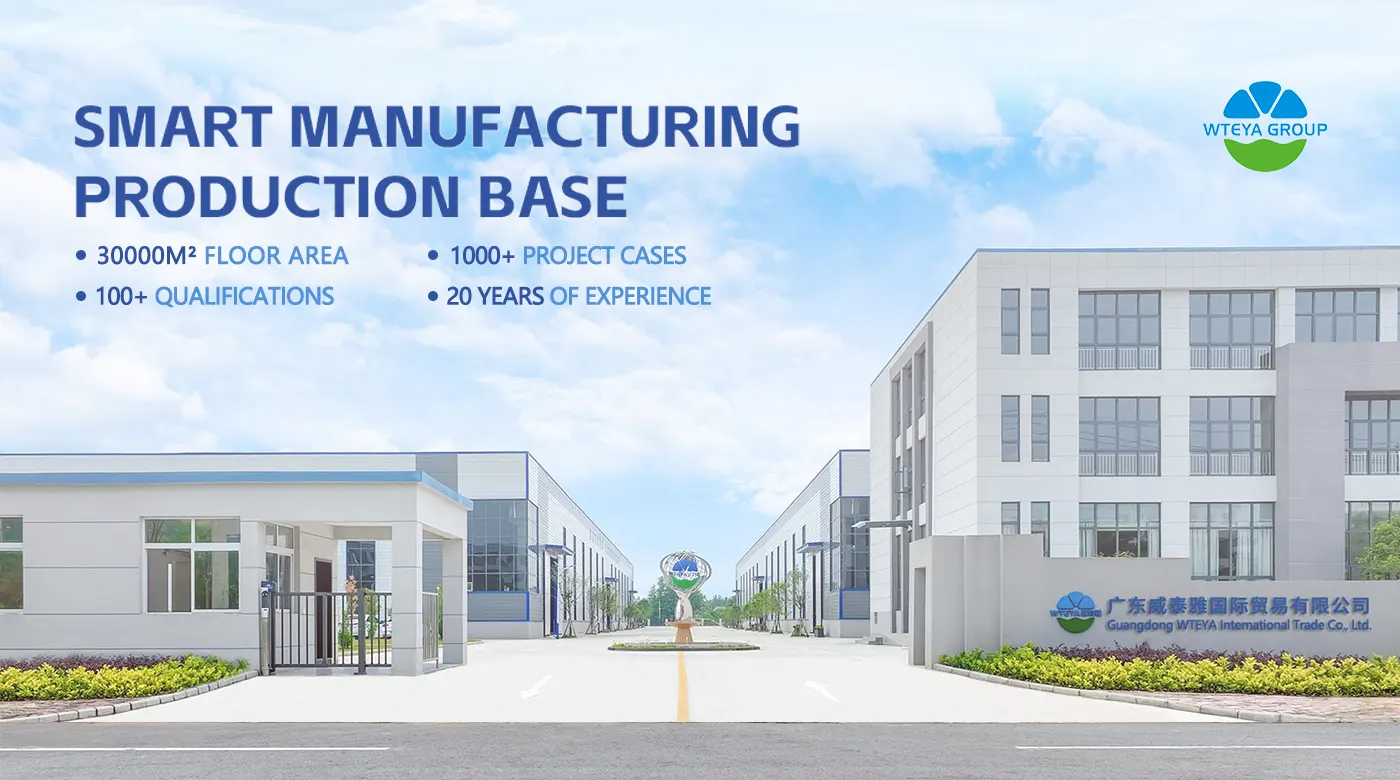
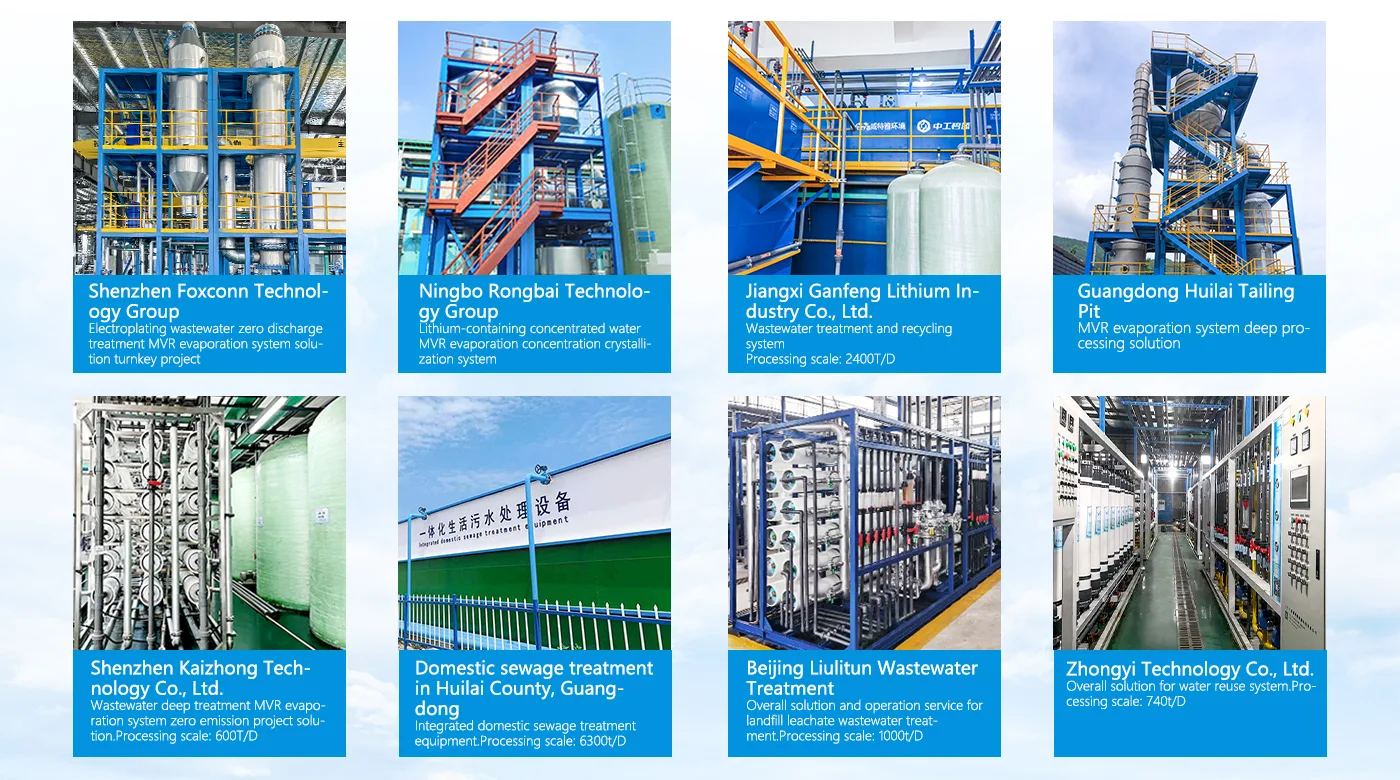
WTEYA has been engineering evaporation systems for nearly 20 years. Over 100 industrial plants — including suppliers to CATL, BYD, and Foxconn — rely on our equipment.
Key advantages:
- Custom engineering — designed for your specific wastewater chemistry
- Corrosion-resistant materials — titanium, Hastelloy, or duplex stainless steel
- Automated operation — PLC control with remote monitoring
- OEM/ODM support — for EPC contractors and system integrators
Energy savings alone typically return your investment in 2–4 years, while eliminating disposal risk entirely.
Frequently Asked Questions
Q: What is an MVR evaporator?
A: MVR (Mechanical Vapor Recompression) evaporator is an energy-efficient evaporation technology that reduces energy consumption by 30-50% compared to traditional evaporation.
Q: How much energy can MVR save?
A: MVR evaporators typically reduce energy consumption by 30-50% compared to traditional multi-effect evaporators, using electricity instead of steam.
Q: What is the difference between MVR and multi-effect evaporator?
A: MVR uses mechanical vapor recompression for energy efficiency, while multi-effect evaporators use multiple evaporation stages. MVR has lower operating costs.
Take the First Step Towards Compliance
Every day of delay costs money. Our rapid-response team can deliver a preliminary solution design within 48 hours.
Send us your wastewater data and let's start building your custom system today.
📱 WhatsApp: +86-1800 2840 855
✉ Email: info@vteya.com
🌐 Website: www.vteya.com
Front page of Cross
Related information
WTEYA Strengthens South America Channel with Chilean Desalination Partner
WTEYA is expanding its seawater desalination business into South America, working with a Chilean distributor to bring skid-mounted and containerized desalination solutions to industrial and municipal water users.
WTEYA at ICIF China 2026: Day One Live from Shanghai
WTEYA showcases five core industrial wastewater treatment equipment lines at ICIF China 2026 (Shanghai, Booth E5D40).
MVR Evaporator for Copper Foil Industry Wastewater
MVR Evaporator for Copper Foil Industry Wastewater Copper foil is the conductive backbone of lithium-ion batteries and printed circuit boards, and making it is a wet, acid-heavy process.
MVR vs Multi-Effect Evaporator: Which Fits Your Plant?
MVR vs Multi-Effect Evaporator: Which Fits Your Plant? Both MVR and multi-effect evaporation do the same job: they take water out of a concentrated stream and leave you with a manageable brine or a crystallised salt.
WTEYA Delivers Titanium Alloy Wastewater Treatment Plant for Danyang Zero-Carbon Project
WTEYA has completed a titanium alloy wastewater treatment plant for Soleman Zero Carbon Technology in Danyang, Jiangsu, treating pickling, scrubber, degreasing and emulsion streams.
What Are the Key Considerations in MVR Evaporator Design?
What Are the Key Considerations in MVR Evaporator Design? An MVR evaporator is a highly customized piece of equipment: the quality of its design decides whether the system runs stably and how much energy it consumes.
Guangdong WTEYA Environmental Technology Co., Ltd
Contact us
WhatsApp: +86 1800 2840 855
Tel: +86-0769-28636053
+86-0769-28636126
Email: info@wteya.com
Add: Floor 14, F4 building, TianAn digital town,
Nancheng District, Dongguan,Guangdong, China