


How to Implement MVR Evaporator in Wastewater Plants
Release Time:
2026-07-07 10:06

How to Implement MVR Evaporator in Wastewater Plants
Implementing an MVR evaporator in wastewater treatment facilities offers a sustainable and cost-effective solution for managing industrial effluent. As industries face increasing pressure to reduce environmental impact and comply with stricter regulations, the adoption of advanced technologies like MVR evaporators has become essential. WTEYA, with nearly 20 years of experience in wastewater treatment solutions, provides expert insights into integrating MVR evaporators into wastewater plants to achieve zero liquid discharge (ZLD) and improve operational efficiency.
Understanding MVR Evaporator Technology
The mechanical vapor recompression (MVR) evaporator is a highly efficient system that recycles waste heat to minimize energy consumption during the evaporation process. Unlike traditional thermal systems, MVR evaporators use a compressor to increase the temperature of vapor, which is then condensed and used as a heating source. This closed-loop system significantly reduces the need for external steam or other energy sources, making it ideal for industrial wastewater treatment applications.
By leveraging this technology, wastewater plants can achieve higher water recovery rates while maintaining low operational costs. WTEYA specializes in designing and deploying MVR evaporators tailored to the specific needs of different industries, ensuring optimal performance and compliance with environmental standards.

Key Considerations for Implementation
Before implementing an MVR evaporator, wastewater plant operators must assess several critical factors. The first step involves evaluating the composition and volume of the incoming wastewater to determine the appropriate system size and configuration. High salinity or complex chemical content may require additional pre-treatment steps to prevent fouling or damage to the evaporator components.
Another important consideration is the integration of the MVR system with existing infrastructure. WTEYA’s engineering team ensures seamless compatibility with current processes, minimizing downtime and maximizing efficiency. Additionally, selecting the right materials of construction is vital to withstand the corrosive nature of certain industrial effluents, further extending the lifespan of the equipment.
Benefits of Achieving Zero Liquid Discharge
Adopting an MVR evaporator can play a crucial role in achieving zero liquid discharge (ZLD), a goal that many industries are striving for to meet environmental regulations and reduce their ecological footprint. With ZLD, all wastewater is treated and reused, eliminating the need for discharge into natural water bodies or landfills.
WTEYA’s MVR evaporator systems are designed to support ZLD by efficiently concentrating and recovering valuable resources from wastewater streams. This not only helps in reducing waste but also allows for the potential reuse of purified water in industrial processes, leading to long-term cost savings and sustainability improvements.
Long-Term Sustainability and Cost Efficiency
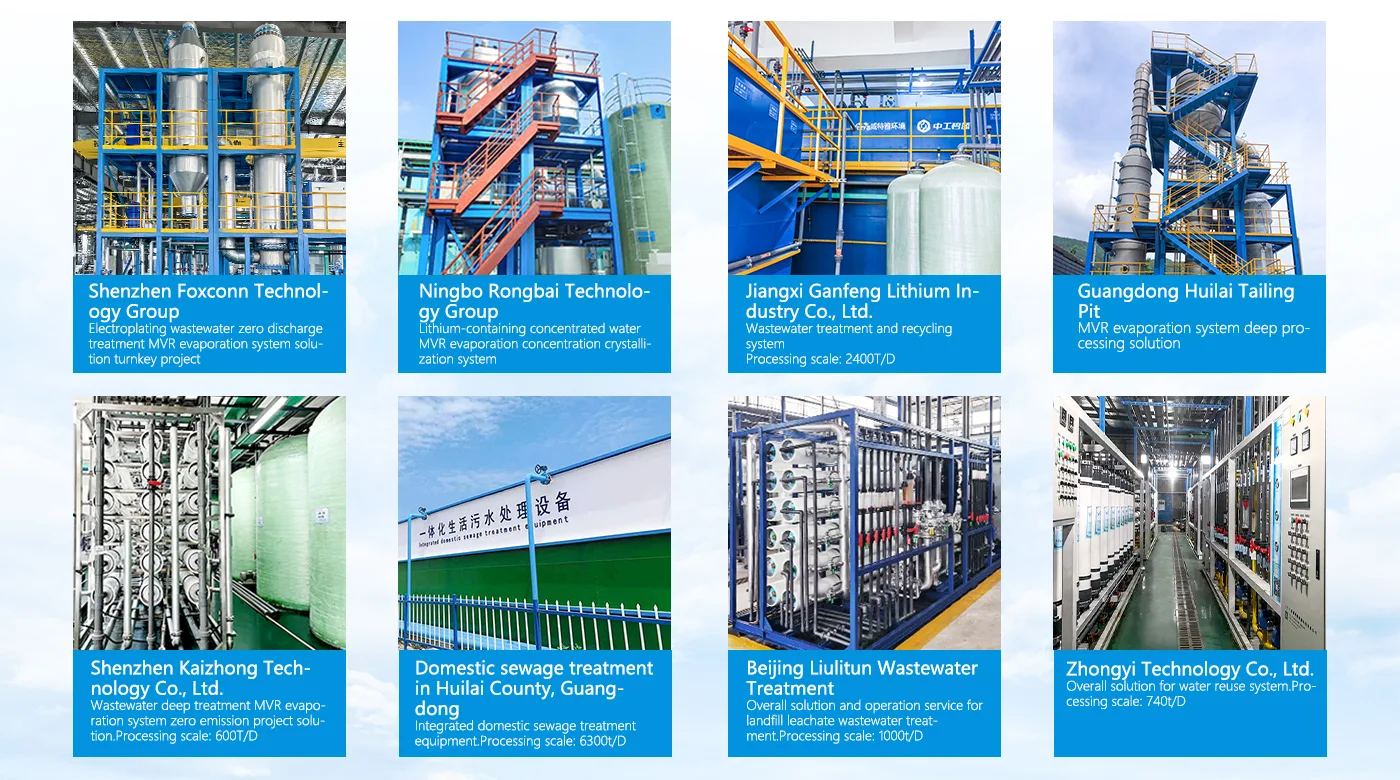
Investing in an MVR evaporator is not just about meeting regulatory requirements; it's also about future-proofing operations. These systems offer long-term cost efficiency through reduced energy consumption, lower maintenance needs, and minimal chemical usage. WTEYA has successfully implemented MVR evaporators across various sectors, helping industry leaders streamline their wastewater management and achieve greater operational control.
As the demand for sustainable and resource-efficient solutions continues to grow, MVR evaporators are becoming a standard in modern wastewater treatment. With WTEYA’s expertise and commitment to innovation, businesses can confidently adopt this technology to enhance their environmental performance and operational resilience.
Frequently Asked Questions
Q: What is an MVR evaporator?
A: MVR (Mechanical Vapor Recompression) evaporator is an energy-efficient evaporation technology that reduces energy consumption by 30-50% compared to traditional evaporation.
Q: How much energy can MVR save?
A: MVR evaporators typically reduce energy consumption by 30-50% compared to traditional multi-effect evaporators, using electricity instead of steam.
Q: What is the difference between MVR and multi-effect evaporator?
A: MVR uses mechanical vapor recompression for energy efficiency, while multi-effect evaporators use multiple evaporation stages. MVR has lower operating costs.
Transform Your Wastewater Management
Looking for a customized solution for MVR evaporation? Our team of experts is ready to help you design the most cost-effective and energy-efficient system for your specific needs.
Contact us today to discuss your project requirements and get a personalized quote.
📱 WhatsApp: +86-1800 2840 855
✉ Email: info@vteya.com
🌐 Website: www.vteya.com
Next go-to page
Related information
WTEYA Portable Seawater Desalination Enters French Market
WTEYA has brought its portable seawater desalination line to France with three 4021 units, each producing about 4,021 gallons of fresh water each day.
Industrial Wastewater Treatment: A Comprehensive Overview
Industrial Wastewater Treatment: A Comprehensive Overview Industrial wastewater is one of the most demanding streams any modern plant has to manage.
Salt Recovery from Industrial Wastewater: Methods and Value
Salt Recovery from Industrial Wastewater: Methods and Value Industrial brine is usually treated as a waste to be disposed of, yet it carries a commodity that many plants pay good money to buy back.
Happy National Day from WTEYA: October 1-7 Holiday Notice
WTEYA wishes all clients and partners a happy National Day. The group observes the October 1-7, 2026 holiday and resumes normal operations on October 8, with on-call engineers reachable throughout the break.
MVR Evaporator Delivery Schedule: Stages and Timelines
An MVR evaporator is engineered to order, so its delivery schedule is a project plan rather than a catalogue figure. From contract signature to shipment, most industrial systems take 90 to 180 days , and the installation and commissioning that follow add several more weeks on site.
MVR Evaporator Warranty: What Is Covered and for How Long?
MVR Evaporator Warranty: What Is Covered and for How Long? An MVR evaporator is a long-life asset, and its warranty determines who pays when something goes wrong in the first years of operation.
Guangdong WTEYA Environmental Technology Co., Ltd
Contact us
WhatsApp: +86 1800 2840 855
Tel: +86-0769-28636053
+86-0769-28636126
Email: info@wteya.com
Add: Floor 14, F4 building, TianAn digital town,
Nancheng District, Dongguan,Guangdong, China