


MVR Evaporator for Copper Foil Industry Wastewater
Release Time:
2026-09-14 09:08

MVR Evaporator for Copper Foil Industry Wastewater
Copper foil is the conductive backbone of lithium-ion batteries and printed circuit boards, and making it is a wet, acid-heavy process. Dissolving copper in sulfuric acid, electrodepositing it onto a rotating drum and then washing and treating the foil all generate acidic streams that carry copper ions, sulfate and organic additives, with COD typically in the 500-2,000 mg/L range. That combination of acidity, salinity and organics is what defeats conventional treatment, and it is also why MVR evaporation has become the standard core of a copper foil wastewater train: it recovers the copper, returns the water and leaves only a dry salt.
🏭 Three Streams, One Difficult Problem
A copper foil plant does not produce one wastewater; it produces several, and they behave very differently in a treatment train.
- Copper dissolution blowdown — spent sulfuric acid electrolyte from the dissolving section, saturated with copper sulfate. Copper concentration and acidity are both high, so this stream must be treated for metal recovery before it ever reaches an evaporator.
- Electrolysis and foil rinsing water — the largest stream by volume. Copper levels are lower but the flow is continuous, which makes volume reduction by membrane concentration the first economic lever.
- Surface treatment rinses — passivation and coating steps for lithium battery foil add organic additives, which is where the COD load of 500-2,000 mg/L comes from.
What the three streams share is a sulfuric acid matrix, dissolved salts and organics that are not readily biodegradable. Biological treatment cannot carry the load alone, and running these streams to a boiler-fed evaporator would mean paying for steam indefinitely.

🔧 The Treatment Train: Pretreatment, Membrane, MVR, Crystallization
The reliable configuration for copper foil wastewater is a four-step chain, with each step protecting the next:
- Step 1 — Pretreatment and copper recovery. pH adjustment plus electrolytic recovery or precipitation pulls the bulk of the copper out as a saleable product and removes suspended solids and hardness, protecting membranes and heat transfer surfaces downstream.
- Step 2 — Membrane concentration. Reverse osmosis and high-pressure RO cut the volume that must be evaporated; in a zero liquid discharge train, membrane stages typically handle 60-90% of the water recovery.
- Step 3 — MVR evaporation. Mechanical vapor recompression concentrates the brine from a few percent solids to 25-35% total dissolved solids. The condensate is better than 99.5% pure and goes straight back to the rinse lines.
- Step 4 — Evaporation crystallization. The remaining brine is crystallized to a dry salt with purity of 97% or higher. Across the full train, 95-98% of the water is recovered and wastewater volume drops by 85-95%.
⚡ Energy: Why MVR Wins on an Acidic Foil Stream
An MVR evaporator replaces steam with electricity. The compressor takes the vapor boiled off the liquid, raises its pressure and temperature, and puts it back to work as the heating medium — so there is no continuous steam demand and no boiler to maintain.
Power consumption depends mainly on the temperature lift required: 5-10 °C lift uses 30-40 kWh per ton of water evaporated, 10-15 °C uses 40-60 kWh per ton, and 15-20 °C uses 60-80 kWh per ton for brines with significant boiling point elevation. Against single-effect evaporation that is a 60-70% energy reduction, and against triple-effect systems still 30-40% lower.
Two design details decide whether those figures hold up in a copper foil plant:
- Material selection against chloride and acid. 316L stainless steel covers chloride levels below 5,000 mg/L, 2205 duplex steel suits 5,000-20,000 mg/L, and titanium is used above that. Copper foil streams are sulfate-dominated, which keeps material cost reasonable if the chloride balance is controlled.
- Scale control. Just 1 mm of scale on a heat transfer surface cuts efficiency by 20-40%. A forced circulation evaporator keeps liquid velocity across the heating surface at 1.5-2.5 m/s to prevent deposition, and a CIP system restores performance on a schedule rather than after a failure.
♻️ Closing the Loop: Copper, Water and Salt
The value case is not only compliance. Recovered copper returns to the electrolyte line or is sold; condensate returns to the rinse lines and reduces fresh demineralized water purchase; and the crystallized salt leaves the site as a dry solid instead of a sludge that must be landfilled. For a plant operating under GB 8978 discharge limits, this turns a compliance cost into a resource loop — copper, water and salt all leaving through the product gate rather than the drain.
📊 Design Parameters That Decide Performance
- Capacity — units are sized from 0.5 t/h upward, matched to the rinse water balance rather than to peak storm flow.
- Concentration factor — 10-30× working concentration keeps evaporator size and energy use in balance.
- Temperature lift — typically 8-10 °C per compression stage; higher lift costs more electricity and must be justified by the boiling point elevation of the brine.
- Automation — automatic density control at the crystallization stage and remote monitoring keep the system stable across batch-to-batch changes in foil production.
✅ Why Choose WTEYA
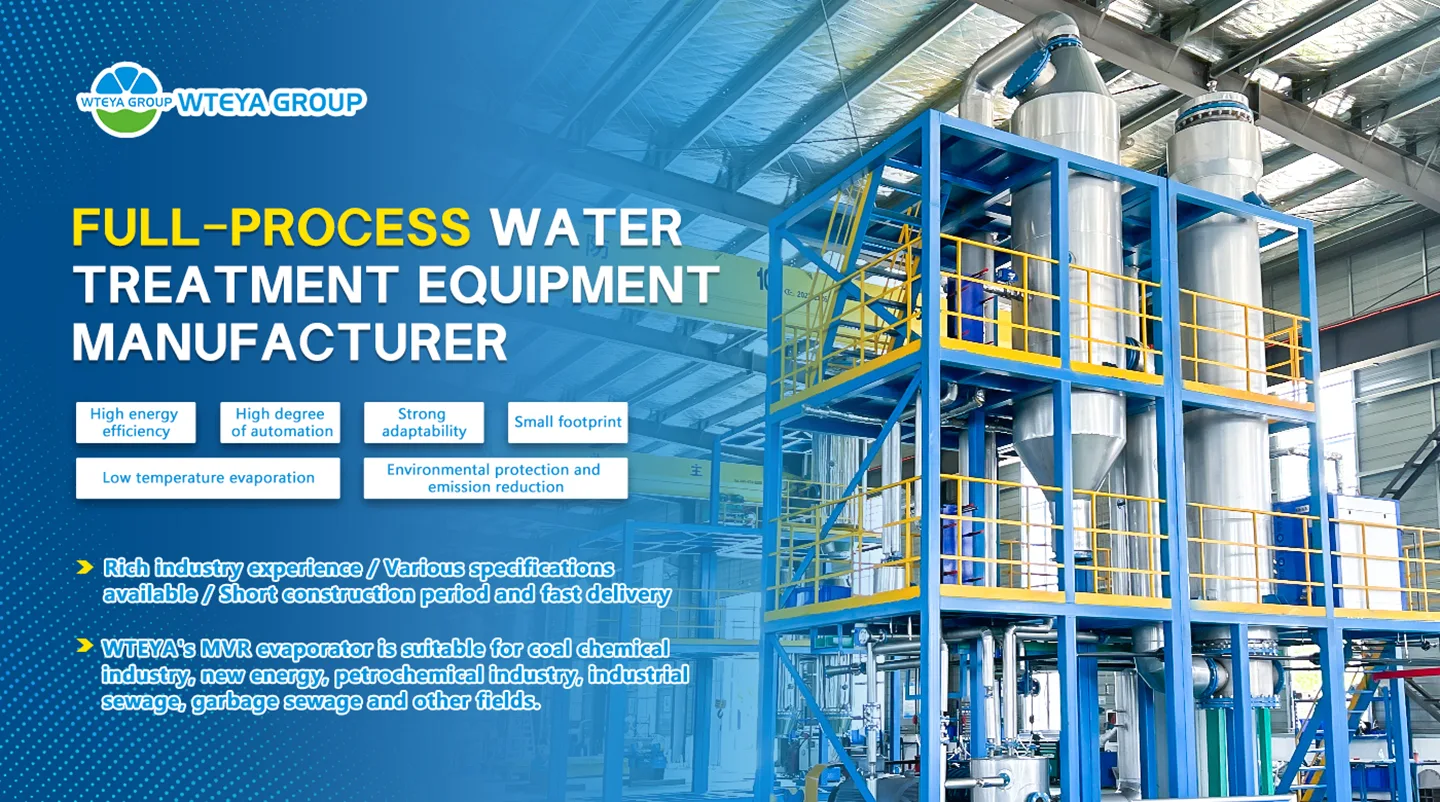
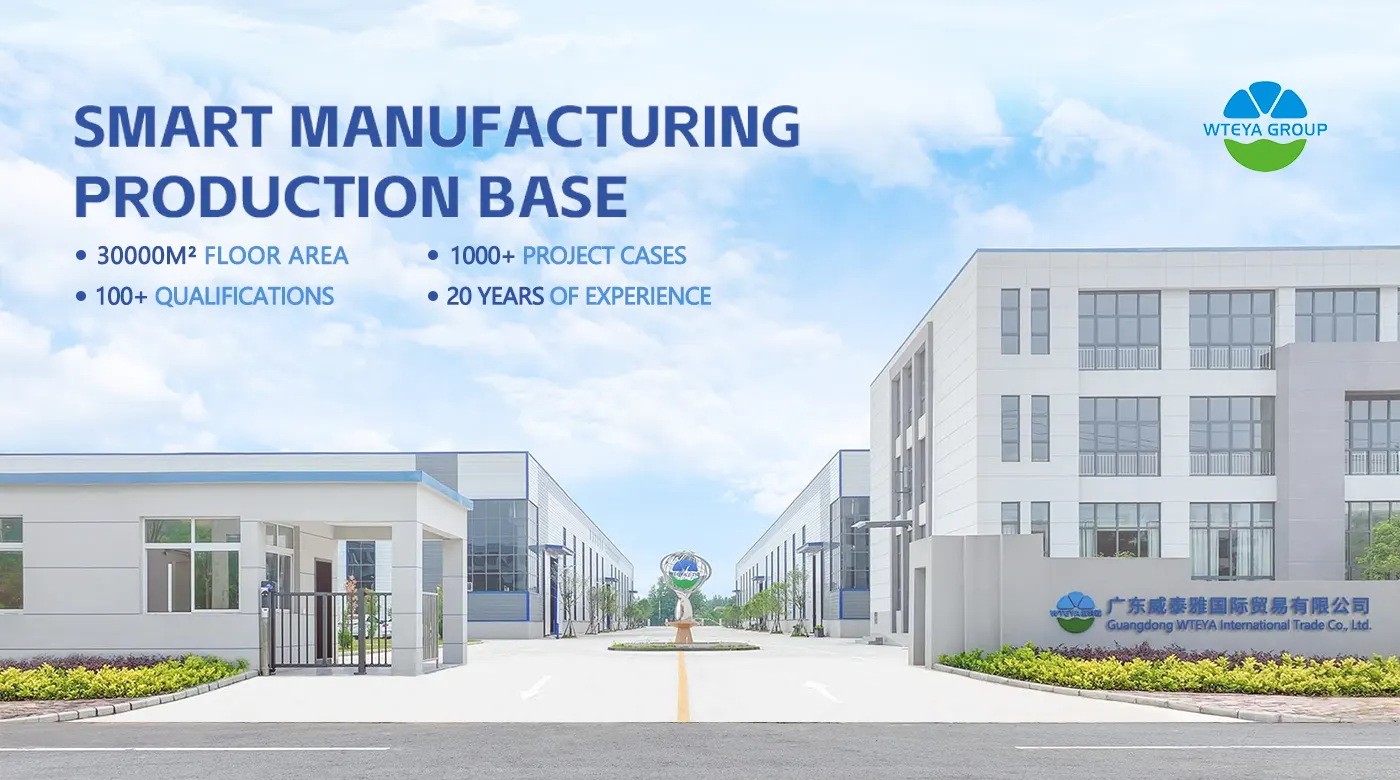
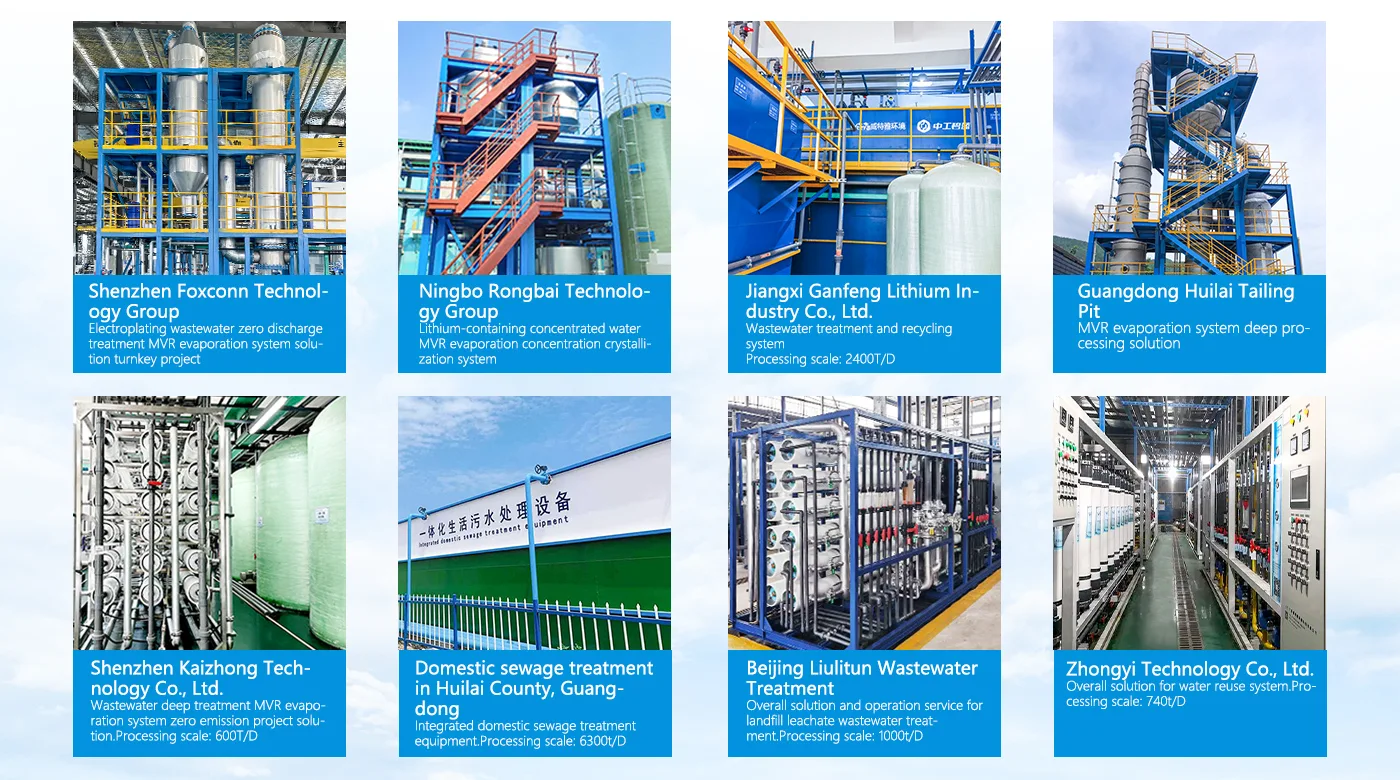
WTEYA is a professional evaporation equipment manufacturer with nearly 20 years of experience. We provide customized solutions and full OEM & ODM services, engineered around your actual water analysis rather than a catalogue unit. Our portfolio covers MVR evaporators, forced circulation evaporators and complete zero liquid discharge trains, with more than 100 projects delivered and reference customers including Foxconn, BYD and Huawei. Send us your water analysis and flow data, and our engineers will return a preliminary process design within 48 hours, with pilot testing available before scale-up to de-risk fouling and crystallization behaviour.
Frequently Asked Questions
A: MVR (Mechanical Vapor Recompression) evaporator is an energy-efficient evaporation technology that reduces energy consumption by 30-50% compared to traditional evaporation.
Q: How much energy can MVR save?
A: MVR evaporators typically reduce energy consumption by 30-50% compared to traditional multi-effect evaporators, using electricity instead of steam.
Q: What is the difference between MVR and multi-effect evaporator?
A: MVR uses mechanical vapor recompression for energy efficiency, while multi-effect evaporators use multiple evaporation stages. MVR has lower operating costs.
Let's Build Your Solution Together
Still using outdated treatment methods? Upgrade to WTEYA's advanced technology and see immediate improvements in efficiency and compliance.
Schedule a video call with our engineers to explore your options.
📱 WhatsApp: +86-1800 2840 855
✉ Email: info@vteya.com
🌐 Website: www.vteya.com
Front page of Cross
Next go-to page
Related information
Can an MVR Evaporator Fit in an Existing Building?
Can an MVR Evaporator Fit in an Existing Building? Retrofitting an MVR evaporator into a building that already exists is one of the most common requests we receive, and the answer is not a simple yes or no.
MVR Evaporator for Salt Lake Lithium Extraction
MVR Evaporator for Salt Lake Lithium Extraction Salt lake brine is one of the lowest-cost lithium sources in the world, but it is also one of the most awkward fluids to concentrate.
Cutting Fluid Wastewater: MVR Evaporation and Zero Discharge
⚙️ Why Spent Emulsion Resists Conventional Treatment Every machining line that uses water-miscible coolant eventually produces a waste stream that cannot be sewered, cannot be burned as-is, and cannot be treated biologically without a fight.
MVR Evaporator Condensate Reuse: Quality and Options
MVR Evaporator Condensate Reuse: Quality and Options The condensate produced by an MVR evaporator is not a waste stream to be disposed of — it is distilled water of consistent quality.
MVR Evaporator Troubleshooting: Common Problems and Fixes
MVR Evaporator Troubleshooting: Common Problems and Fixes MVR evaporators are mechanically simple compared with steam-driven evaporator trains, but they are sensitive to small changes in vacuum, scaling and compressor stability.
Crystallization for Battery Material Wastewater Recovery
Crystallization for Battery Material Wastewater Recovery Battery manufacturing is a wet chemistry business. Cathode active material plants producing lithium iron phosphate or nickel-cobalt-manganese chemistries, and hydrometallurgical recycling lines recovering metals from spent cells, all consume...
Guangdong WTEYA Environmental Technology Co., Ltd
Contact us
WhatsApp: +86 1800 2840 855
Tel: +86-0769-28636053
+86-0769-28636126
Email: info@wteya.com
Add: Floor 14, F4 building, TianAn digital town,
Nancheng District, Dongguan,Guangdong, China