


MVR Evaporator Delivery Schedule: Stages and Timelines
Release Time:
2026-09-30 10:22

MVR Evaporator Delivery Schedule: Stages and Timelines
An MVR evaporator is engineered to order, so its delivery schedule is a project plan rather than a catalogue figure. From contract signature to shipment, most industrial systems take 90 to 180 days, and the installation and commissioning that follow add several more weeks on site. Understanding how that time is spent — and which stages are most likely to slip — lets a plant plan its shutdowns, storage space and commissioning crew with confidence.
🗓️ Timeline by System Scale
The single biggest variable is how standardized the system is. A compact skid-mounted evaporator built from conventional stainless steel and a proven process package is largely prefabricated, and can usually be shipped within 60 to 90 days. That covers most duties below roughly 5 t/h where the feed is well characterized.
Move up to a medium customized system — typically 10 to 30 t/h, or a duty that calls for titanium, duplex stainless steel or a less familiar process route — and the schedule extends to 120 to 150 days. At the top end, an integrated evaporation and crystallization train above 30 t/h routinely needs 180 days or more, because the crystallizer, the solids handling and the larger vessel fabrication all have to be sequenced together.

⚙️ The Four Stages That Build the Lead Time
Design and drawing accounts for roughly two to four weeks. Process calculations, mass and energy balances, P&ID, equipment drawings and electrical drawings all have to be frozen before materials can be ordered — which is why an unsettled water analysis delays everything downstream.
Material procurement takes another two to four weeks for standard grades. Specialty materials are the exception: titanium and duplex steel plate, and large forged compressor components, frequently run to six to eight weeks because they are mill-ordered rather than picked from stock.
Fabrication occupies four to eight weeks. A pressure vessel must pass welding, non-destructive testing, hydrostatic testing and, where the code requires it, third-party supervision inspection before it can be released — a compliance step that cannot be compressed.
Assembly and trial run at the factory takes a further two to three weeks. The complete train is piped, wired and run as a unit so that control logic, sealing and vibration behaviour are proven before dispatch rather than discovered on site.
⛔ Where Schedules Actually Slip
Two stages cause most of the slippage in practice: procurement of specialty materials and pressure-vessel supervision inspection. Both sit outside the manufacturer's direct control, and both are difficult to recover once lost. Projects that confirm exotic materials early — or design them out in favour of a workable standard grade — consistently hold their dates better than projects that leave the material decision open until the drawings are finished.
📦 Practical Ways to Compress the Schedule
Lock the water quality and process scheme first. Repeated changes to the design basis are the number-one cause of delay, because every change sends the drawings back through the approval loop and can invalidate material orders already placed.
Prefer a supplier with a mature process package and stock materials. A standardized skid design that has been built many times removes weeks of engineering and lets common components be ordered in advance instead of after the drawings are released.
Station an expeditor at the critical milestones — design freeze, material arrival and pre-shipment inspection — so that a slipping gate becomes visible while it can still be corrected.
Put dates and consequences in the contract. Agree the shipping date in writing and attach a delay penalty, commonly 0.03% to 0.1% of contract value per day. A schedule without a remedy is a wish rather than a commitment.
Bridge a tight window with available capacity. If the civil works or the discharge deadline will not move, ask whether a ready unit, a refurbished machine or a short-term rental can cover the gap until the new system arrives.
🏆 Why Plants Plan Delivery With WTEYA
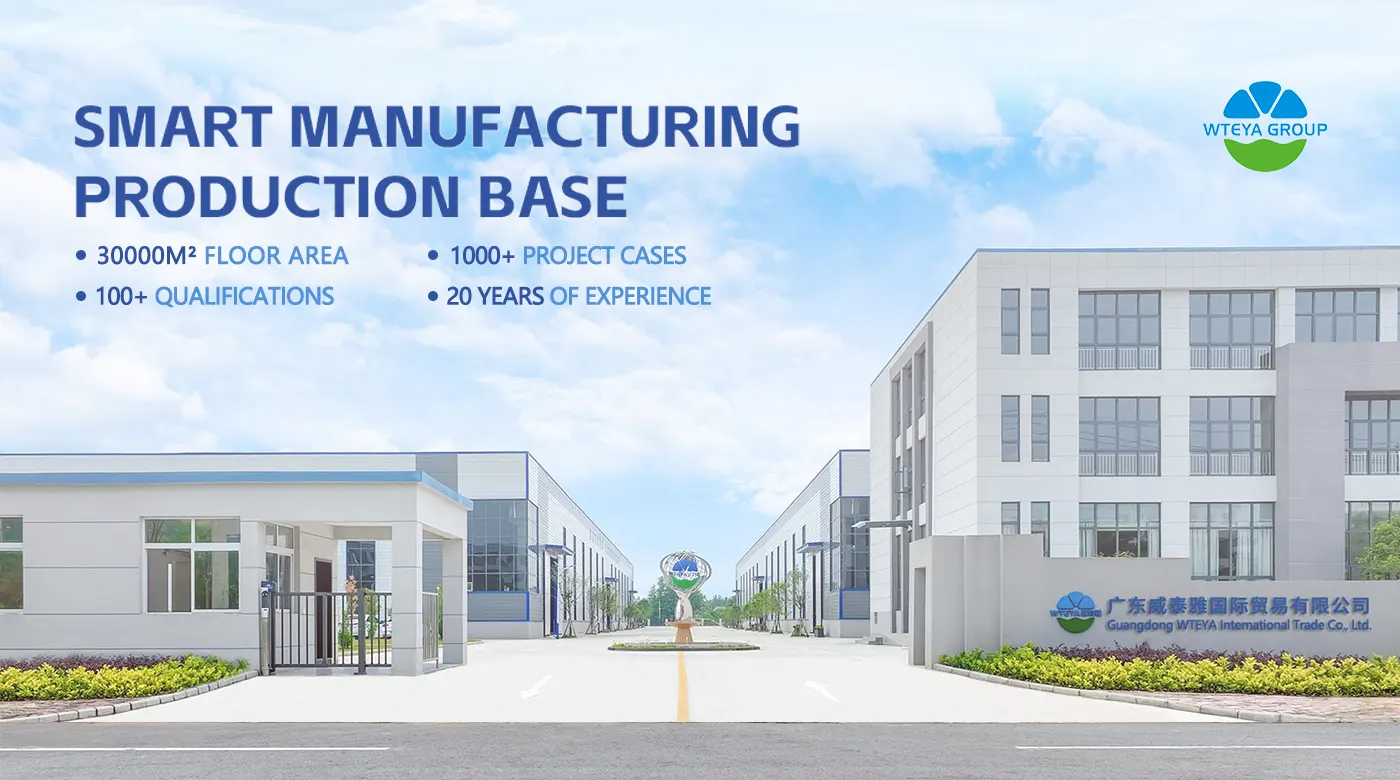
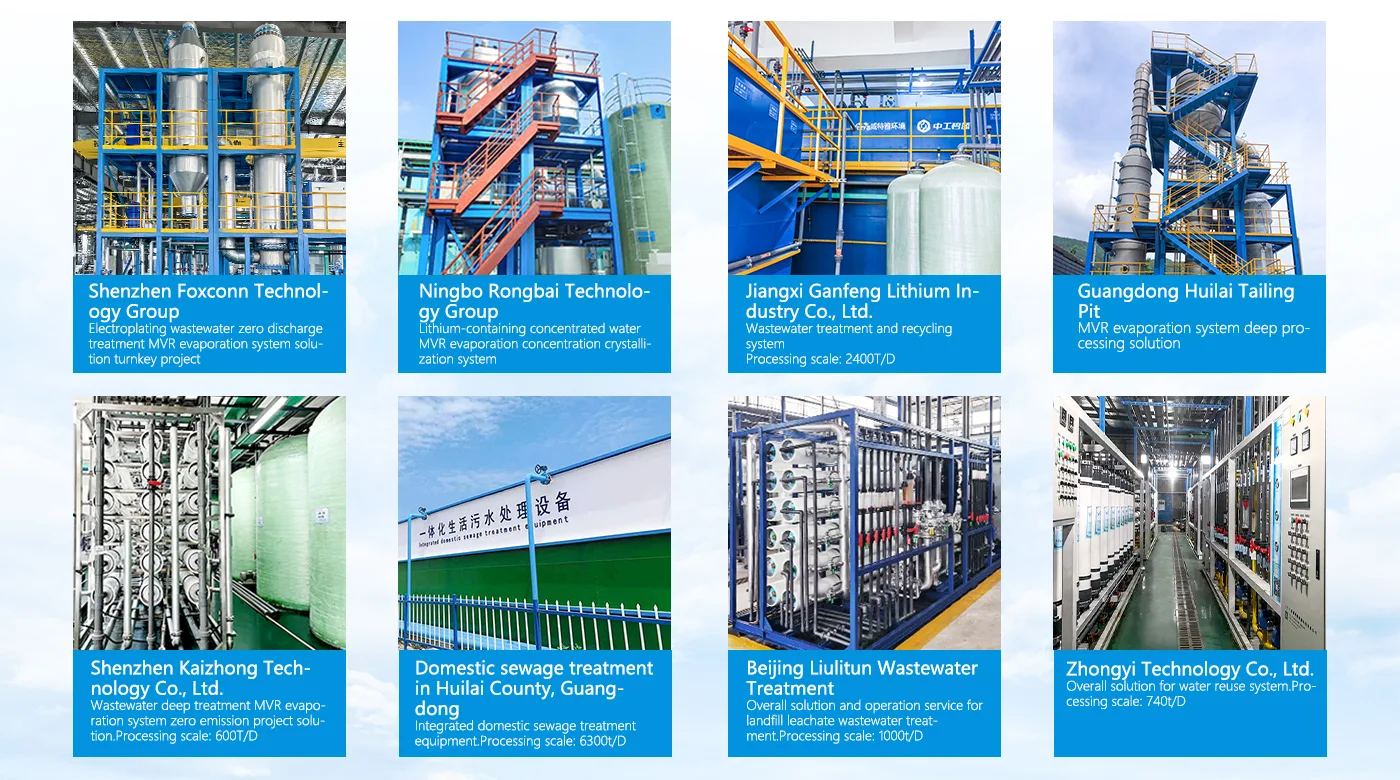
WTEYA manufactures evaporation and crystallization systems in its own workshops, with nearly 20 years of experience and more than 2,000 customers worldwide. Because design, fabrication, assembly and testing sit in one place, the schedule is controlled rather than subcontracted, and every project is built around the actual water quality, capacity and site conditions. Standard and fully customized builds, including OEM and ODM programmes, are both supported.
Frequently Asked Questions
A: MVR (Mechanical Vapor Recompression) evaporator is an energy-efficient evaporation technology that reduces energy consumption by 30-50% compared to traditional evaporation.
Q: How much energy can MVR save?
A: MVR evaporators typically reduce energy consumption by 30-50% compared to traditional multi-effect evaporators, using electricity instead of steam.
Q: What is the difference between MVR and multi-effect evaporator?
A: MVR uses mechanical vapor recompression for energy efficiency, while multi-effect evaporators use multiple evaporation stages. MVR has lower operating costs.
Ready to Reduce Your Environmental Footprint?
Every day of delay costs money. Our rapid-response team can deliver a preliminary solution design within 48 hours.
Send us your wastewater data and let's start building your custom system today.
📱 WhatsApp: +86-1800 2840 855
✉ Email: info@vteya.com
🌐 Website: www.vteya.com
Front page of Cross
Next go-to page
Related information
MVR Evaporator Delivery Schedule: Stages and Timelines
An MVR evaporator is engineered to order, so its delivery schedule is a project plan rather than a catalogue figure. From contract signature to shipment, most industrial systems take 90 to 180 days , and the installation and commissioning that follow add several more weeks on site.
MVR Evaporator Warranty: What Is Covered and for How Long?
MVR Evaporator Warranty: What Is Covered and for How Long? An MVR evaporator is a long-life asset, and its warranty determines who pays when something goes wrong in the first years of operation.
WTEYA Extends Its Footprint in Korea's Lithium Battery Water Treatment Market
WTEYA expands in South Korea after hosting a lithium battery wastewater purification client serving SK, Samsung and LG. The company pairs nearly 20 years of experience with more than 2,000 delivered projects.
Zero Liquid Discharge: A Complete Guide for 2026
Zero Liquid Discharge: A Complete Guide for 2026 Zero liquid discharge (ZLD) has moved from a niche compliance tactic to a mainstream design requirement for water-intensive industries.
Wastewater Evaporation for the Photovoltaic Industry
Wastewater Evaporation for the Photovoltaic Industry Photovoltaic manufacturing is one of the fastest-growing industrial sectors in the world, and it is also one of the most water-intensive.
Mid-Autumn Greetings from WTEYA and Our 2026 Holiday Notice
WTEYA wishes clients and colleagues a happy Mid-Autumn Festival. Offices and the Jingshan plant observe the holiday from 25 to 27 September 2026, with duty engineers on site and service lines kept open.
Guangdong WTEYA Environmental Technology Co., Ltd
Contact us
WhatsApp: +86 1800 2840 855
Tel: +86-0769-28636053
+86-0769-28636126
Email: info@wteya.com
Add: Floor 14, F4 building, TianAn digital town,
Nancheng District, Dongguan,Guangdong, China