



WTEYA Ships Three 4040 Seawater Desalination Units to Mexico, Strengthening Latin America Cooperation with Rotoplas
Release Time:
2026-09-23 09:32

WTEYA Ships Three 4040 Seawater Desalination Units to Mexico, Strengthening Latin America Cooperation with Rotoplas
WTEYA has shipped three 4040 seawater desalination units to Mexico, the latest delivery in the company's growing cooperation with Rotoplas, a leading water solutions company in Latin America. The shipment marks another step in WTEYA's channel development across the region.
Another Delivery to Latin America
The three units were assembled and tested at WTEYA's factory and dispatched to Mexico by sea freight. For WTEYA, the significance of the order lies less in its volume than in what it represents: a repeatable working relationship with a regional partner that serves water customers every day.
The delivery consists of three 4040 seawater desalination units, packed for a long sea voyage and supplied with the full technical file — test records, packing lists and operating manuals — so the partner's team can move straight into installation and commissioning.

Mexico's Water Priorities and the Case for Decentralized Desalination
Mexico combines long coastlines with communities and industries whose water supply is under pressure, and many of these sites are far from large centralized treatment infrastructure. That makes decentralized desalination attractive: a compact unit placed where the water is needed, rather than a long pipeline from where treatment happens to be.
Small-format equipment is easier to fund, transport and maintain in stages. A partner can start with one or two units, prove the operating cost, and expand later on the same platform — an approach that fits the practical realities of regional water projects.
Partner Profile: Rotoplas, a Latin American Water Solutions Leader
Rotoplas is a leading water solutions company in Latin America. Its business spans the full water cycle — water storage, purification, treatment and recycling — and its network reaches customers across the region.
That combination matters to equipment suppliers. A partner with stored-water and purification experience already understands the customer's problem from the inside: what the water is used for, what quality is expected, and what service model the end user can sustain. WTEYA's role is to supply the treatment and desalination equipment that closes the loop.

What This Cooperation Means for Both Sides
For Rotoplas, the cooperation extends its technical scope into seawater desalination, allowing it to answer inquiries that would previously have ended at the equipment boundary. For WTEYA, working alongside an established regional player provides application knowledge, on-the-ground presence and customer feedback that no amount of remote communication can replace.
The result is a delivery model in which the partner owns the customer relationship and WTEYA owns the process engineering — configuration, factory testing, documentation and after-sales support. Each shipment the two companies complete together makes the next project faster to specify and easier to service.
Strengthening WTEYA's Latin America Channel
Latin America is one of the markets where WTEYA is investing in partner-based growth. Rather than building local offices in every country, the company works with established water businesses, contractors and distributors who already hold the customer relationships and the service capability.
Under this model, WTEYA supplies desalination and water treatment equipment for seawater and brackish water, industrial reuse, and zero liquid discharge applications, while the partner handles local logistics, installation support and day-to-day service. This Mexico shipment is a direct result of that channel strategy.

Global Delivery Capability — and Why Choose WTEYA
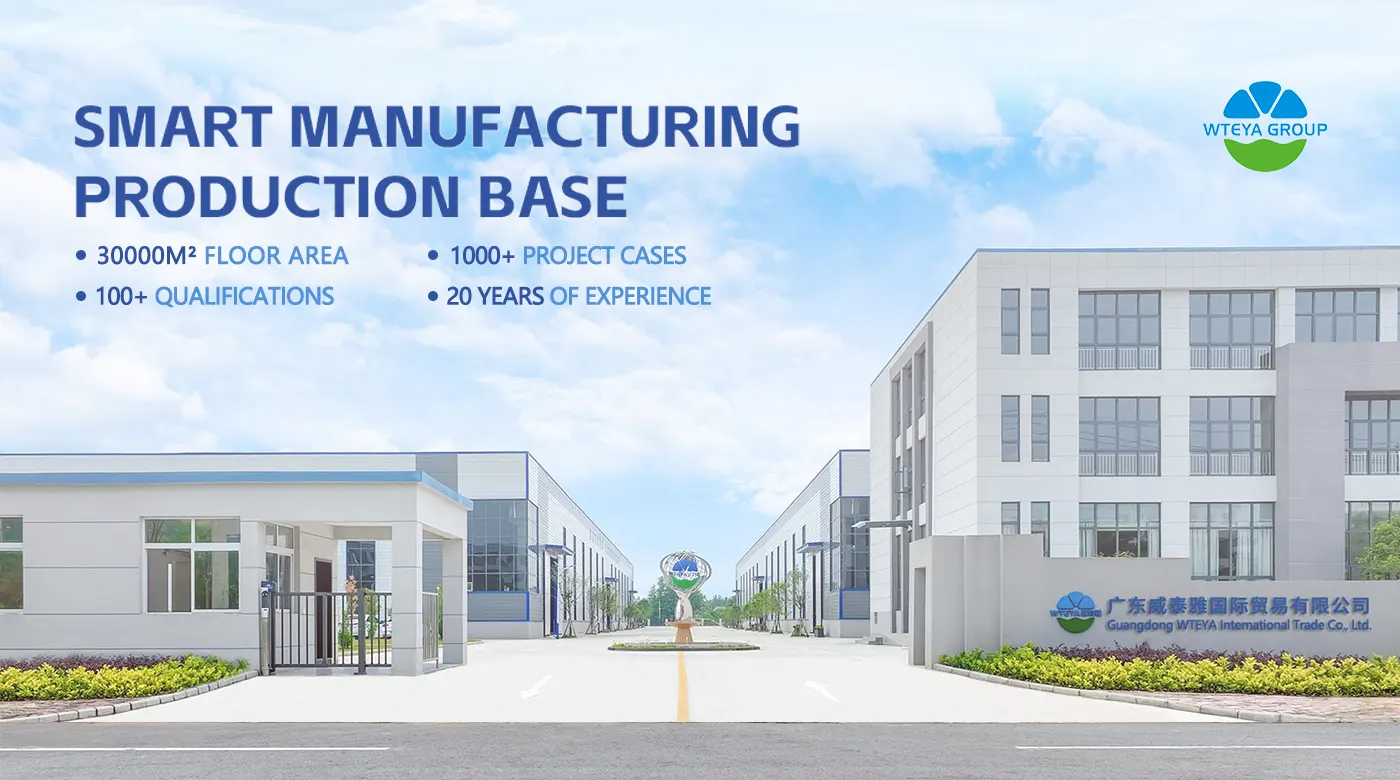
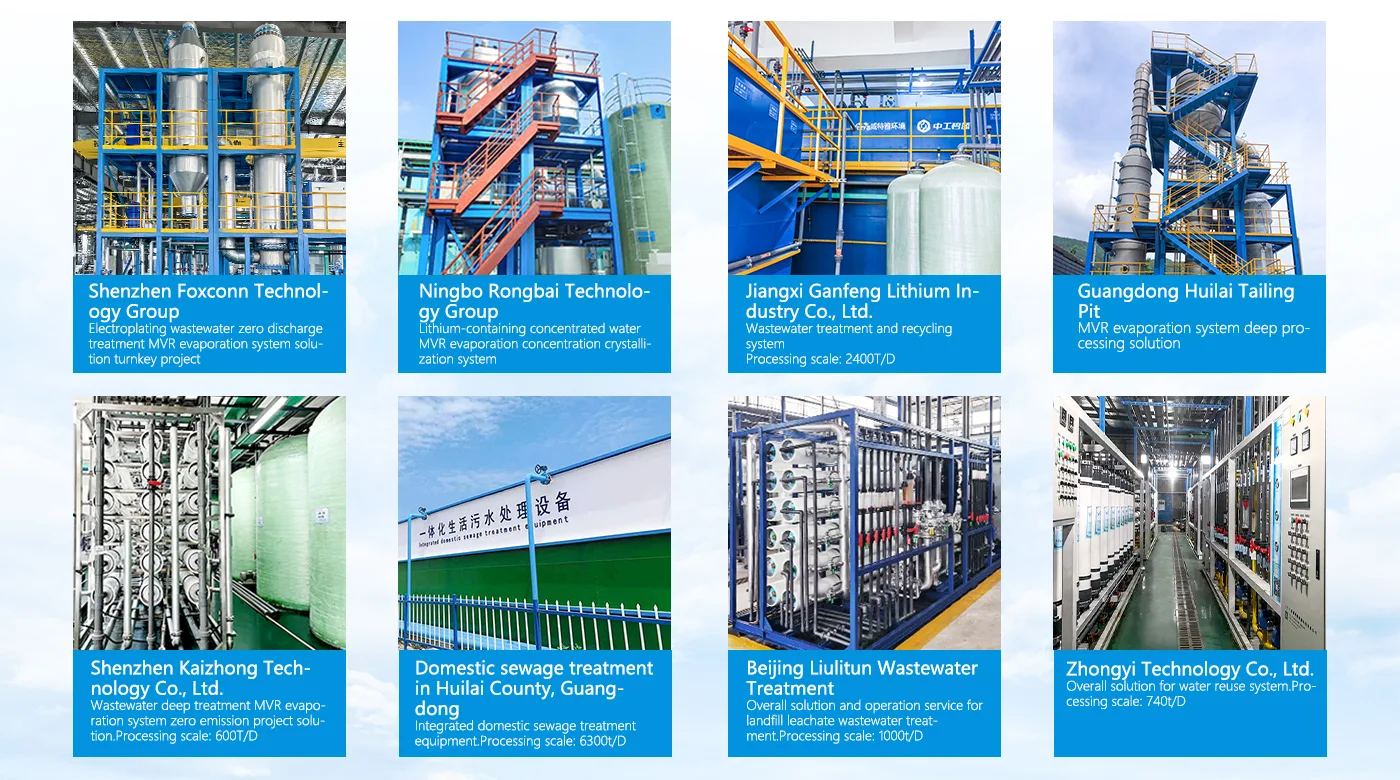
WTEYA has focused on water treatment and evaporation technology for nearly 20 years, with more than 2,000 projects delivered. Its equipment is built for export: factory-tested before shipment, crated for sea freight, documented for customs and site handover, and supported with remote technical assistance and spare parts after commissioning.
Seawater desalination units, membrane systems including ultrafiltration and reverse osmosis trains, and zero liquid discharge plants share one engineering base — which means a partner can address several water problems with a single supplier instead of assembling a portfolio from unrelated vendors.
Frequently Asked Questions
Q: Why is Latin America a priority market for WTEYA?
A: Latin America combines growing demand for water treatment with capable local companies already serving those customers. Working through established partners lets WTEYA deliver equipment and process support without asking customers to wait for a local factory to be built.
Q: What is the value of cooperating with Rotoplas?
A: Rotoplas is a leading Latin American water solutions company whose work covers storage, purification, treatment and recycling. Its regional reach and application knowledge sit alongside WTEYA's desalination and water treatment equipment — together they cover a broader part of the water cycle than either could alone.
Q: How does WTEYA support partners after the equipment is delivered?
A: Every export shipment leaves the factory tested and documented, with operating manuals and inspection records. After delivery, WTEYA supports the partner with commissioning guidance, remote technical assistance and spare parts supply, so the equipment stays in service over the long term.
Start Saving on Operating Costs
Still using outdated treatment methods? Upgrade to WTEYA's advanced technology and see immediate improvements in efficiency and compliance.
Schedule a video call with our engineers to explore your options.
📱 WhatsApp: +86-1800 2840 855
✉ Email: info@vteya.com
🌐 Website: www.vteya.com
Front page of Cross
Next go-to page
Related information
WTEYA has shipped three 4040 seawater desalination units to Mexico under its cooperation with Rotoplas, a leading Latin American water solutions company, extending the company's Latin America channel and global delivery capability.
How Is MVR Evaporator Capacity Determined?
How Is MVR Evaporator Capacity Determined? MVR evaporator capacity is set by the feed flow the unit must handle, not by the volume of distillate it produces.
How Does a Steam Compressor Work in MVR Systems?
How Does a Steam Compressor Work in MVR Systems? The steam compressor is the heart of every MVR evaporator. It takes the low-grade secondary vapour that a conventional evaporator would simply condense and throw away, raises its pressure and saturation temperature, and feeds it back into the heating...
Evaporation Crystallizer: How It Works and When to Use It
Evaporation Crystallizer: How It Works and When to Use It An evaporation crystallizer sits at the very end of a zero liquid discharge line, where two questions have to be answered at once: where does the water go, and where does the salt go.
WTEYA Concludes a Successful Run at ICIF China 2026 in Shanghai
WTEYA concluded a successful three-day run at ICIF China 2026 in Shanghai, displaying a 5 t/h MVR heat exchanger, mother liquor drying equipment and a membrane skid to chemical and lithium-battery project teams.
WTEYA Strengthens South America Channel with Chilean Desalination Partner
WTEYA is expanding its seawater desalination business into South America, working with a Chilean distributor to bring skid-mounted and containerized desalination solutions to industrial and municipal water users.
Guangdong WTEYA Environmental Technology Co., Ltd
Contact us
WhatsApp: +86 1800 2840 855
Tel: +86-0769-28636053
+86-0769-28636126
Email: info@wteya.com
Add: Floor 14, F4 building, TianAn digital town,
Nancheng District, Dongguan,Guangdong, China