



WTEYA Portable Seawater Desalination Enters French Market
Release Time:
2026-10-05 09:33

WTEYA Portable Seawater Desalination Enters French Market
WTEYA's portable seawater desalination line has reached a new market in Western Europe. Three 4021 portable seawater desalination machines have been shipped to France, extending the company's desalination footprint into a region where decentralized water supply is becoming a practical answer to seasonal and site-specific water shortages.
France and Europe: Growing Demand for Decentralized Water Supply
Europe's coastline is long, and much of its water demand sits where bulk infrastructure is thin: islands, marinas, holiday resorts, small ports and remote coastal facilities. In many of these places, building a conventional centralized desalination plant is hard to justify — the civil works are heavy, the footprint is large, and demand is often seasonal.
Decentralized, containerized desalination flips that logic. Instead of a single large plant, capacity is placed exactly where the water is needed and can be moved when the requirement changes. That is the gap WTEYA's portable range is designed to fill.

Why Portable Desalination Fits This Market
A portable unit arrives pre-assembled and factory-tested. Installation needs little more than a seawater feed, a power connection and a product-water outlet, so the time between delivery and first water is short. Because the machine is skid-mounted inside a container footprint, it can be relocated between sites — useful for operators who serve more than one location across a season.
Scaling is modular as well. Several identical units can run in parallel for higher output, or be distributed across separate sites, rather than committing to one oversized plant.
The 4021 Portable Seawater Desalination Machine
The machine sent to France is the 4021, a self-contained unit built on reverse osmosis. Its specifications are aimed at real operating conditions rather than laboratory figures.
| Model | 4021 Portable Seawater Desalination Machine |
| Daily Output | 4,021 gallons (approx. 15 m³/day) |
| Desalination Rate | 99.5% |
| Product Water TDS | Below 200 ppm |
| Energy Consumption | 3–4 kWh per m³ |
| Form Factor | Containerized / portable |
A desalination rate of 99.5% and product-water TDS below 200 ppm mean the output meets drinking-water quality targets, while energy consumption of 3–4 kWh per m³ keeps running costs predictable — a decisive factor for operators who will run the machine day after day.
Three Units Shipped to France
The French order covered three identical 4021 units, each manufactured at WTEYA's Jingshan smart manufacturing base and factory water-tested before dispatch. Testing verified output, product-water quality and the desalination rate on the bench, after which the units were packed for sea freight with their export documentation. Standard lead time for this type of portable unit is 30 to 60 days.

WTEYA's Global Desalination Footprint
France is the latest market for a product line that already serves clients well beyond China. WTEYA has shipped portable and containerized seawater desalination systems to customers in the United States, the UAE, the Philippines, Mexico, Chile, Kenya, Myanmar and Singapore — for fishing vessels, coastal hotels, remote communities and industrial users.
Each market brings a different salinity, climate and power supply, and that experience feeds back into the standard product: the range is built to be configured rather than fixed.
Why Choose WTEYA
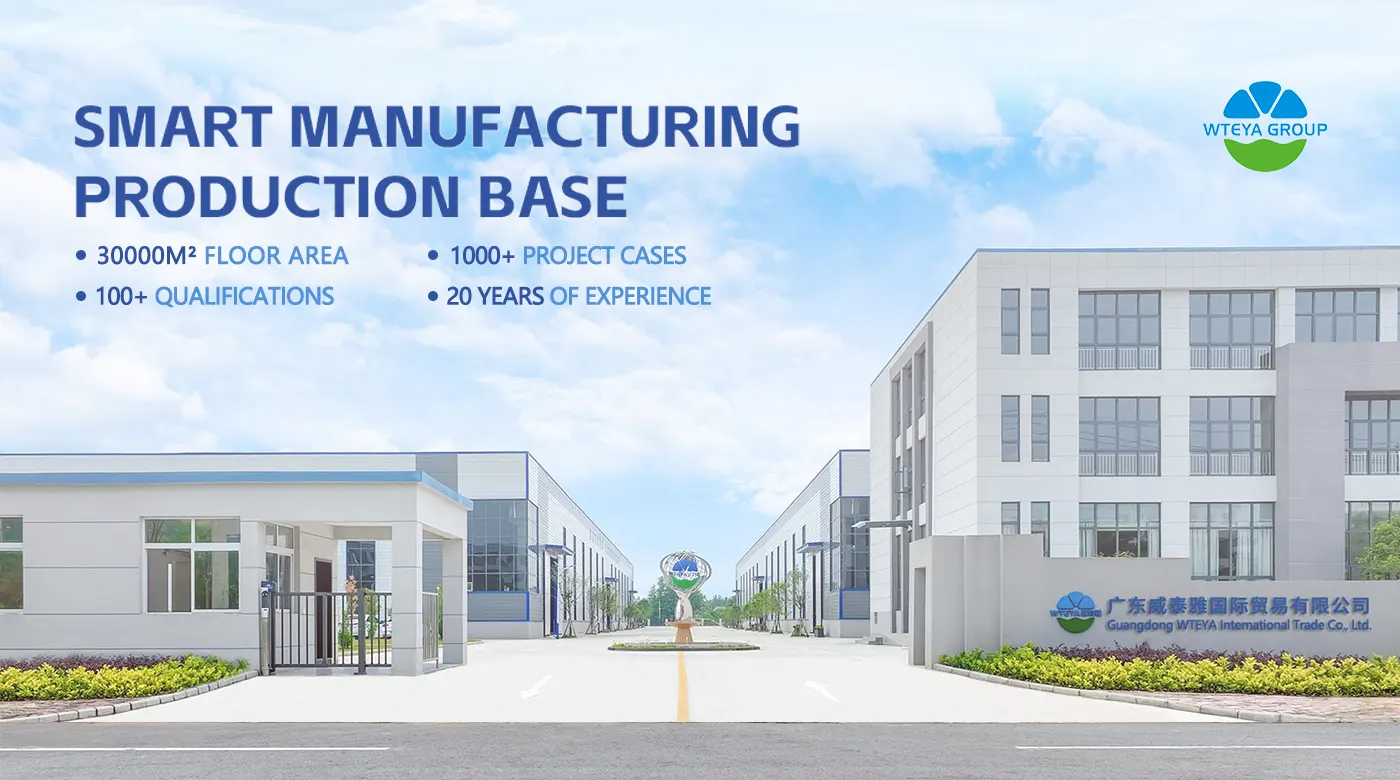
WTEYA has focused on water treatment and desalination equipment for nearly 20 years, since it was founded in 2009. The company runs its own Jingshan smart manufacturing base of 30,000 m², supported by 42 branch companies and more than 500 employees, and has served over 2,000 customers.
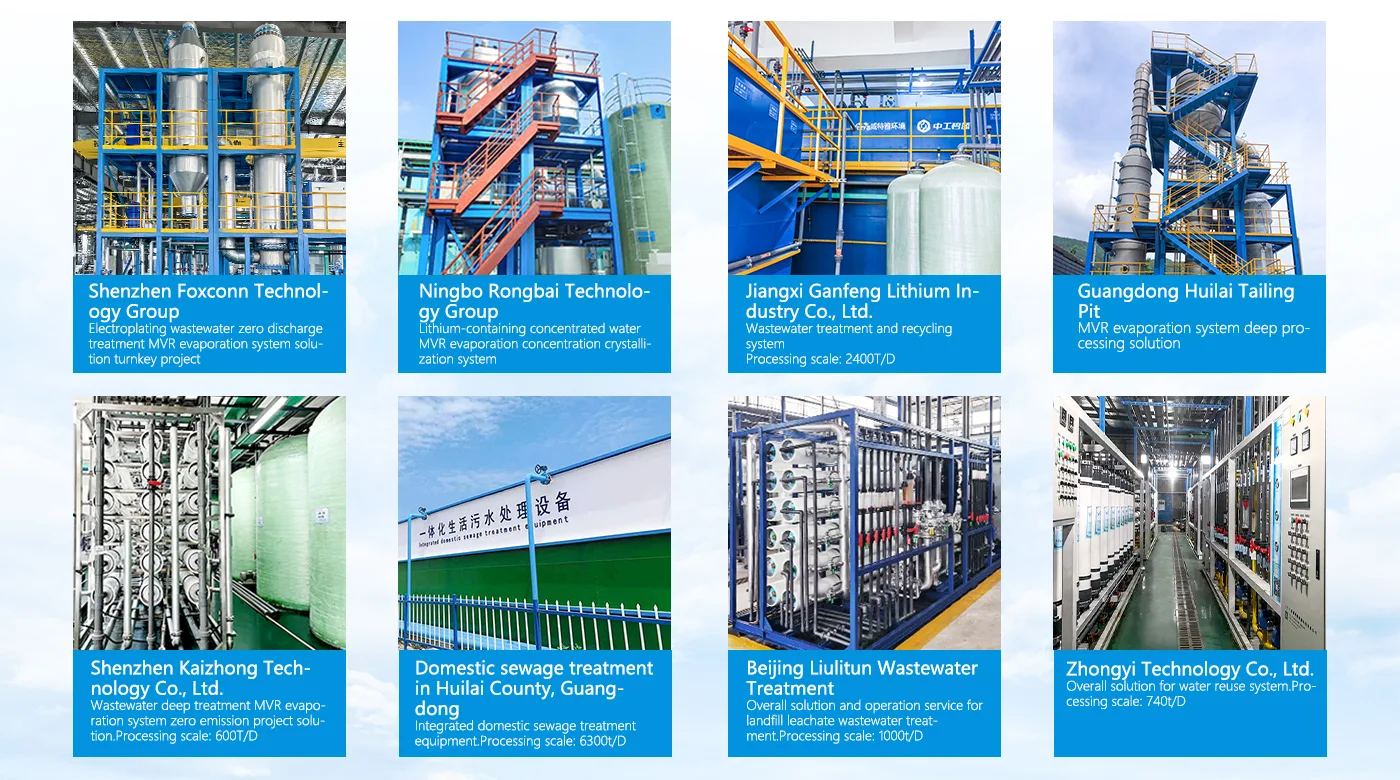
More than 40 listed companies — among them CATL, BYD, Huawei and Foxconn — have worked with WTEYA on water projects. For overseas clients, the company provides customized configuration, export documentation, commissioning guidance and a 48-hour on-site response commitment.
Frequently Asked Questions
Q: Why is portable desalination growing in Europe?
A: Many European coastal and island sites need water where bulk infrastructure is limited and demand is seasonal. A portable unit can be deployed quickly and relocated, avoiding the cost of a large fixed plant.
Q: What water quality can the 4021 achieve?
A: The 4021 reaches a 99.5% desalination rate with product-water TDS below 200 ppm, producing about 4,021 gallons (15 m³) per day at 3–4 kWh per m³.
Q: How does WTEYA support overseas clients?
A: WTEYA provides customized configurations, complete export documentation, commissioning guidance and a 48-hour on-site response commitment, with a standard lead time of 30 to 60 days.
Get Your Free Consultation Today
Looking for a customized solution for your industry? Our team of experts is ready to help you design the most cost-effective and energy-efficient system for your specific needs.
Contact us today to discuss your project requirements and get a personalized quote.
📱 WhatsApp: +86-1800 2840 855
✉ Email: info@vteya.com
🌐 Website: www.vteya.com
Front page of Cross
Next go-to page
Related information
WTEYA Portable Seawater Desalination Enters French Market
WTEYA has brought its portable seawater desalination line to France with three 4021 units, each producing about 4,021 gallons of fresh water each day.
Industrial Wastewater Treatment: A Comprehensive Overview
Industrial Wastewater Treatment: A Comprehensive Overview Industrial wastewater is one of the most demanding streams any modern plant has to manage.
Salt Recovery from Industrial Wastewater: Methods and Value
Salt Recovery from Industrial Wastewater: Methods and Value Industrial brine is usually treated as a waste to be disposed of, yet it carries a commodity that many plants pay good money to buy back.
Happy National Day from WTEYA: October 1-7 Holiday Notice
WTEYA wishes all clients and partners a happy National Day. The group observes the October 1-7, 2026 holiday and resumes normal operations on October 8, with on-call engineers reachable throughout the break.
MVR Evaporator Delivery Schedule: Stages and Timelines
An MVR evaporator is engineered to order, so its delivery schedule is a project plan rather than a catalogue figure. From contract signature to shipment, most industrial systems take 90 to 180 days , and the installation and commissioning that follow add several more weeks on site.
MVR Evaporator Warranty: What Is Covered and for How Long?
MVR Evaporator Warranty: What Is Covered and for How Long? An MVR evaporator is a long-life asset, and its warranty determines who pays when something goes wrong in the first years of operation.
Guangdong WTEYA Environmental Technology Co., Ltd
Contact us
WhatsApp: +86 1800 2840 855
Tel: +86-0769-28636053
+86-0769-28636126
Email: info@wteya.com
Add: Floor 14, F4 building, TianAn digital town,
Nancheng District, Dongguan,Guangdong, China